GlobalTime Blog - Latest Articles

🕒 GlobalTime Blog

Login to post your own articles!


1. What We Learned After Launching GlobalTime.io

🌍 Why We Built GlobalTime.io
Timezones shouldn’t be hard — but they are.

As someone working with people across different countries, I constantly faced:

Confusion with IST ↔ PST / UTC

Missed meetings due to wrong conversions

No simple way to set event reminders across zones

That’s when the idea for GlobalTime.io was born — a single platform to solve all your timezone and scheduling headaches.

🚀 The Launch on ProductHunt
We launched GlobalTime.io on ProductHunt last week.

It was exciting and nerve-wracking. We got valuable feedback, votes, and attention from people who really needed this kind of tool.

While we didn't go "top of the charts", the experience helped validate that:
✅ Timezones are still a pain
✅ Users want something lightweight and fast
✅ Alerts (email + SMS) are a surprisingly loved feature

🧩 What GlobalTime.io Can Do (Right Now)
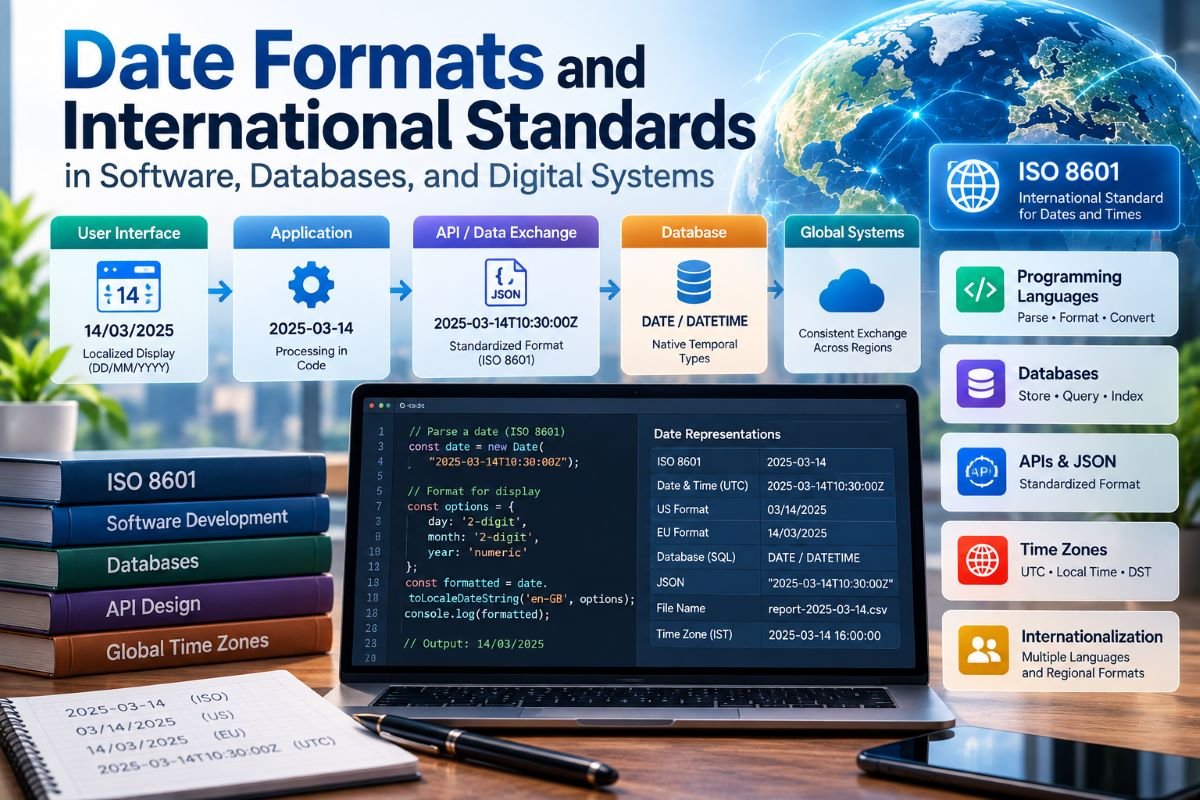
🌐 Convert IST to PST, UTC, GMT and more — in real-time with DST support

🕒 View multiple world clocks at once

📅 Schedule global meetings easily

⏳ Create event countdowns with email/SMS reminders

📝 Add notes to specific calendar days (like micro-planning!)

🌗 Dark Mode + Mobile-first design

We focused on speed + simplicity. No logins needed for most features.

🌱 Join the Journey
We’re just getting started.

If you:

Work across timezones

Plan meetings/events

Need to send reminders globally
Then give GlobalTime.io a try → https://globaltime.io

💬 Got feedback or ideas? Message me at supprot@globaltime.io
⭐️ Want to support us? Share it with your team or community!

Posted by admin Admin on 2025-07-26 11:02:56

Comments:

No comments yet.

Leave a comment:


2. The Invention of Timekeeping: From Sundials to Smartwatches.

Imagine a world with no clocks, no schedules, no alarms. People would wake up with the sun, eat when they felt hungry, and sleep when night fell. For much of human history, that was life — until we learned to measure time.

From the shadows of sundials to the touchscreens of smartwatches, the story of timekeeping is one of curiosity, innovation, and human obsession with precision.

Let’s explore how we went from watching the sky to wearing time on our wrists.

1. Timekeeping Begins with Nature

Before any gadgets, nature was our clock.

The Sun: People noticed that shadows moved as the sun changed position.

The Moon and Stars: Used to mark months and seasons.

Body Rhythms: Sleep-wake cycles helped estimate daily time.

But nature wasn’t enough. Humans needed more accuracy — especially as civilizations grew.

2. Ancient Sundials: The First Clocks

The earliest known timekeeping device was the sundial, dating back to around 1500 BCE in Egypt.

How it worked:
A stick (called a gnomon) cast a shadow on a marked surface.

As the sun moved, so did the shadow — showing the time.

???? Interesting Fact: The ancient Greeks and Romans refined sundials to divide the day into 12 daylight hours, which varied in length based on seasons.

Limitations? Sundials didn’t work at night or on cloudy days.

3. Water Clocks and Sand Timers

To tell time when the sun wasn’t shining, civilizations like Babylonians, Chinese, and Greeks invented:

Water Clocks (Clepsydra):

Water dripped at a constant rate from one container to another.

Time was measured by the water level.

Hourglasses:

Introduced later, in medieval Europe.

Sand flowed between two bulbs — a simple countdown tool.

These weren’t ultra-precise, but they worked indoors and at night.

4. Mechanical Clocks Revolutionize Time

In the 14th century, European inventors built the first mechanical clocks in church towers.

Key features:
Powered by weights and gears.

Used a device called an escapement to regulate motion.

Chimed bells to announce the hour — especially useful for townspeople.

⛪ Famous Example: The astronomical clock in Prague (1410) still works today!

Over the next few centuries, mechanical clocks became smaller and more accurate — eventually leading to...

5. Pocket Watches and the Birth of Personal Time

In the 1500s, spring-powered pocket watches appeared.

Mostly worn by the wealthy.

Decorative, stylish, and a status symbol.

Early models had only hour hands (no minutes or seconds).

By the 1700s, watchmaking improved thanks to British inventors like John Harrison, who built marine chronometers — critical for navigation at sea.

6. Wristwatches: From Battlefield to Fashion

Though wristwatches existed earlier, they became popular during World War I:

Soldiers needed hands-free timekeeping.

Pocket watches were impractical in combat.

After the war, wristwatches became fashionable for both men and women — evolving into everyday essentials.

7. The Quartz Revolution

In 1969, Seiko launched the first quartz watch:

Used a quartz crystal vibrating at a precise frequency.

Much more accurate and affordable than mechanical watches.

Quartz technology revolutionized timekeeping — making accurate watches available to the masses.

⏱️ Accuracy: ±15 seconds/month vs. mechanical watches’ ±15 seconds/day!


8. Smartwatches: Time Meets Technology

The latest evolution is the smartwatch — a mini-computer on your wrist.

Popularized by brands like Apple, Samsung, and Fitbit, smartwatches do far more than tell time:

Track health, heart rate, sleep

Send messages & calls

GPS navigation

Weather, apps, calendars

Voice assistants

With AI and biometric sensors, smartwatches are reshaping how we interact with time — and with ourselves.

What’s Next for Timekeeping?

The future of timekeeping may not lie in watches at all. Instead, we may see:

Brain-computer interfaces syncing your internal body clock

Ultra-precise atomic wearables

Augmented reality time tracking

Time as data, not just display

Timekeeping is no longer about just knowing the hour — it’s about optimizing life.

Final Thoughts

From a simple shadow on the ground to a voice-activated smart device, the journey of timekeeping reflects how far we’ve come as a civilization. It tells the story of our desire to control, measure, and master time itself.

Next time you glance at your smartwatch or phone, remember — you’re looking at the result of 5,000 years of innovation.

Posted by admin Admin on 2025-06-09 10:37:32

Comments:

No comments yet.

Leave a comment:


3. Why India Has Only One Time Zone, but America Has Many Time Zones?

Time is universal, but the way we measure it varies across countries. One of the most intriguing facts about timekeeping is that India, a vast country in terms of land area and population, uses only one time zone, while the United States spans multiple time zones. Why is that? Let’s explore the geographical, political, and practical reasons behind this difference.

Understanding Time Zones

A time zone is a region where the same standard time is used. The Earth is divided into 24 time zones, each typically covering 15 degrees of longitude. However, actual time zones often follow political and regional boundaries rather than strict longitudinal lines.

Why India Has Only One Time Zone (IST)

India follows Indian Standard Time (IST), which is UTC +5:30. Regardless of whether you are in Arunachal Pradesh in the east or Gujarat in the west, IST is the standard.

✅ Reasons for a Single Time Zone in India:
Political Unity
After independence, India’s leaders opted for a single time zone to promote national unity and administrative simplicity.

Colonial Legacy
Under British rule, India used two time zones: Bombay Time and Calcutta Time. Post-independence, the country shifted to IST to avoid confusion.

Central Meridian
IST is based on the 82.5°E longitude, which passes near Mirzapur (Uttar Pradesh), roughly central in India’s geography.

Simplicity in Communication and Governance
With one time zone, railways, TV programming, office timings, and government operations all function smoothly.

Population Distribution
Most of India’s population and economic hubs lie in the central and western parts, minimizing the problems caused by a single time zone.

Why the United States Has Multiple Time Zones

The United States spans approximately 4,500 kilometers (2,800 miles) from the east coast to the west coast. It officially uses six time zones:

Eastern

Central

Mountain

Pacific

Alaska

Hawaii-Aleutian

✅ Reasons for Multiple Time Zones in the U.S.:

Large Geographic Width

The U.S. stretches across a wide range of longitudes, making multiple time zones necessary for synchronizing day and night cycles naturally.

Economic and Regional Decentralization

Cities like New York, Chicago, Denver, and Los Angeles are all economic hubs. Multiple time zones help local businesses and governments run on natural schedules.

Federal System

The U.S. has a decentralized federal system, allowing states to have more control over timekeeping policies, including daylight saving time.


Does India Need a Second Time Zone?

This is a debated topic.
The northeastern states of India, like Assam and Arunachal Pradesh, experience sunrise as early as 4 AM and sunset by 4 PM. A second time zone for these regions could save energy and align better with local life.

However, challenges include:

Confusion in train and flight schedules

Complexity in administration and business operations

Increased risk of missed deadlines and errors


Conclusion

The difference in time zone usage between India and the U.S. reflects not just geography, but also political decisions, cultural preferences, and administrative priorities.

India prioritizes unity and simplicity with one time zone.

The U.S. balances local convenience and natural day-night cycles using multiple zones.

As globalization grows, the debate about time zones will continue—balancing efficiency with regional needs.

Posted by ravi kumar choudhary User on 2025-06-09 10:24:49

Comments:

No comments yet.

Leave a comment:


4. Why India Has Only One Time Zone, but America Has Many Time Zones.

Time is universal, but the way we measure it varies across countries. One of the most intriguing facts about timekeeping is that India, a vast country in terms of land area and population, uses only one time zone, while the United States spans multiple time zones. Why is that? Let’s explore the geographical, political, and practical reasons behind this difference.

Understanding Time Zones

A time zone is a region where the same standard time is used. The Earth is divided into 24 time zones, each typically covering 15 degrees of longitude. However, actual time zones often follow political and regional boundaries rather than strict longitudinal lines.

Why India Has Only One Time Zone (IST)

India follows Indian Standard Time (IST), which is UTC +5:30. Regardless of whether you are in Arunachal Pradesh in the east or Gujarat in the west, IST is the standard.

✅ Reasons for a Single Time Zone in India:
Political Unity
After independence, India’s leaders opted for a single time zone to promote national unity and administrative simplicity.

Colonial Legacy
Under British rule, India used two time zones: Bombay Time and Calcutta Time. Post-independence, the country shifted to IST to avoid confusion.

Central Meridian
IST is based on the 82.5°E longitude, which passes near Mirzapur (Uttar Pradesh), roughly central in India’s geography.

Simplicity in Communication and Governance
With one time zone, railways, TV programming, office timings, and government operations all function smoothly.

Population Distribution
Most of India’s population and economic hubs lie in the central and western parts, minimizing the problems caused by a single time zone.

Why the United States Has Multiple Time Zones

The United States spans approximately 4,500 kilometers (2,800 miles) from the east coast to the west coast. It officially uses six time zones:

Eastern

Central

Mountain

Pacific

Alaska

Hawaii-Aleutian

✅ Reasons for Multiple Time Zones in the U.S.:

Large Geographic Width

The U.S. stretches across a wide range of longitudes, making multiple time zones necessary for synchronizing day and night cycles naturally.

Economic and Regional Decentralization

Cities like New York, Chicago, Denver, and Los Angeles are all economic hubs. Multiple time zones help local businesses and governments run on natural schedules.

Federal System

The U.S. has a decentralized federal system, allowing states to have more control over timekeeping policies, including daylight saving time.


Does India Need a Second Time Zone?

This is a debated topic.
The northeastern states of India, like Assam and Arunachal Pradesh, experience sunrise as early as 4 AM and sunset by 4 PM. A second time zone for these regions could save energy and align better with local life.

However, challenges include:

Confusion in train and flight schedules

Complexity in administration and business operations

Increased risk of missed deadlines and errors


Conclusion

The difference in time zone usage between India and the U.S. reflects not just geography, but also political decisions, cultural preferences, and administrative priorities.

India prioritizes unity and simplicity with one time zone.

The U.S. balances local convenience and natural day-night cycles using multiple zones.

As globalization grows, the debate about time zones will continue—balancing efficiency with regional needs.

Posted by ravi kumar choudhary User on 2025-06-09 10:22:15

Comments:

No comments yet.

Leave a comment:


5. How Atomic Clocks Work: The Most Precise Timekeepers on Earth

Time rules everything — from satellite navigation and stock markets to your smartphone and smartwatch. But have you ever wondered how we define a second so precisely?

Welcome to the fascinating world of atomic clocks — the most accurate timekeeping devices humanity has ever created.

What Is an Atomic Clock?
An atomic clock is a clock that keeps time by measuring the vibrations of atoms, usually cesium-133 or rubidium.

Key Idea: Atoms oscillate at incredibly consistent frequencies. Atomic clocks use this to "tick" billions of times per second — far more reliably than any mechanical or quartz clock.

⌛ Why Atoms? The Science Behind It
Atoms have electrons that orbit around the nucleus. These electrons can "jump" between energy levels by absorbing or releasing a specific amount of energy.

In cesium-133, there are 9,192,631,770 oscillations every second when it changes energy states.

That exact number is used to define 1 second in the International System of Units (SI).

1 second = 9,192,631,770 vibrations of a cesium atom

How It Actually Works (Simplified)
An atomic clock works like this:

Atom Source: The clock releases a beam of cesium atoms.

Microwave Oscillator: The atoms pass through a microwave field tuned to their natural frequency.

Resonance: When the frequency is just right, atoms switch states — this change is detected.

Feedback Loop: The oscillator automatically adjusts to stay perfectly tuned.

Time Output: The oscillator’s signal is then used to keep perfect time.

✅ Think of it as a super-accurate metronome, synced to the rhythm of the universe.

Why Atomic Clocks Matter
Atomic clocks are not just for scientists — they power everyday technologies:

Use Case Why It Needs Atomic Time
GPS Satellites Need nanosecond accuracy for location

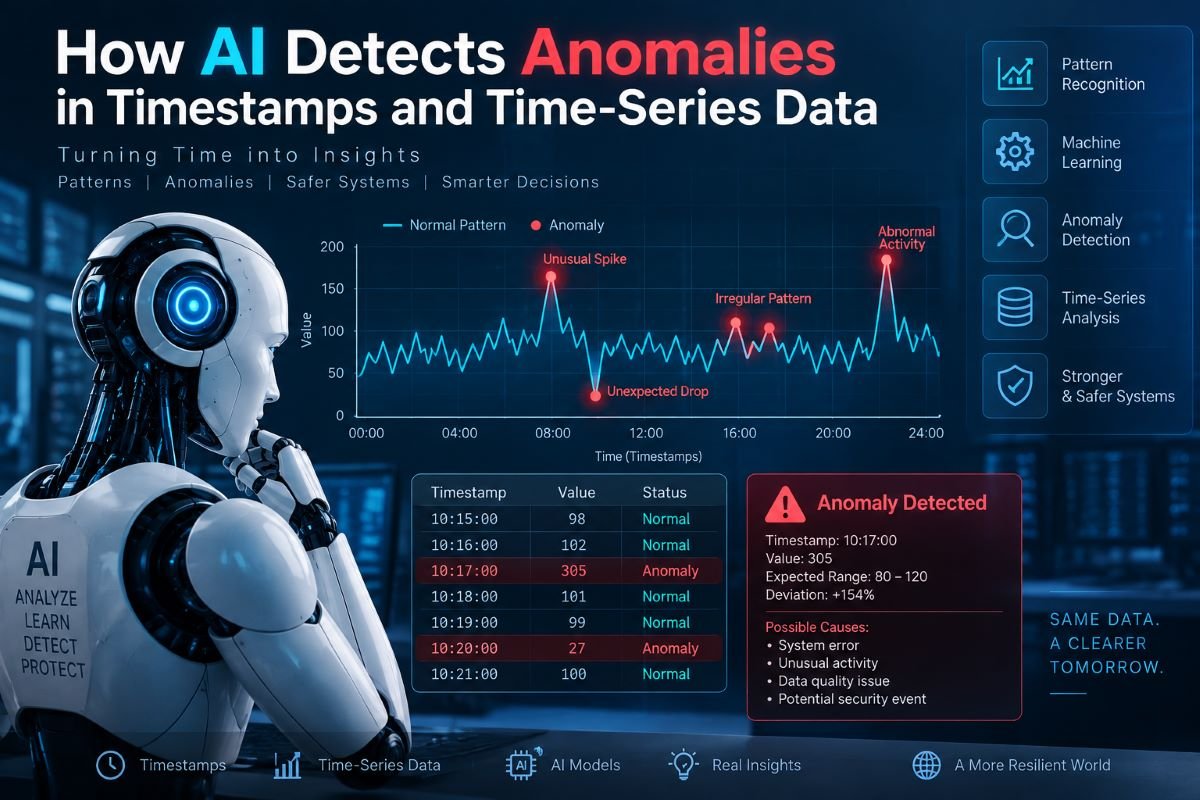
⏰ Internet Time Protocol Syncs global computer networks
Financial Transactions Timestamps for global trading
Telecommunication Networks Data transmission coordination
Science & Astronomy Space probes, particle physics, etc.

Types of Atomic Clocks
Clock Type Atom Used Accuracy
Cesium Beam Clock Cesium-133 Loses 1 second in ~100 million years
Hydrogen Maser Hydrogen Higher short-term stability
Rubidium Clock Rubidium-87 Smaller, portable, less accurate
Optical Clock Ytterbium, Strontium Next-gen; accurate to 1 sec in 15 billion years

The Future: Optical Atomic Clocks
Next-gen optical atomic clocks are being developed with 100x greater precision than current cesium-based clocks.

They could:

Redefine the second again.

Detect gravitational waves.

Improve GPS accuracy to within centimeters.

Fun Fact: Time Flows Differently in Space!
According to Einstein’s General Relativity, time moves slower in stronger gravity. GPS satellites must correct for this time dilation — made possible thanks to atomic clocks onboard.

Since When Are We Using Atomic Time?
1955: First practical atomic clock built in the UK (using cesium).

⏱ 1967: The second was redefined based on atomic vibrations.

Today: The world’s official time is set by the International Atomic Time (TAI) and Coordinated Universal Time (UTC) — both based on a global network of atomic clocks.

Conclusion: Precision That Powers the World
Atomic clocks are the silent guardians of our digital age — from satellites in orbit to servers on Earth. Their incredible accuracy helps us navigate, communicate, and calculate with near-perfect precision.

So the next time you check your phone or GPS, remember:

You’re syncing with atoms vibrating 9 billion times a second — and that’s what keeps the world ticking.

Posted by admin Admin on 2025-06-02 04:59:10

Comments:

No comments yet.

Leave a comment:


6. Understanding Time and the Hour: A Complete Guide

Time is one of the most fundamental aspects of human life — yet its structure, especially the hour, has a complex and fascinating story.

Let’s break it down into 9 clear sections:

1️ What Is Time? (Scientific & Philosophical)
Time is a continuous progression of events — from the past, through the present, and into the future.
It’s measured in intervals (seconds, minutes, hours) to help us make sense of motion, change, and existence.
In physics, time is a dimension (like space) and is studied under relativity and quantum mechanics.

2️ Natural Origins of Time Measurement

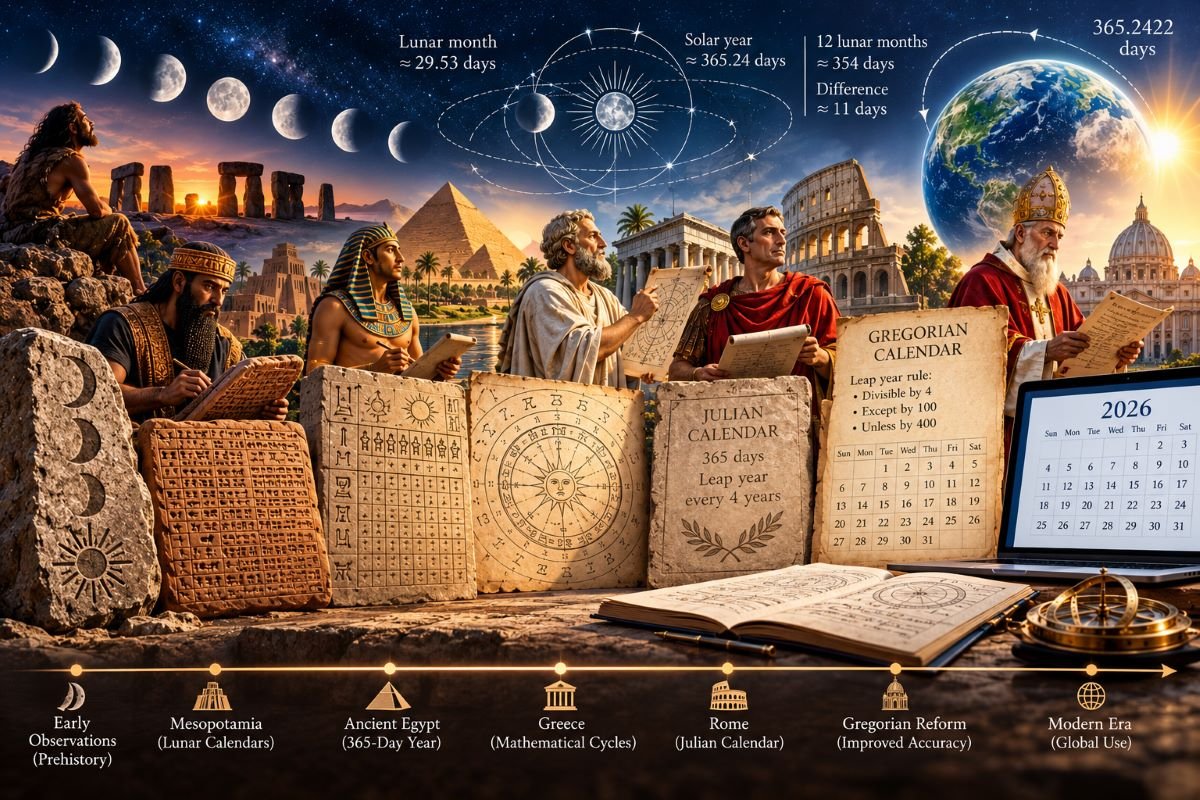
Humans first measured time based on natural cycles:
Day & Night: Based on the Earth's rotation.
Lunar Cycles: New moon to full moon (~29.5 days).
Seasons: Earth’s orbit around the sun (~365 days).

3️ Early Divisions of the Day

Before mechanical clocks, time was divided based on observable changes:
12 hours of daylight (Greek & Roman tradition).
Night watches (used by Egyptians, Greeks, Romans, and Hebrews).
No fixed length — hours changed with the seasons.

4️ The Origin of the Word “Hour”

Comes from Latin hora → from Greek hōra → meaning “season” or “time.”
In Ancient Rome, an “hour” was 1/12 of daylight, not a fixed 60 minutes.

5️ The 24-Hour Day System

Developed by Babylonians and Egyptians using base-12 and base-60 systems.
Egyptians used duodecimal (base-12) for daylight.
Babylonians used sexagesimal (base-60) — leading to:
60 minutes in an hour
60 seconds in a minute

6️ When Did Hours Become Fixed?

Around the 14th century, mechanical clocks required uniform hours to function.
Clocks began dividing days into 24 fixed hours, regardless of season.
Later, each hour was divided into:
60 minutes
60 seconds

7️ Modern Timekeeping Units

Unit Symbol Duration

Second s Base SI unit of time
Minute min 60 seconds
Hour h 60 minutes = 3,600 s
Day d 24 hours
Week 7 days
Year ~365.25 days

⏱ Fun Fact: A second is now officially defined as:
“9,192,631,770 cycles of radiation from the cesium-133 atom.”

8️ Timekeeping Devices Through History

Era Device/Method Civilizations

Prehistoric Observation of stars/moon All early cultures
~1500 BCE Sundial Egyptians, Greeks, Romans
~1400 BCE Water clocks (Clepsydra) Babylonians, Chinese
~1000 CE Candle & Incense clocks Chinese, Islamic world
~1300 CE Mechanical clocks Europe
20th century Quartz clocks Global
Modern era Atomic clocks Scientific institutions

9️ Cultural & Religious Time Systems

Islamic Prayer Times: Based on sun position.
Jewish Halachic Hours: Variable hours based on sunrise and sunset.
Hindu Panchang: Uses astronomical calculations for tithis and muhurtas.
Chinese Zodiac Clock: 12 time divisions, each 2 hours long.

✅ Summary: Key Takeaways
The “hour” originated from ancient observations of the sun and seasons.
It wasn't fixed until mechanical clocks were invented.
Modern timekeeping is deeply tied to science, culture, and history.
The hour we use today (60 minutes) is the result of thousands of years of refinement, innovation, and standardization.

Posted by admin Admin on 2025-06-02 04:01:54

Comments:

No comments yet.

Leave a comment: