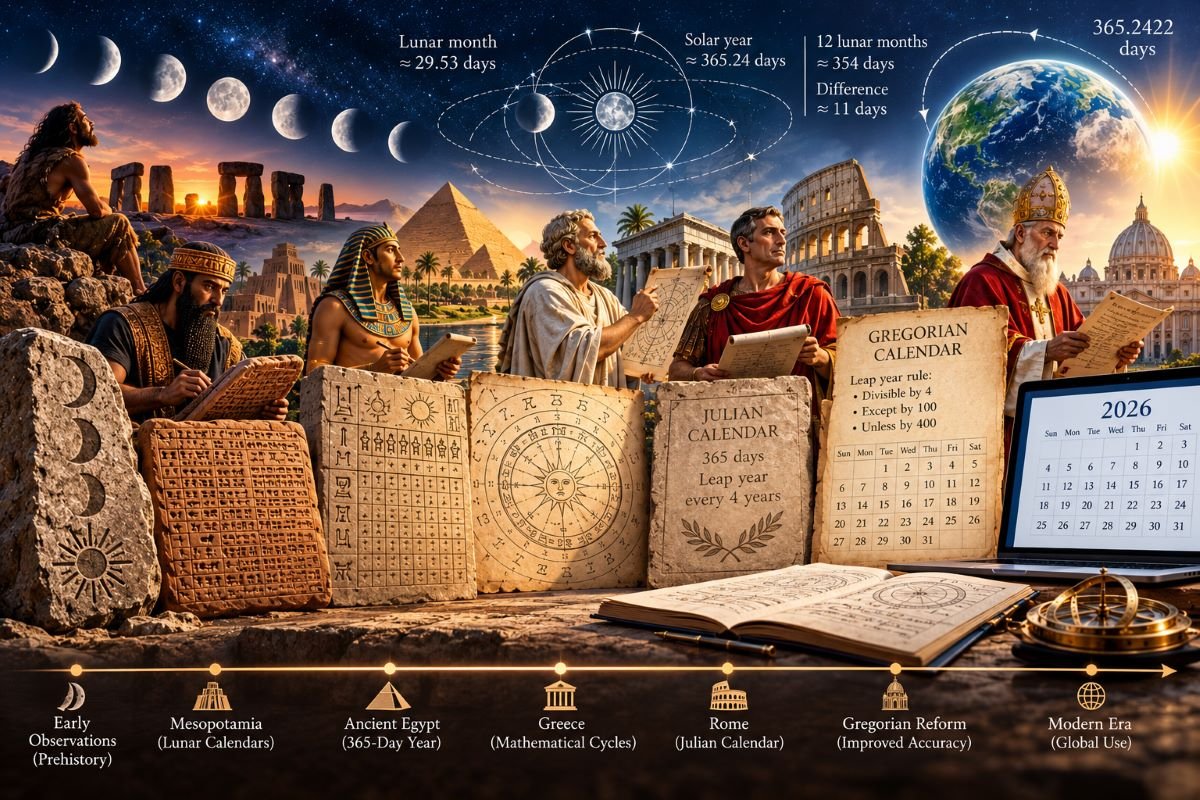
Long before digital clocks, printed calendars, and date-calculation software existed, human societies faced a fundamental challenge: how to measure the passage of time and organize it into a reliable ...
Read More →The Origins of Date Formats and International Standards: How the System Developed Through History
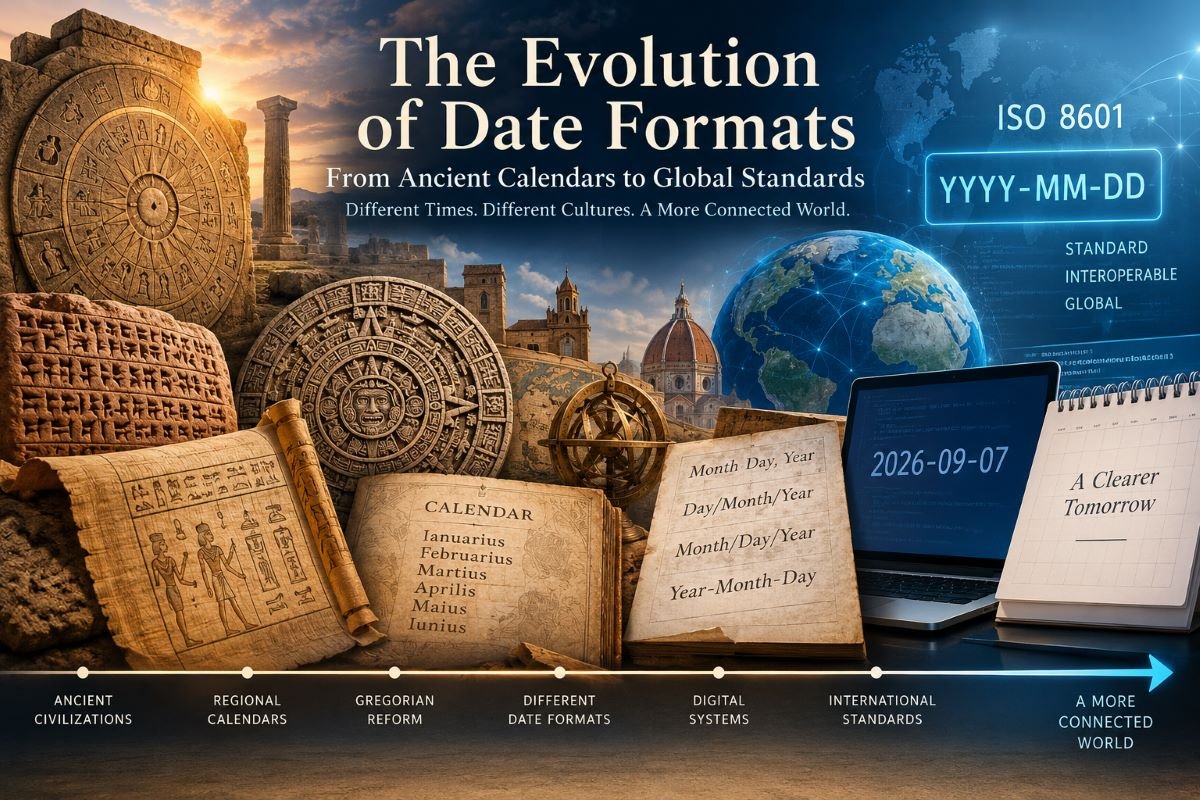
Writing a date may seem simple, but the way a date is represented can vary significantly between countries, languages, organizations, and computer systems. For example, the same calendar date may be w...
Read More →Why Weeks Have 7 Days? The History Behind the Seven-Day Week
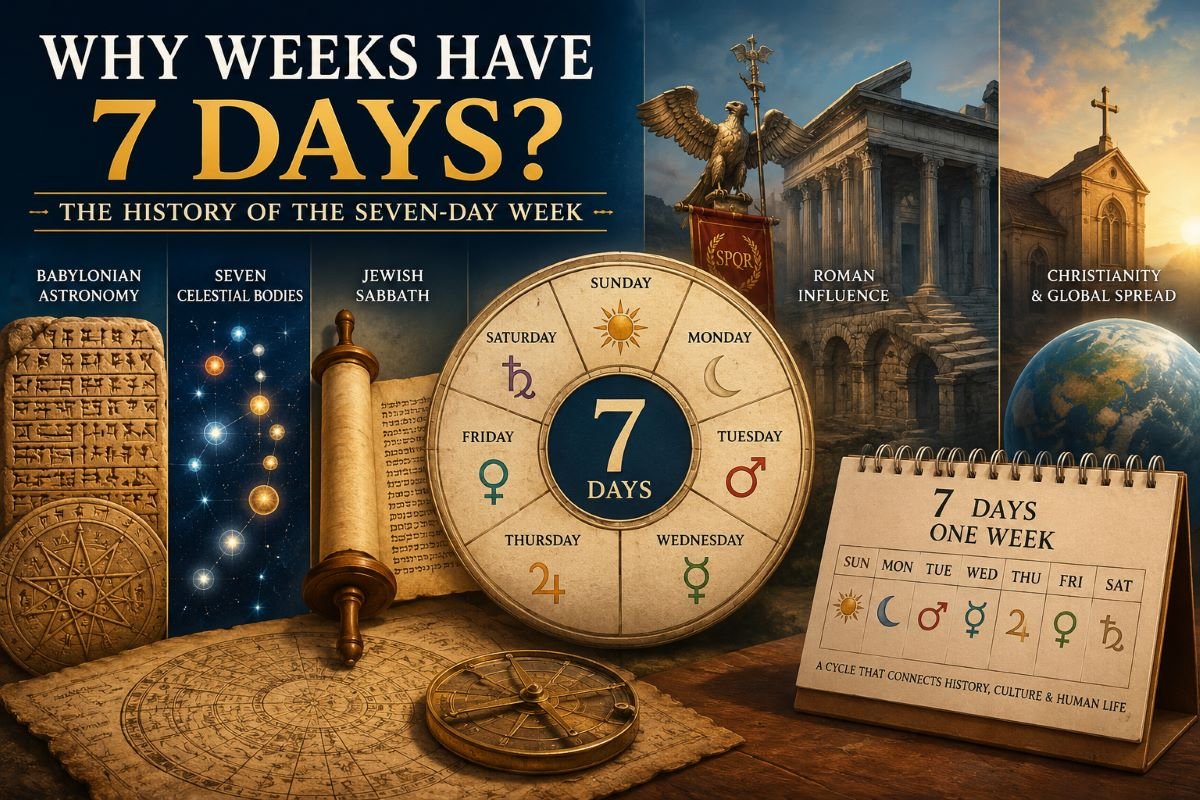
Have you ever wondered why a week has seven days? A day has a clear astronomical explanation: Earth takes about 24 hours to rotate once. A year follows Earth's orbit around the Sun. A month is loosely...
Read More →Origin of Months and Days: How the Modern Calendar Was Created
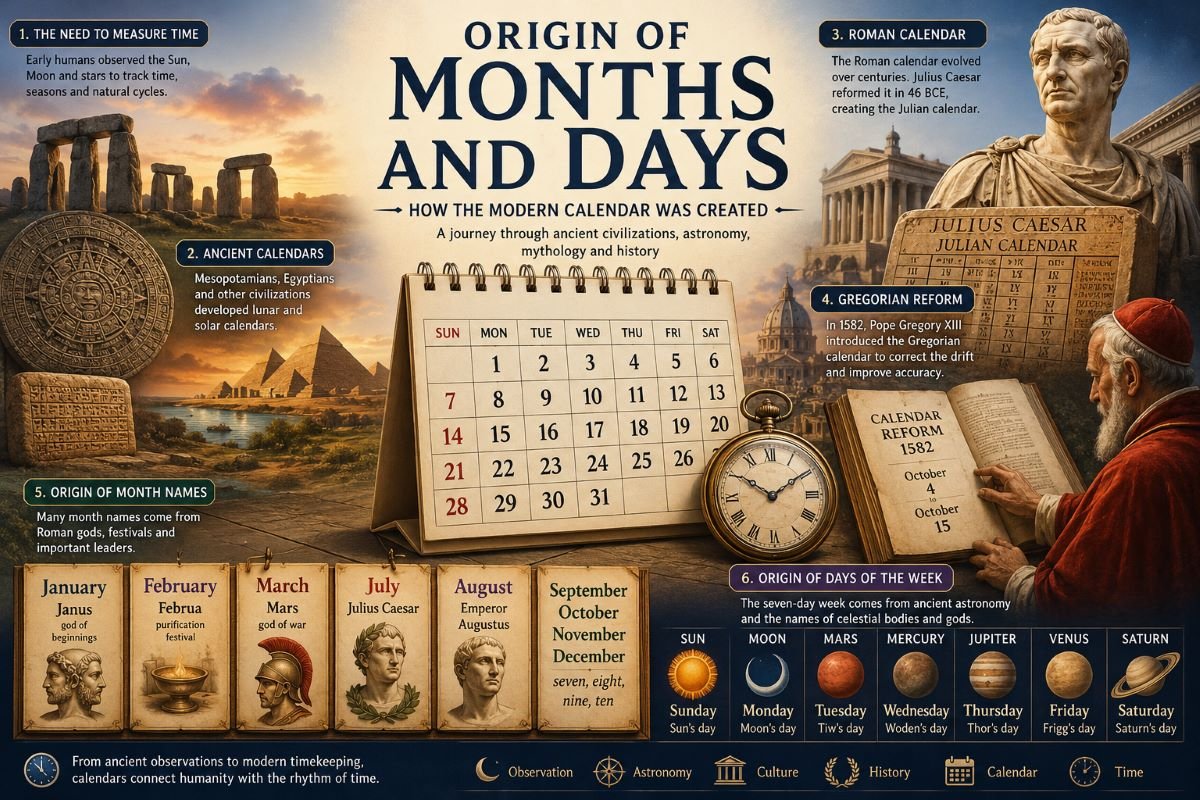
Every modern calendar looks familiar. The year is divided into months, months into days, and the week into seven days. January comes before February, Monday follows Sunday, and a new year begins on a ...
Read More →Aztec Calendar Mysteries: The Secrets Behind the Sun Stone and the Five Ages of the World
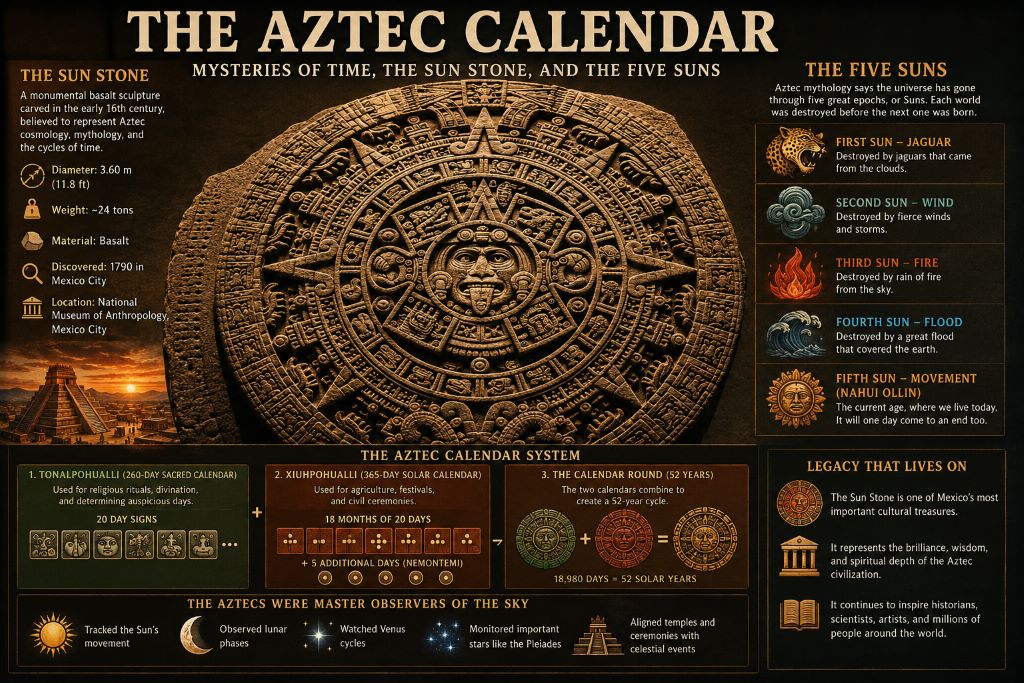
"Long before mechanical clocks, satellites, or atomic timekeeping, ancient civilizations looked to the heavens to understand the passage of time. Among them, the Aztecs created one of the world's most...
Read More →Indian Calendar Mysteries: How Ancient India Measured Time, Planets, Seasons, and Cosmic Cycles
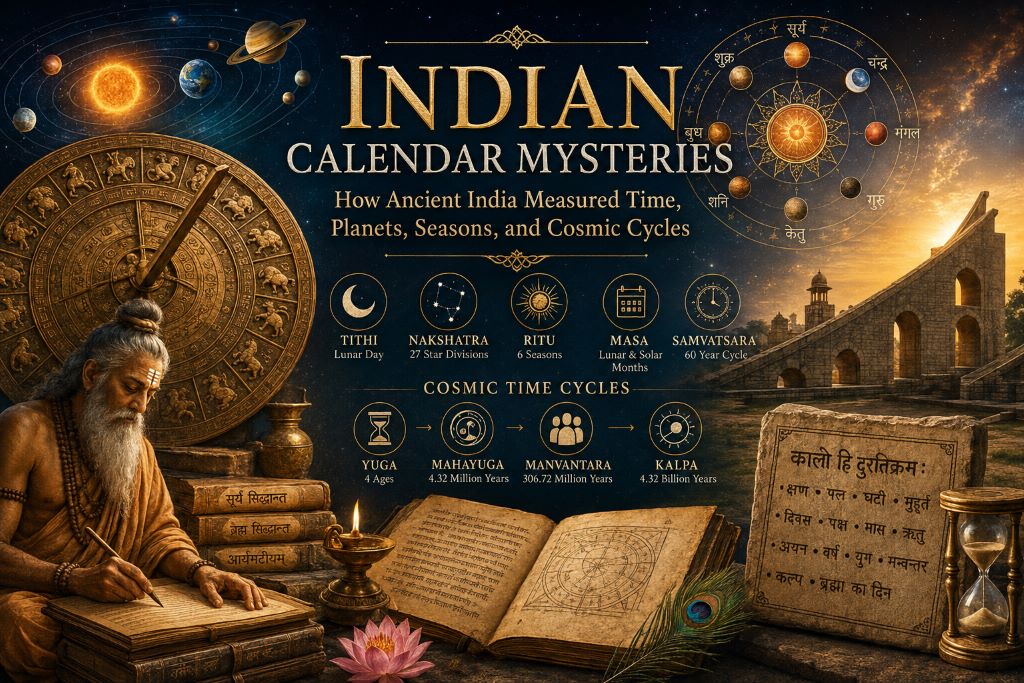
Long before mechanical clocks, modern observatories, satellites, or digital calendars existed, scholars in ancient India were studying one of humanity's most difficult questions: How can time be measu...
Read More →Mayan Calendar Mysteries: Unraveling the Secrets of One of History's Most Advanced Timekeeping Systems
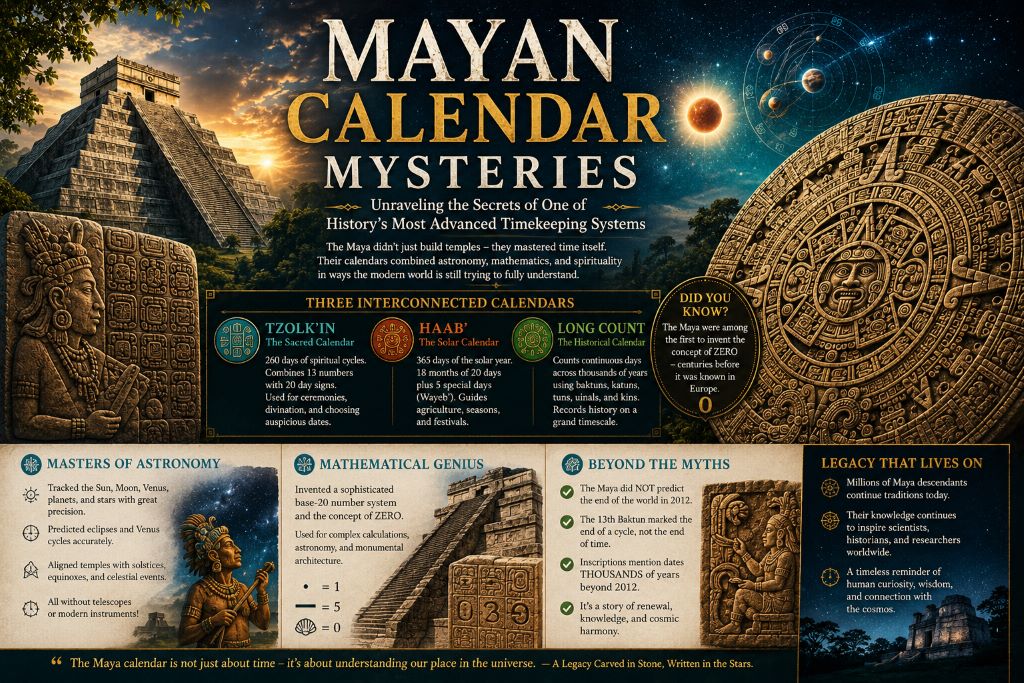
Among the many achievements of the ancient world, few have fascinated historians, archaeologists, astronomers, and the general public as much as the Mayan Calendar. It is often surrounded by mystery, ...
Read More →History of Calendars Around the World: From Ancient Civilizations to Modern Timekeeping
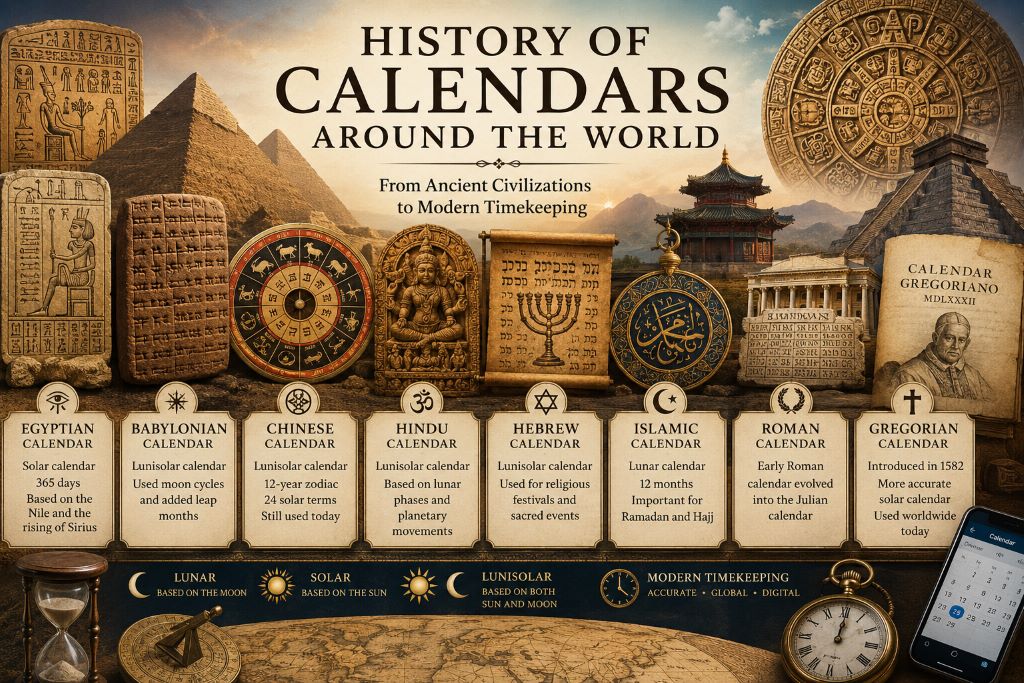
Time has always been one of humanity's greatest mysteries. Long before mechanical clocks, atomic clocks, and smartphones, ancient people needed a reliable way to measure the passing of days, months, a...
Read More →What is AM and PM? Complete Guide to 12-Hour Time Explained
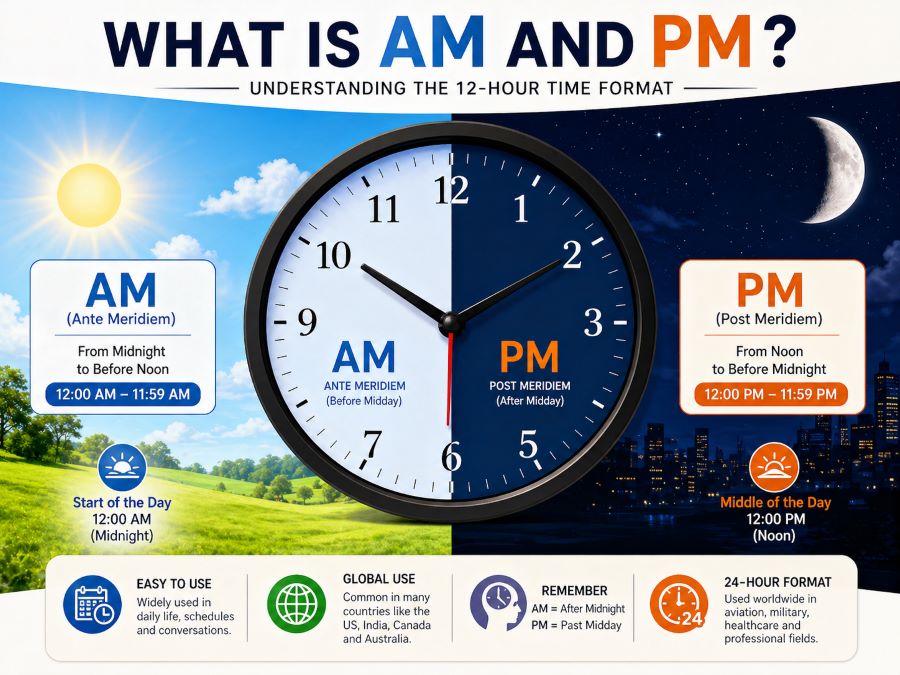
Time is one of the most universal systems used in everyday life. We use it to organize work, school, travel, appointments, communication, and countless other activities. Although the measurement of ti...
Read More →The Evolution of Timekeeping: From Sundials to Smartwatches
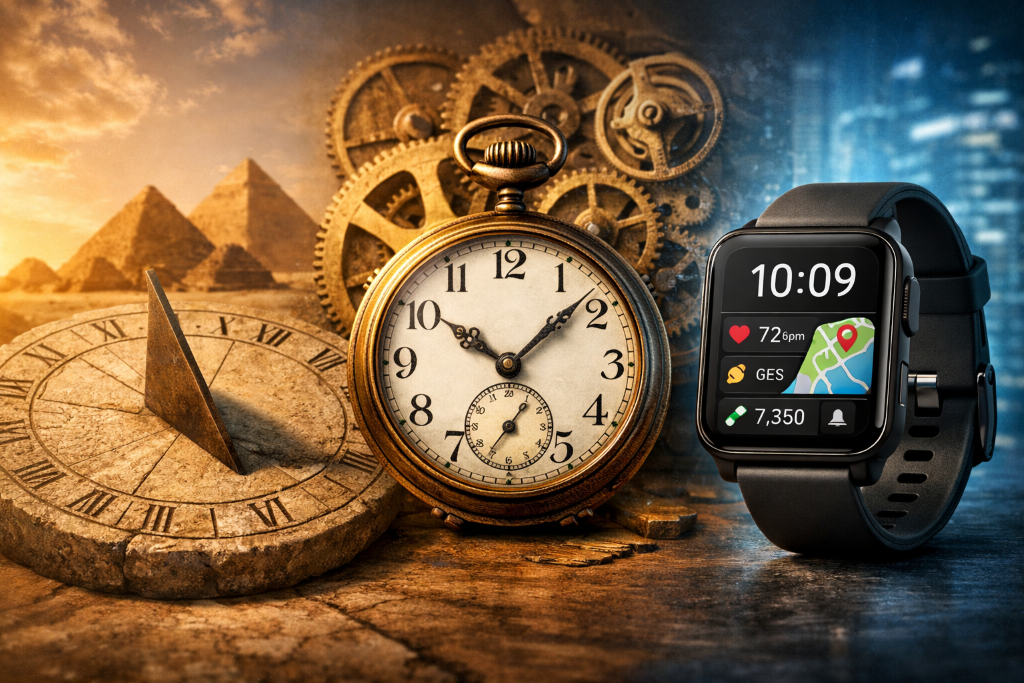
Imagine a world without clocks, watches, smartphones, alarms, or digital calendars. There would be no exact 9:00 AM meetings, train timetables, school periods, or countdowns to important events. Peopl...
Read More →