
🏛️ Dravidian Architecture
See monumental gopurams, vimanas, pillared mandapas, temple tanks and detailed stone sculptures.
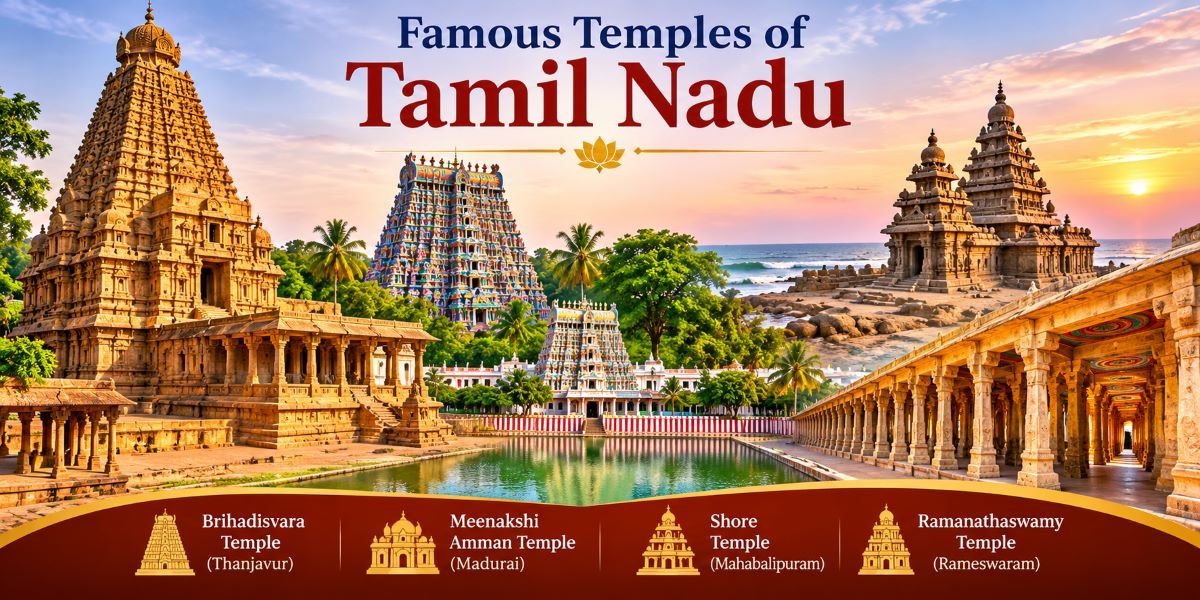
Discover Tamil Nadu's remarkable temple heritage — from the towering Chola vimanas and colourful gopurams of major pilgrimage centres to the ancient rock-cut and coastal monuments of the Pallava era.
Tamil Nadu is one of India's most important regions for historic temple architecture and living religious traditions. Across the state, temple towns preserve centuries of worship, craftsmanship, music, festivals and community life. Their architecture is especially associated with the Dravidian tradition, recognised for carefully planned sanctums, pillared halls, sculpted stonework and monumental gateway towers known as gopurams.
The state's temple heritage reflects the contributions of several historic dynasties, including the Pallavas, Cholas, Pandyas and later South Indian kingdoms. Their patronage shaped distinctive architectural forms, temple complexes and artistic traditions that continue to influence the cultural identity of Tamil Nadu.
Among the most significant heritage groups are the Great Living Chola Temples — Brihadisvara at Thanjavur, Brihadisvara at Gangaikondacholapuram and Airavatesvara at Darasuram — inscribed on the UNESCO World Heritage List in 1987. The Group of Monuments at Mahabalipuram, including the celebrated Shore Temple, was inscribed in 1984.
Beyond these UNESCO-listed monuments, visitors can explore major pilgrimage centres such as Madurai, Rameswaram, Srirangam, Tiruvannamalai, Kanchipuram, Chidambaram, Thiruvanaikaval, Chennai and Palani. Each destination offers its own history, rituals, festivals and architectural character.
See monumental gopurams, vimanas, pillared mandapas, temple tanks and detailed stone sculptures.
Explore landmark monuments that reveal the architectural and artistic achievements of historic Tamil dynasties.
Experience active temple towns where daily rituals, annual festivals and devotional practices remain part of community life.
Visit the Great Living Chola Temples and the Group of Monuments at Mahabalipuram, recognised for their global cultural significance.
Home to Brihadisvara Temple and the wider Great Living Chola Temples heritage, including Gangaikondacholapuram and Darasuram.
Known for Meenakshi Amman Temple and long-standing pilgrimage routes across southern Tamil Nadu.
An historic temple city associated with major Shaiva and Vaishnava temples and Pallava-era heritage.
Features Pallava rock-cut monuments, monolithic rathas, open-air reliefs and the coastal Shore Temple.
Generally more comfortable for sightseeing and walking around large temple complexes, although local conditions vary.
A practical time for temple visits, especially in warmer months. Check each temple's own worship and visitor schedule.
Major festivals offer insight into local traditions but can bring large crowds, processions and changes to access arrangements.
Heat, humidity and seasonal rain can affect travel comfort. Plan breaks, carry water and check weather conditions.
These well-known temples represent different periods, traditions and regions of Tamil Nadu. Use the links below to jump to each temple's overview on this page.
Brihadisvara Temple, also known as Peruvudaiyar Kovil, is one of the most celebrated achievements of Chola architecture. Commissioned by Rajaraja I and consecrated around 1010 CE, the temple is recognised for its monumental vimana, carefully organised courtyard, sculptural details and historic inscriptions.
It forms part of the UNESCO-listed Great Living Chola Temples. The monument demonstrates the scale, technical skill and artistic ambition of the Chola period, while continuing to function as a place of worship.
Meenakshi Amman Temple is a defining landmark of Madurai and an important centre of Tamil religious and cultural life. The complex is associated with Goddess Meenakshi and Lord Sundareswarar and is admired for its monumental gateway towers, sculptural decoration, halls and sacred spaces.
The temple's architecture and festivals are closely connected with the identity of Madurai. Visitor access, ritual schedules and photography rules should be checked locally before arrival.
The Shore Temple stands beside the Bay of Bengal at Mamallapuram, also known as Mahabalipuram. Built during the Pallava period, it is part of the Group of Monuments at Mahabalipuram, a UNESCO World Heritage Site inscribed in 1984.
The coastal complex is known for its structural stone shrines and its place within a wider landscape of Pallava rock-cut caves, monolithic rathas and open-air reliefs. The monuments illustrate an important phase in the development of early South Indian temple architecture.
Ramanathaswamy Temple is one of the best-known pilgrimage destinations in Rameswaram, an island town in the Gulf of Mannar region. Dedicated to Lord Shiva, the temple is widely admired for its long pillared corridors, sculpted pillars, sacred water tanks and strong association with the Ramayana pilgrimage tradition.
Rameswaram is also visited for its coastal setting and nearby sacred sites. Pilgrims should follow the temple's current bathing, dress and entry instructions.
Located on Srirangam island near Tiruchirappalli, Sri Ranganathaswamy Temple is a major Vaishnava pilgrimage centre dedicated to Lord Ranganatha, a reclining form of Vishnu. Its extensive complex contains multiple enclosures, gateways, halls and shrines that reflect centuries of temple development.
The temple remains an active religious institution and a significant destination for devotees, architecture enthusiasts and visitors interested in Sri Vaishnava traditions.
Arunachaleswarar Temple stands at the base of Annamalai Hill in Tiruvannamalai and is associated with Lord Shiva as the element of fire in the Pancha Bhoota Sthalam tradition. The large temple complex is known for its gateways, spacious courtyards and close connection with the sacred hill.
The Karthigai Deepam festival is an especially important annual observance in the town and attracts large numbers of pilgrims. Travel and accommodation should be planned well ahead during major festival periods.
Ekambareswarar Temple is one of Kanchipuram's major Shaiva temples and is traditionally associated with the earth element among the Pancha Bhoota Sthalams. The complex is recognised for its tall gopuram, extensive courtyards, pillared spaces and long history of worship.
Kanchipuram is also known for several other historic temples, making it a rewarding destination for visitors exploring the region's religious architecture.
Nataraja Temple in Chidambaram is dedicated to Shiva in the form of Nataraja, the cosmic dancer. The temple is particularly associated with the idea of divine dance and the Chidambara Rahasyam, and its architecture includes prominent gopurams, halls and ritual spaces.
The temple's traditions connect worship, music, dance and philosophy, giving it an important place in Tamil Shaiva heritage.
Airavatesvara Temple at Darasuram was built under the Chola ruler Rajaraja II in the 12th century. It forms one of the three components of the UNESCO-listed Great Living Chola Temples, together with Brihadisvara at Thanjavur and Brihadisvara at Gangaikondacholapuram.
The temple is admired for its finely detailed stone work, sculptural programme and distinctive mandapa conceived with chariot-like features. Its scale differs from the larger Brihadisvara temples, but its craftsmanship is exceptionally elaborate.
Jambukeswarar Temple, near Srirangam in the Tiruchirappalli region, is traditionally associated with the water element in the Pancha Bhoota Sthalam tradition. Dedicated to Lord Shiva, the temple is known for its sacred water-related symbolism, enclosures and historic Dravidian architectural features.
Kapaleeshwarar Temple is a prominent landmark in Mylapore, Chennai. Dedicated to Lord Shiva, it is recognised for its colourful gopuram, temple tank, sculptural details and its place within one of the city's oldest cultural neighbourhoods.
The surrounding Mylapore area offers an opportunity to experience Chennai's traditional streets, music, food and festival culture.
Palani is one of the most important pilgrimage centres dedicated to Lord Murugan. The Dhandayuthapani Swamy Temple stands on a hill and draws devotees throughout the year, especially during major Murugan festivals.
Visitors should check current hill access, transport facilities, queue arrangements and temple guidance before travelling, particularly during festival seasons.
Dravidian temple architecture is one of the defining artistic traditions of southern India. Common features include a sanctum (garbhagriha), halls or mandapas, enclosing corridors, temple tanks and monumental entrance towers known as gopurams. The sanctum may be crowned by a vimana, while sculpted pillars and stone panels enrich the wider complex.
Architectural forms changed over time as dynasties expanded existing shrines, added halls and gateways, and supported new sculptural and ritual programmes. Tamil Nadu's temples therefore preserve evidence of several periods of design, patronage and religious practice.
The Pallavas helped shape early structural and rock-cut temple architecture, particularly around Kanchipuram and Mamallapuram. Their monuments include cave sanctuaries, monolithic rathas and early structural temples that influenced later South Indian building traditions.
The Cholas expanded temple construction on a remarkable scale, leaving major monuments at Thanjavur, Gangaikondacholapuram and Darasuram. Later Pandyas and other South Indian rulers contributed to the growth of temple towns, sculptural programmes, mandapas and monumental gopurams.
These buildings are not only historic monuments. Many remain active places of worship where daily rituals, annual festivals, music, craft traditions and community practices continue.
Temple opening hours, darshan schedules, entry arrangements, dress guidance and photography rules differ by location and can change. Confirm details with the temple administration or official tourism sources before visiting.
Many temples are active places of worship. Dress respectfully, follow posted instructions, remove footwear where required and be considerate during prayers and ceremonies. Some inner areas may be restricted to certain visitors.
Plan a heritage-focused journey around Thanjavur, Gangaikondacholapuram and Darasuram to explore the three components of the Great Living Chola Temples. Allow time for travel between the sites and check monument access information in advance.
Madurai and Rameswaram can form part of a southern Tamil Nadu itinerary. Meenakshi Amman Temple and Ramanathaswamy Temple are major destinations, but travel time, festival crowds and local schedules should shape the plan.
A northern Tamil Nadu route can combine the temple heritage of Kanchipuram with the Pallava monuments at Mamallapuram. The coastal setting and rock-cut monuments make Mamallapuram a distinct stop on a temple and architecture itinerary.
Tamil Nadu has a broad rail, road and air transport network. Chennai, Madurai, Tiruchirappalli and Coimbatore are among the useful transport hubs depending on the route. Check current train, bus and flight schedules before finalising intercity travel.
Tamil Nadu is renowned for its Dravidian temple architecture, monumental gopurams, historic temple towns, sculpture, festivals and living worship traditions.
The Great Living Chola Temples include Brihadisvara at Thanjavur, Brihadisvara at Gangaikondacholapuram and Airavatesvara at Darasuram. The Group of Monuments at Mahabalipuram includes the Shore Temple.
There is no single official ranking. Brihadisvara, Meenakshi Amman, Shore Temple and Ramanathaswamy are among the best-known temple landmarks.
October through March is often more comfortable for sightseeing, though weather differs across the state and festival dates may affect crowd levels.
It is a South Indian architectural tradition often featuring a sanctum, vimana, pillared mandapas, enclosing corridors, sculptural decoration and monumental gopurams.
Tamil Nadu follows India Standard Time (IST), UTC+05:30, throughout the year.