🕌 Mughal Architecture
Discover the symmetry, marble architecture, ornamental details and craftsmanship that define the Taj Mahal complex.
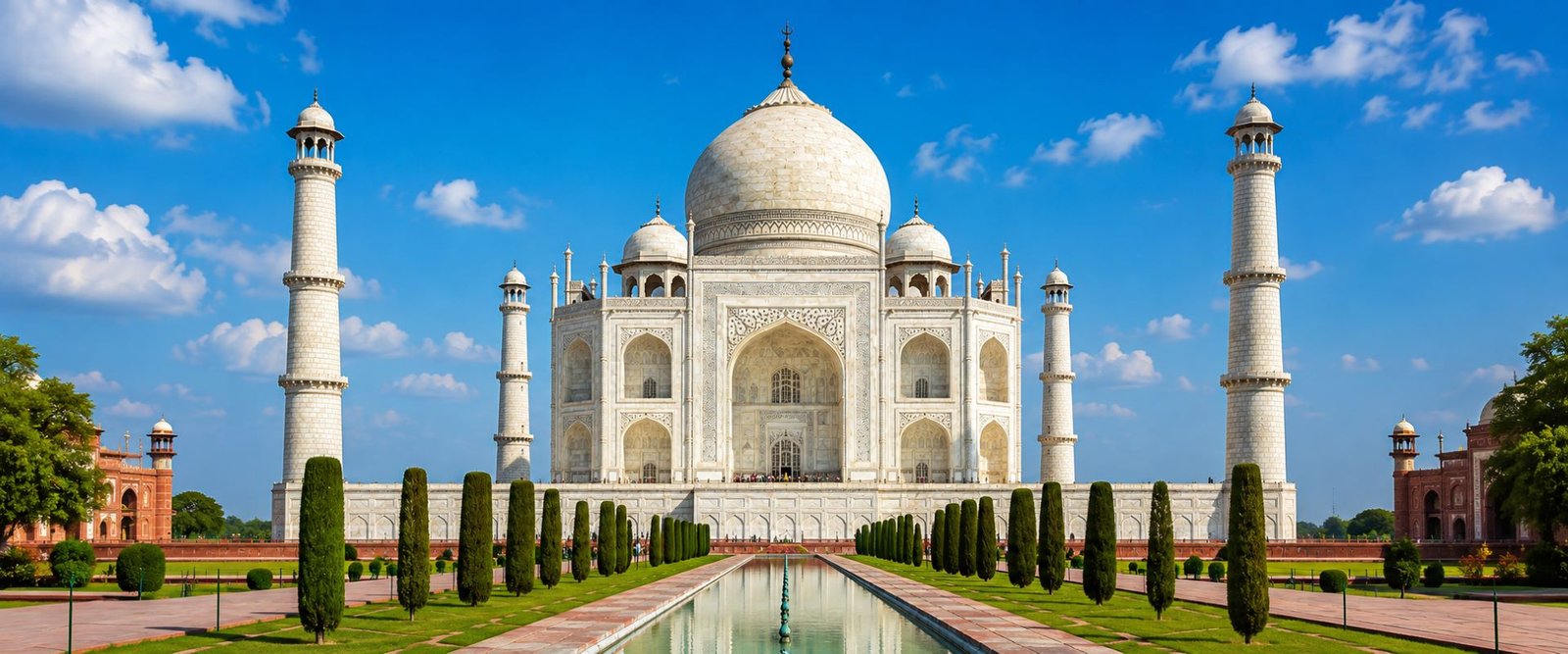
 Taj Mahal
Explore the Taj Mahal in Agra, Uttar Pradesh — one of the world's most celebrated monuments of Mughal architecture and a UNESCO World Heritage Site.
The Taj Mahal is an immense white-marble mausoleum on the banks of the Yamuna River in Agra, Uttar Pradesh. It was commissioned by Mughal emperor Shah Jahan in memory of Mumtaz Mahal and is regarded as one of the great masterpieces of Indo-Islamic architecture.
UNESCO describes the monument as a masterpiece distinguished by its balance, symmetry, craftsmanship and harmonious architectural composition. The wider Taj complex occupies a large Mughal garden and includes the principal mausoleum, mosque, guest house and monumental gateway.
Construction began in the 17th century, with the main mausoleum completed in 1648. Craftspeople including masons, stone-cutters, inlayers, carvers, painters and calligraphers were brought from across the Mughal empire and beyond.
The Taj Mahal became a UNESCO World Heritage Site in 1983 and remains one of India's most important cultural and architectural attractions.
Discover the symmetry, marble architecture, ornamental details and craftsmanship that define the Taj Mahal complex.
Early morning light creates changing tones across the marble and is one of the most popular ways to experience the monument.
The landscaped gardens, reflecting pools and carefully aligned pathways form an important part of the Taj Mahal's visual composition.
The monument's symmetry, reflecting pools and changing natural light offer exceptional photography opportunities.
The official Taj Mahal tourism website states that the monument normally opens 30 minutes before sunrise and closes 30 minutes before sunset. It is closed for general viewing every Friday.
Opening times, ticketing arrangements and visitor rules can change. Always verify current information through the official Taj Mahal tourism website and Archaeological Survey of India ticketing information before travelling.
The official Taj Mahal tourism website currently lists separate admission categories for Indian/OCI visitors, foreign visitors and SAARC/BIMSTEC visitors. Visiting the main mausoleum requires an additional ticket.
The official tourism website currently lists ₹50 for general Taj Mahal entry, with an additional ₹200 ticket for the main mausoleum.
The official tourism website currently lists ₹1,100 for general entry, with an additional ₹200 ticket for the main mausoleum.
The official tourism information states that children below 15 years do not require an entry ticket.
Ticket prices and booking arrangements may change. Check the official ticketing information before purchase.
The early morning is popular for softer light, cooler temperatures and a quieter atmosphere.
These months are generally preferred by travellers looking for more comfortable conditions in Agra.
Late afternoon provides a different visual character as the marble responds to changing sunlight.
Limited night viewing is available under separate rules and ticketing arrangements around the full-moon period.
Agra is much more than the Taj Mahal. Its historic landscape includes Mughal forts, gardens, tombs and heritage sites.
A focused one-day itinerary can begin with an early-morning Taj Mahal visit, followed by Agra Fort and one or two nearby heritage attractions. Visitors can finish the day with a sunset view from across the Yamuna.
With two days, travellers can explore the Taj Mahal at sunrise, spend additional time at Agra Fort and visit Itimad-ud-Daulah, Mehtab Bagh and other historic sites. A second day can also be used for Fatehpur Sikri and other nearby excursions.
Agra is one of India's most popular heritage destinations for travellers arriving from Delhi. The city can be reached by rail, road and air, making it suitable for both short visits and longer Uttar Pradesh itineraries.
The Taj Mahal is located in Agra District, Uttar Pradesh, India, on the right bank of the Yamuna River.
The Taj Mahal was commissioned by Mughal emperor Shah Jahan in memory of his wife Mumtaz Mahal.
Yes. The Taj Mahal was inscribed on the UNESCO World Heritage List in 1983.
The Taj Mahal is closed for general viewing every Friday.
Normal visiting hours are from 30 minutes before sunrise until 30 minutes before sunset.
Sunrise is especially popular because of the softer light and cooler conditions. October through March is commonly preferred for comfortable travel.
Limited night viewing is available around the full-moon period under separate ticketing and visitor rules. Check the official Taj Mahal tourism website before planning a night visit.
Popular nearby attractions include Agra Fort, Mehtab Bagh, Itimad-ud-Daulah, Akbar's Tomb and Fatehpur Sikri.
For current visiting hours, ticket prices, night viewing arrangements and visitor rules, travellers should consult the official Taj Mahal tourism website and the Archaeological Survey of India ticketing information.
GlobalTime.io provides destination information and local time information for travellers. Official monument rules, prices and operating arrangements should always be verified before a visit.