
🕌 Sacred Harmandir Sahib
Visit the central shrine of Sikhism, set within the waters of the Amrit Sarovar.
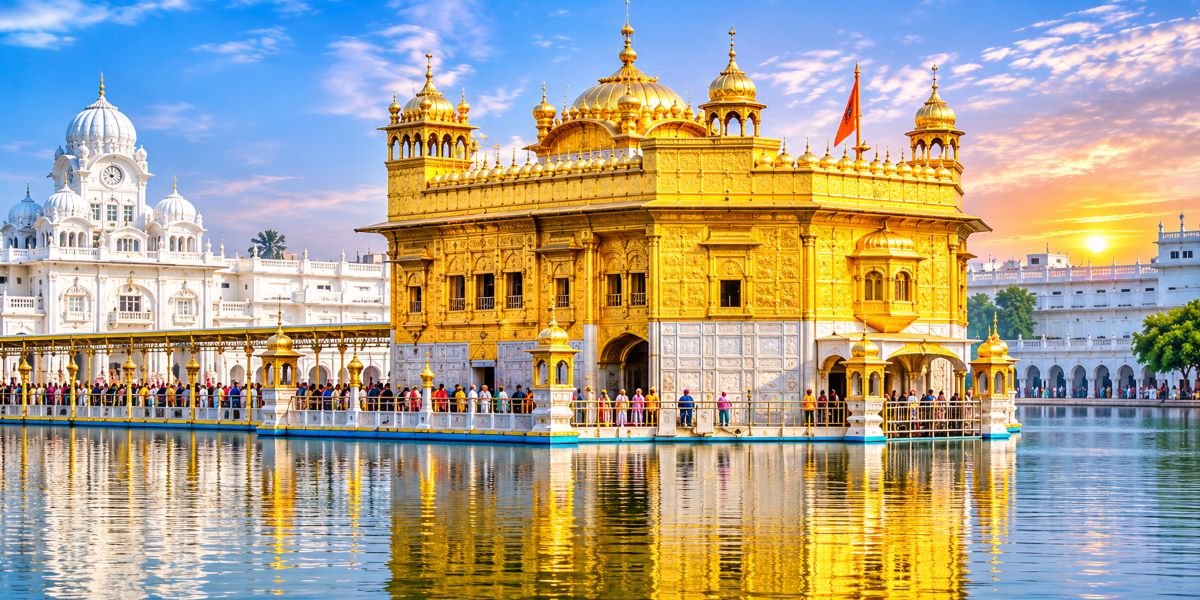
Discover Sri Harmandir Sahib, widely known as the Golden Temple — the central Sikh place of worship in Amritsar, celebrated for its gilded shrine, sacred pool, devotional kirtan and tradition of welcoming people from every background.
Sri Harmandir Sahib, also known as Sri Darbar Sahib and popularly called the Golden Temple, is located in the heart of Amritsar, Punjab. It is the central religious place of Sikhism and a living centre of prayer, reflection, music and community service. The shrine stands within the Amrit Sarovar, a sacred pool whose waters and marble pathways form an integral part of the complex.
The town of Amritsar grew around the sacred pool associated with Guru Ram Das Ji, the fourth Sikh Guru. Guru Arjan Sahib, the fifth Guru, developed the shrine at the centre of the pool. The Adi Granth was installed at Sri Harmandir Sahib in 1604, with Baba Buddha Ji appointed as its first granthi. The shrine's four entrances express an invitation to people from every direction and background.
The building is approached by a causeway across the sarovar and is admired for its harmonious proportions, marble work, decorative surfaces and gilded upper sections. Maharaja Ranjit Singh supported the gilding of the shrine in the nineteenth century, contributing to the name by which it is widely known around the world.
The complex is also renowned for the Guru Ka Langar, a community kitchen where meals are served free of charge to visitors. Volunteers take part in preparing, serving and cleaning, reflecting the Sikh practice of seva and the values of equality and sharing.
Visit the central shrine of Sikhism, set within the waters of the Amrit Sarovar.
The four-sided access is a powerful expression of welcome, openness and human equality.
Experience the community kitchen tradition, where free meals are served to all visitors.
Listen respectfully to the devotional singing and recitation that shape the atmosphere of the shrine.
Sri Harmandir Sahib is the spiritual centre of the complex. Its position within the sarovar and its approach by a causeway create a distinctive setting for prayer and reflection. The shrine is open to people of all faiths and backgrounds, subject to the shared rules of the sacred premises.
Visitors are asked to maintain a respectful manner, keep their heads covered, remove footwear and follow the directions of the sevadars and management.
The Amrit Sarovar is the sacred pool around which the city and shrine developed. Its still water reflects the gilded building, marble parikrama and surrounding structures. The pool is central to the identity and devotional life of the complex.
Visitors should follow the posted guidance for the sarovar and use only the designated areas and facilities. Respect the sanctity of the water and the worshippers who come for prayer.
Akal Takht Sahib, meaning the Throne of the Timeless One, stands within the Golden Temple complex opposite the main shrine. It was established by Guru Hargobind Sahib and holds a central place in Sikh history and the tradition of Sikh temporal authority.
The Akal Takht is an important part of the wider sacred precinct. Visitors should observe the same respectful conduct and any specific instructions in force at the time of their visit.
Langar is the free community meal served to visitors without distinction of religion, caste, gender, nationality or social position. People sit together in pangat, sharing a simple meal as an expression of equality and fellowship.
Volunteers contribute through seva, including preparing food, serving meals and washing utensils. Visitors who wish to participate should follow the guidance of the volunteers and respect the kitchen's working arrangements.
The Central Sikh Museum, located within the wider complex, presents aspects of Sikh history and heritage through portraits, artworks and historical displays. It can add context to a visit for travellers interested in the Sikh Gurus, historical events and the development of the community.
Check current access arrangements and photography rules locally, as museum schedules and visitor policies may differ from those of the main shrine.
The history of Amritsar is closely linked with Guru Ram Das Ji, the fourth Sikh Guru, who established the settlement and initiated the development of the sacred pool in the sixteenth century. The pool became the focal point around which the city grew.
Guru Arjan Sahib, the fifth Sikh Guru, developed Sri Harmandir Sahib at the centre of the sarovar. The foundation of the shrine was laid in 1588, and the Adi Granth was ceremonially installed there in 1604. Baba Buddha Ji served as its first granthi.
The shrine experienced destruction and rebuilding during periods of conflict in the eighteenth century. In the early nineteenth century, Maharaja Ranjit Singh provided support for the marble and gilded work that gave the building its distinctive golden appearance.
Today, Sri Harmandir Sahib remains a living place of worship and service. Daily prayers, kirtan, the care of the sarovar and the langar are sustained through the participation and seva of the sangat.
The Golden Temple is distinguished by its setting within the Amrit Sarovar, its lower-level approach, the causeway leading to the sanctum and its four entrances. The plan and approach communicate humility and welcome rather than imposing a single privileged direction of entry.
Marble surfaces, decorative inlay, gilded copper and intricate ornament contribute to the shrine's visual character. The reflection of the gold-covered upper structure in the surrounding water is one of its most recognisable views, especially in changing daylight and after dark.
The complex is known for day-and-night access, but the daily religious programme, entry flow and access to particular areas follow management arrangements. Check current SGPC information and on-site notices before visiting.
Cover your head, remove footwear, dress modestly and wash your feet at the facilities provided before entering. Smoking, tobacco and intoxicants are prohibited within the sacred premises. Follow current photography restrictions and instructions from the sevadars.
There is no entry fee for the shrine. Langar is offered free of charge. Donations are voluntary; use official donation arrangements if you wish to contribute.
Sri Guru Ram Dass Jee International Airport serves Amritsar. From the airport, visitors can continue to the old city by taxi or other local transport. Allow extra time during busy periods.
Amritsar Junction is the city's main railway station and is a short drive from the Golden Temple area. Local traffic and pedestrian restrictions may affect the final approach.
Amritsar is connected by road with major cities in Punjab and neighbouring states. Buses, taxis and private vehicles serve the city; check local parking and drop-off arrangements near the old city.
Jallianwala Bagh is a memorial site commemorating the people killed and wounded during the 1919 massacre. Its proximity to the Golden Temple makes it a significant place to learn about the history of India's freedom movement. Check current memorial opening arrangements before visiting.
The Partition Museum documents personal stories, objects, photographs and memories connected with the 1947 Partition of India. It offers historical context for understanding the experiences of families and communities affected by the division.
Durgiana Temple is an important Hindu place of worship in Amritsar. Its architecture, sacred water tank and devotional traditions make it another notable religious landmark in the city.
Plan enough time to enter the complex, walk around the sarovar and visit the main shrine. Queues can vary significantly with the day, season, religious calendar and time of visit.
If you wish to take part in langar, follow the volunteers' directions and the shared dining arrangements. Visitors may also observe or participate in appropriate seva where invited and guided by the volunteers.
Combine your visit with nearby heritage sites such as Jallianwala Bagh and the Partition Museum. Leave time for travel between locations and verify their current opening schedules independently.
Amritsar experiences hot summers, a monsoon season and cool winters. Early mornings and evenings can be more comfortable for walking outdoors, while festival days and public holidays may bring larger crowds.
Its official name is Sri Harmandir Sahib. It is also known as Sri Darbar Sahib and is popularly called the Golden Temple.
Guru Ram Das Ji established the sacred pool and founded the town of Amritsar. Guru Arjan Sahib developed the shrine at the centre of the pool and installed the Adi Granth there in 1604.
Yes. People of all faiths and backgrounds are welcome. Everyone is expected to follow the same visitor etiquette and instructions within the sacred complex.
Yes. Guru Ka Langar serves free community meals to visitors. The langar tradition reflects equality, sharing and selfless service.
Cover your head, remove your footwear, wash your feet at the designated facility and follow the instructions displayed at the entrance.
Amritsar follows India Standard Time (IST), UTC+05:30, throughout the year.