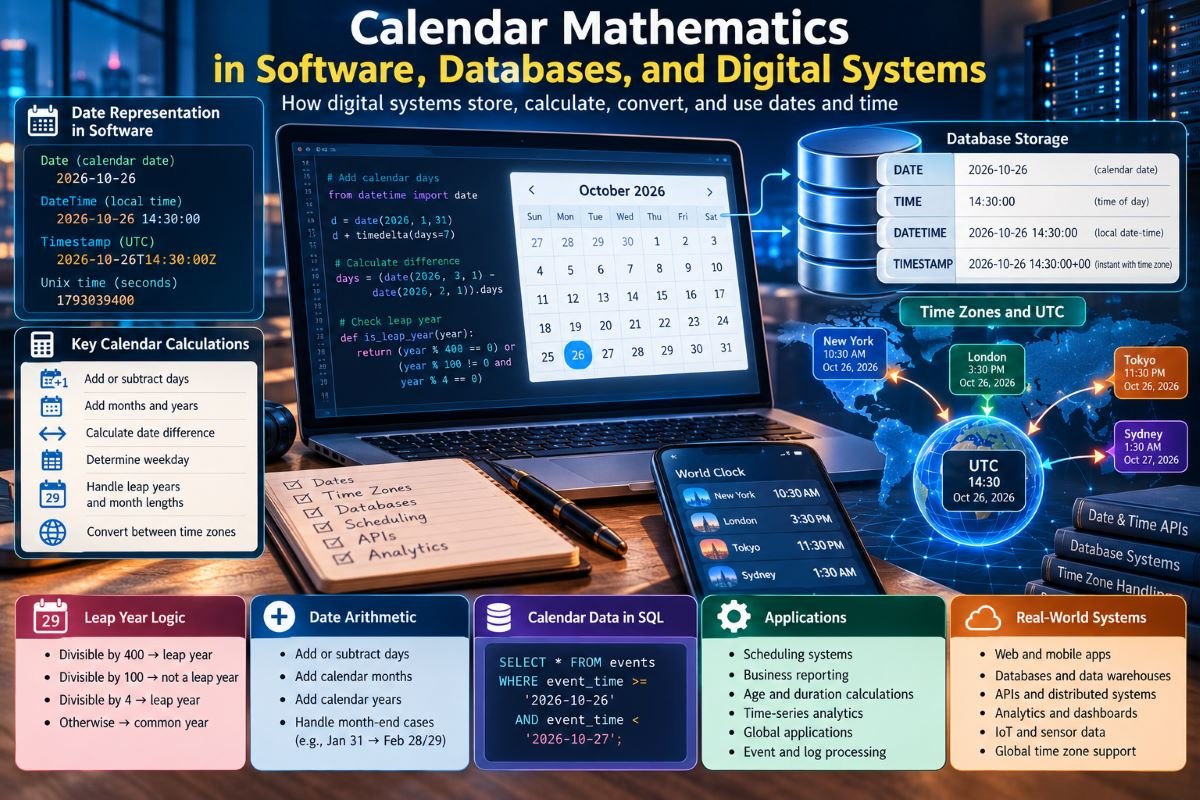
Calendars are essential to modern digital systems. Every time a user schedules a meeting, a database records an order, an application calculates an age, or a server processes a timestamp, software mus...
Read More →How Calendar Mathematics Is Calculated, Determined, and Applied
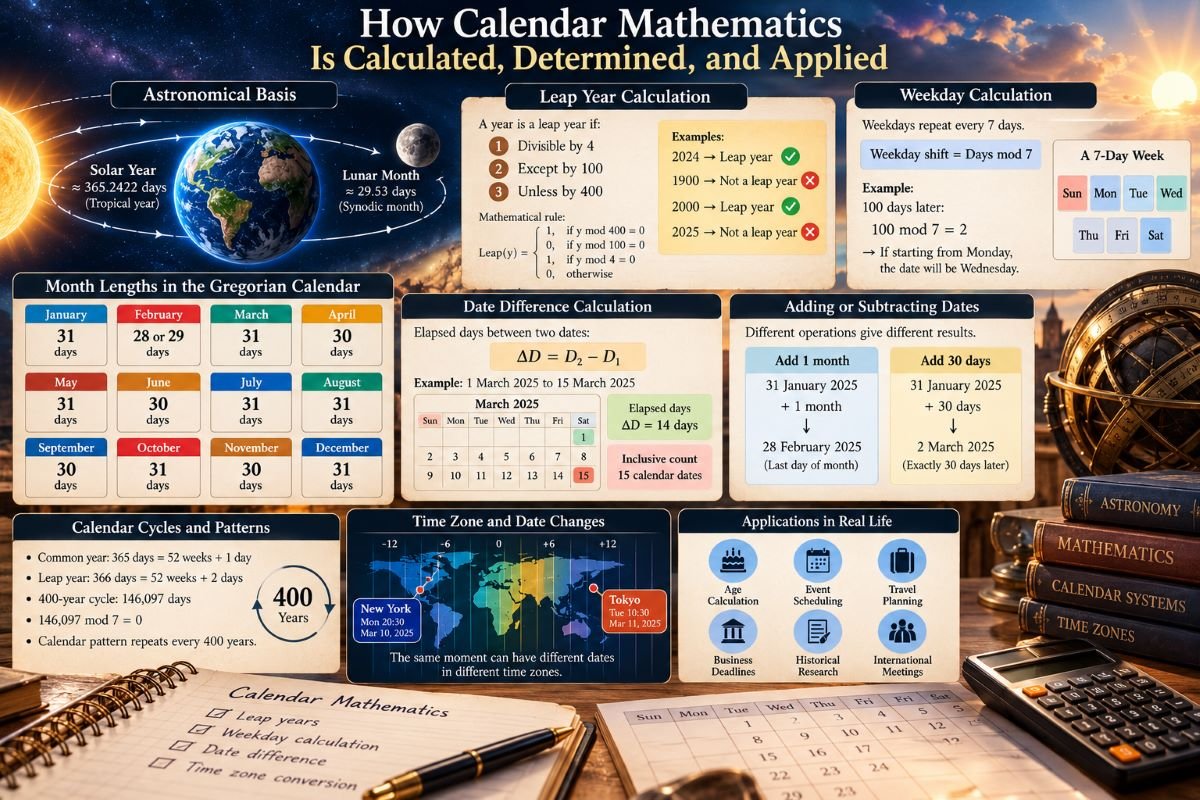
Calendar mathematics is the practical use of mathematical rules to calculate dates, determine weekdays, measure intervals between events, identify leap years, and organize time into a consistent syste...
Read More →The Structure of Calendar Mathematics: Its Main Components Explained
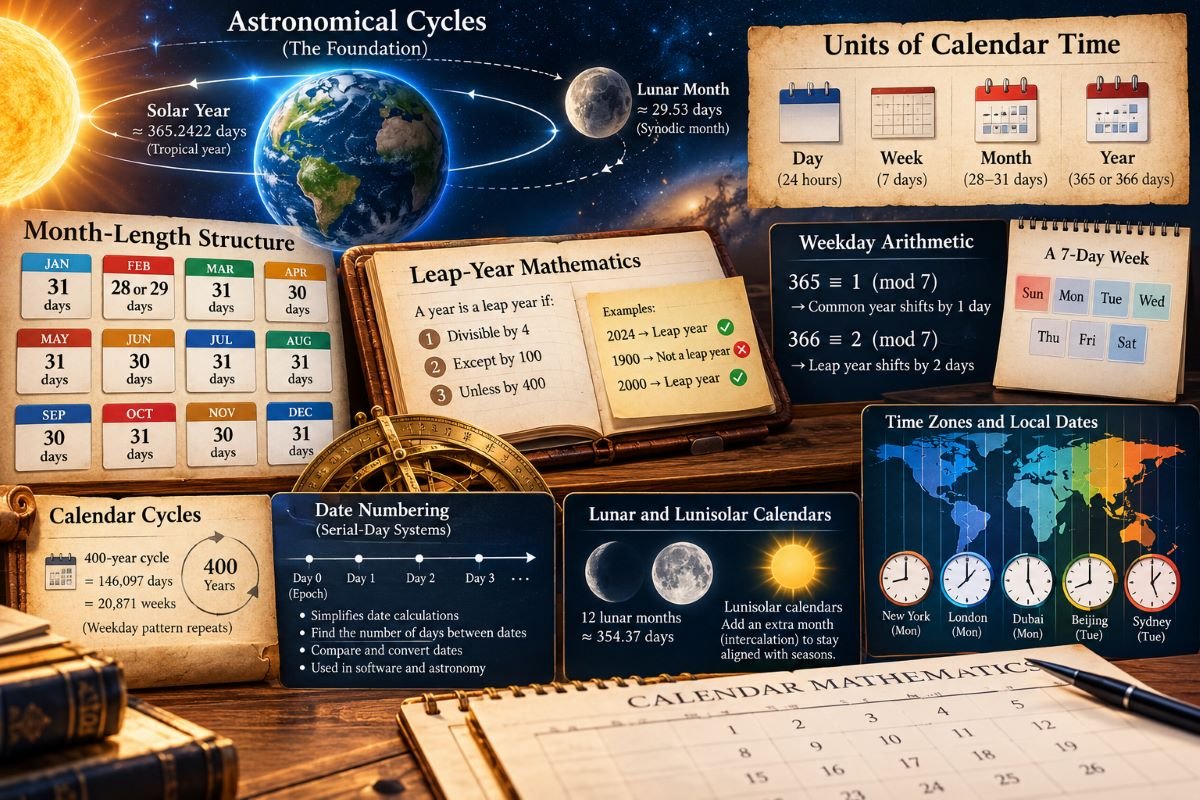
Calendars are among the most familiar systems used in everyday life, yet their underlying structure involves a surprisingly complex combination of astronomy, arithmetic, numerical patterns, and time m...
Read More →The Origins of Calendar Mathematics: How the System Developed
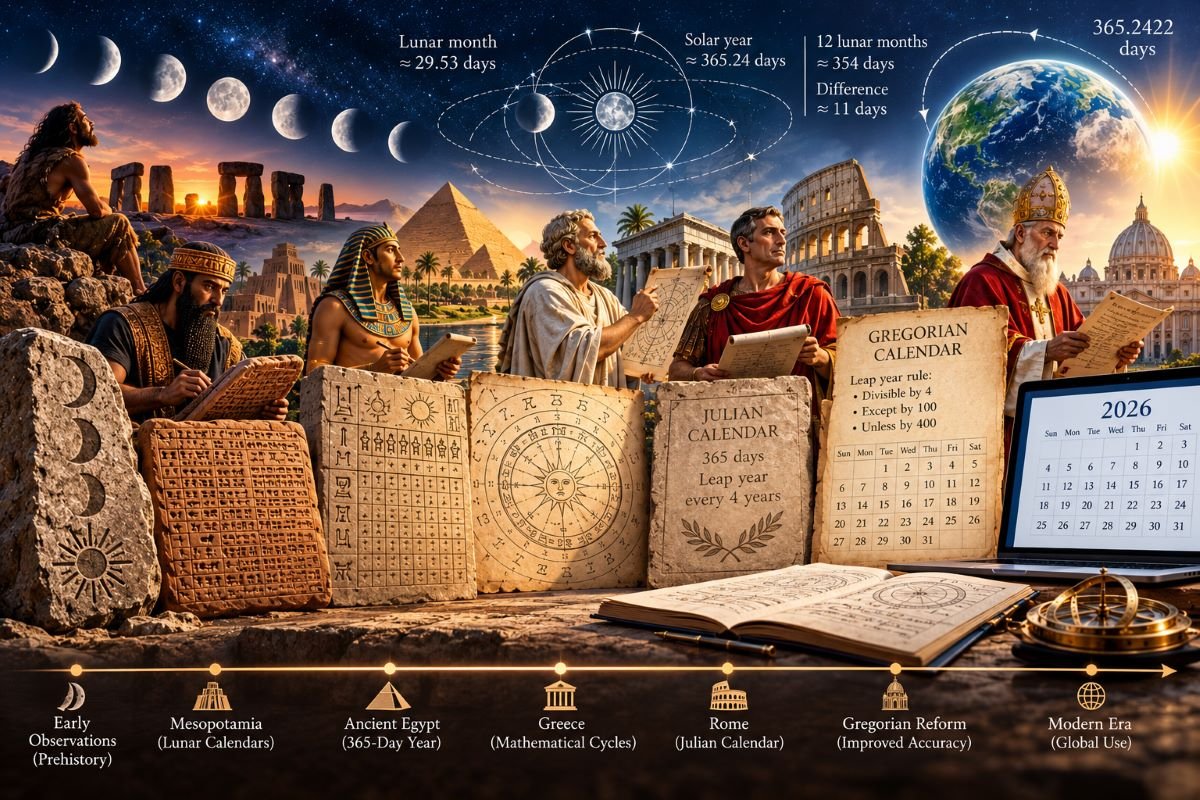
Long before digital clocks, printed calendars, and date-calculation software existed, human societies faced a fundamental challenge: how to measure the passage of time and organize it into a reliable ...
Read More →Understanding Calendar Mathematics: Definition, Scope, and Core Concepts

Calendars are often treated as simple tools for organizing dates, weeks, months, and years. We use them to schedule appointments, plan holidays, calculate ages, record historical events, and determine...
Read More →