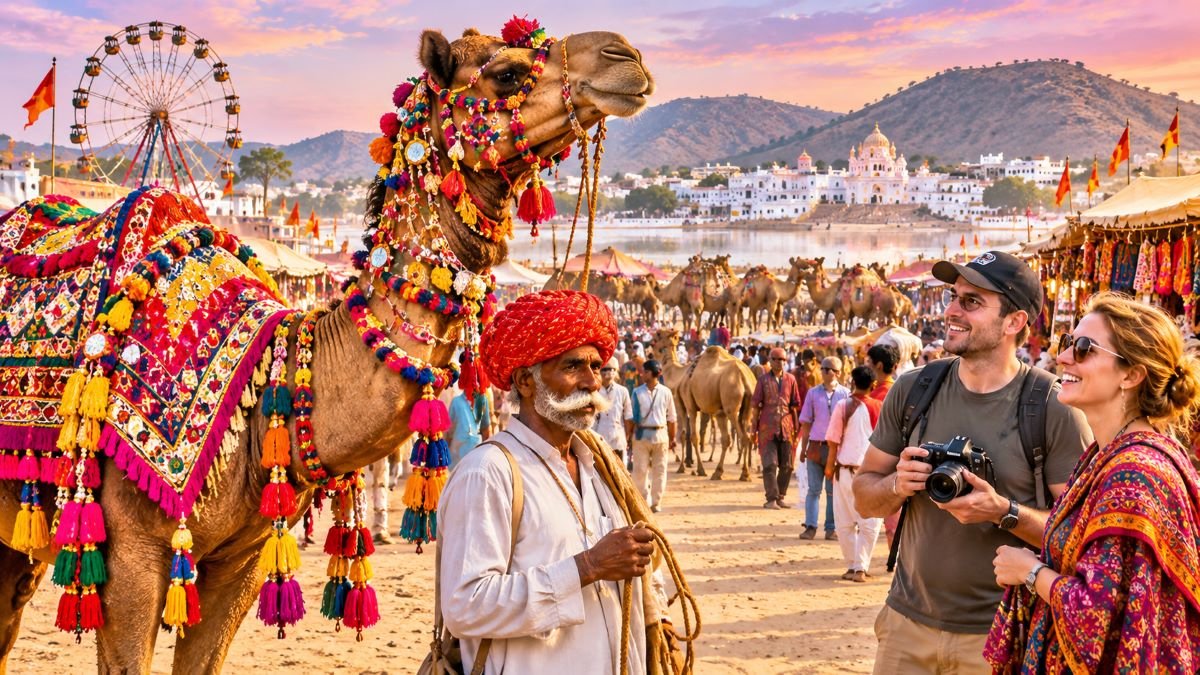
Pushkar Fair in India: A Complete Guide to Rajasthan's Famous Camel Festival and Cultural Celebration
Introduction
Imagine a vast desert landscape filled with decorated camels, colourful traditional clothing, folk music, bustling marketplaces, and travellers from different parts of the world. This is the atmosphere of the Pushkar Fair, one of India's most distinctive cultural gatherings.
Also known as Pushkar Mela or the Pushkar Camel Fair, this annual event takes place in Pushkar, a historic town in Rajasthan, northwestern India. It brings together traditional livestock traders, local communities, pilgrims, artisans, photographers, and international visitors for a celebration that combines rural commerce, religious traditions, and cultural entertainment.
For international travellers, the Pushkar Fair offers an opportunity to experience a side of India that goes beyond its famous cities, monuments, and modern attractions. Visitors can discover traditional camel trading, explore local handicrafts, listen to Rajasthani folk music, taste regional food, and learn about the spiritual importance of Pushkar Lake.
The festival is particularly interesting because it combines two different experiences: a traditional livestock fair and an important Hindu pilgrimage gathering. Understanding both aspects helps international visitors appreciate why Pushkar has become such a memorable destination.
Where Is Pushkar and Why Is It Famous?
Pushkar is a small historic town in Ajmer district, in the Indian state of Rajasthan. It lies near the Aravalli mountain range and is surrounded by hills and a landscape that gradually transitions into the dry terrain of northwestern India.
The town is approximately 15 kilometres from Ajmer and is accessible by road from major Rajasthan destinations, including Jaipur.
Pushkar is known for three important features:
- Pushkar Camel Fair: An annual livestock and cultural gathering featuring camels, horses, traditional markets, and local celebrations.
- Pushkar Lake: A sacred lake surrounded by bathing ghats and religious sites.
- Brahma Temple: A significant Hindu temple dedicated to Lord Brahma, the deity associated with creation in Hindu tradition.
These attractions make Pushkar both a cultural destination and an important pilgrimage centre.
What Is the Pushkar Fair?
The Pushkar Fair is an annual gathering traditionally associated with camel and livestock trading. It usually takes place during October or November, according to the Hindu lunar calendar.
For generations, livestock owners and traders from Rajasthan and neighbouring regions have travelled to Pushkar to buy, sell, and display animals. Camels have traditionally been particularly important because of their role in transportation, agriculture, and rural life in desert regions.
Over time, the gathering developed into a much broader cultural event. Traditional animal trading now takes place alongside folk performances, handicraft markets, competitions, religious ceremonies, and activities designed for visitors.
The fair generally lasts several days, with the religious observances associated with Kartik Purnima forming an important part of the wider celebration. The exact programme and dates vary each year.
The Rajasthan Tourism Department recognizes Pushkar Fair as one of the major camel and livestock fairs in the region.
The History and Cultural Origins of Pushkar Fair
The origins of Pushkar Fair are closely connected with the religious importance of Pushkar town.
For centuries, Hindu pilgrims have travelled to Pushkar during the month of Kartik to visit its sacred lake and participate in religious ceremonies. The full moon day of Kartik, known as Kartik Purnima, is considered particularly auspicious.
As pilgrims gathered in the town, rural communities also began using the occasion for livestock trading and commercial exchanges. Farmers and breeders brought animals to the area, creating a seasonal marketplace.
Camels were especially valuable in Rajasthan's dry environment. They were traditionally used for carrying goods, travelling across difficult terrain, and supporting agricultural activities.
The combination of pilgrimage, livestock trading, and community gatherings gradually shaped the event into the famous Pushkar Fair known today.
Its modern identity reflects both the traditional economy of Rajasthan and the growing interest of domestic and international tourists in Indian cultural festivals.
Why Is Pushkar Lake Important?
Pushkar Lake is one of the most important religious landmarks in Rajasthan.
According to Hindu mythology, Lord Brahma dropped a lotus flower onto the earth, and the place where it fell became Pushkar Lake. This traditional story explains the spiritual significance of the town and its association with Lord Brahma.
The lake is surrounded by numerous bathing ghats, which are stone steps leading down to the water. Pilgrims visit these ghats to pray, perform religious rituals, and take ceremonial baths.
During Kartik Purnima, large numbers of devotees gather at the lake. The occasion is particularly important because many Hindus believe that bathing in its sacred waters on this day brings spiritual merit.
For international visitors, Pushkar Lake provides an opportunity to understand the religious traditions that form an essential part of the town's identity.
Visitors should remember that the ghats are active places of worship, not simply tourist photography locations. Respecting local customs and following posted instructions is important.
What Can International Visitors Experience at Pushkar Fair?
The fair offers a variety of experiences that allow overseas visitors to explore Rajasthan's cultural heritage.
1. Decorated Camels and Traditional Livestock Trading
Decorated camels are among the most recognizable sights of Pushkar Fair.
Camel owners prepare their animals with colourful fabrics, ornaments, bells, and traditional decorations. Some animals are presented in competitions and displays that highlight their appearance and grooming.
Visitors can also observe livestock traders negotiating and examining animals. These activities provide insight into the traditional relationship between desert communities and camels.
The fair is not simply a performance for tourists; livestock trading remains part of its historical character.
2. Traditional Rajasthani Music and Dance
Rajasthan has a rich folk music and dance heritage, and Pushkar Fair offers visitors opportunities to experience it.
Performances may include traditional singing, regional instruments, folk dances, and cultural presentations.
The music, colourful costumes, and lively atmosphere create a memorable experience for people discovering Indian regional culture for the first time.
Evening cultural programmes may also be organized as part of the official fair schedule.
3. Unique Competitions and Rural Games
The fair is known for its unusual and entertaining competitions.
Some traditional and visitor-oriented activities include:
- Longest moustache competitions
- Turban-tying contests
- Matka Phod, a traditional pot-breaking activity
- Camel decoration competitions
- Rural sports and community games
These activities highlight local customs and provide visitors with a closer look at Rajasthan's community celebrations.
4. Handicraft Markets and Shopping
Pushkar's temporary markets are popular with visitors interested in traditional Indian craftsmanship.
Local traders and artisans sell a variety of products, including:
- Embroidered textiles and colourful fabrics
- Traditional jewellery and accessories
- Leather products
- Decorative handicrafts
- Handmade souvenirs
- Regional clothing and fabrics
Shopping at these markets can be a good way to discover Rajasthan's artistic traditions and support local businesses.
5. Camel Safaris and Desert Experiences
Camel rides and desert excursions are popular tourism activities around Pushkar.
Visitors may have opportunities to explore the surrounding landscape, experience the atmosphere of rural Rajasthan, and enjoy views of the desert environment.
Some travel operators also arrange overnight camping and other outdoor experiences.
When choosing a camel-related activity, international visitors should check animal welfare practices, safety arrangements, and the reputation of the operator.
6. Hot-Air Ballooning and Adventure Activities
Depending on the year and the availability of authorized operators, hot-air ballooning and other adventure activities may be offered during the fair period.
A balloon flight can provide a different perspective of Pushkar, its surrounding hills, and the colourful fairground.
These activities depend on weather, permissions, and safety conditions, so visitors should check the current programme before making plans.
The Religious Celebration of Kartik Purnima
Kartik Purnima is the full moon day of the Hindu lunar month of Kartik. It is one of the most important religious occasions associated with Pushkar Fair.
Pilgrims travel from different parts of India to visit Pushkar Lake and participate in religious ceremonies. Many devotees take a ceremonial bath, offer prayers, and visit nearby temples.
The Brahma Temple is an important destination during this period. Dedicated to Lord Brahma, it is one of Pushkar's most significant religious landmarks.
The combination of religious observances and livestock trading makes Pushkar Fair different from many other cultural festivals around the world.
International visitors who attend during this period can observe how religion, community life, and traditional commerce come together in one historic town.
What Food Should You Try at Pushkar Fair?
Food is another enjoyable part of discovering Rajasthan's culture.
Visitors can find local restaurants, food stalls, and temporary market vendors serving regional dishes and Indian snacks.
Some popular Rajasthani dishes include:
- Dal Baati Churma: A traditional combination of lentils, baked wheat balls, and a sweet crushed wheat preparation.
- Gatte Ki Sabzi: A regional curry made with gram flour dumplings.
- Ker Sangri: A traditional desert-region preparation using local beans and berries.
- Pyaaz Kachori: A popular savoury pastry filled with spiced onions.
- Ghewar: A traditional Rajasthani sweet often associated with festive occasions.
Pushkar has a strong vegetarian food culture, particularly around religious areas. Visitors should respect local food customs and check dietary ingredients if they have specific requirements.
When Does Pushkar Fair Take Place?
Pushkar Fair generally takes place during October or November, with its dates connected to the Hindu lunar calendar.
The main religious observances are associated with Kartik Purnima, the full moon day of Kartik.
Because the festival follows a lunar calendar, its dates change every year in the Gregorian calendar used internationally.
For overseas travellers, it is important to check the official Rajasthan Tourism programme before booking flights and accommodation. The livestock activities, cultural programmes, and religious celebrations may take place across different days.
Visiting earlier in the fair period may provide opportunities to observe more of the livestock activity, while the period around Kartik Purnima offers a particularly important religious atmosphere.
How to Reach Pushkar from Other Parts of India
International visitors generally reach Pushkar through nearby transport hubs before continuing to the town by road.
By Air
Jaipur International Airport is a major option for travellers arriving from other parts of India and international destinations through connecting flights.
Kishangarh Airport is another nearby option, depending on available flight connections.
From the airport, visitors can arrange a taxi or other onward transport to Pushkar.
By Train
Ajmer is the nearest major railway hub for many travellers visiting Pushkar.
Ajmer has rail connections with several Indian cities. From there, Pushkar can be reached by taxi, bus, or local transport.
By Road
Pushkar is connected by road to Ajmer and other destinations in Rajasthan.
Visitors travelling from Jaipur can plan a road journey to Pushkar, while Ajmer provides a convenient nearby starting point.
During the fair, traffic and transport demand may increase, so advance planning is recommended.
Travel Tips for International Visitors
A little preparation can make a visit to Pushkar Fair more comfortable.
Book accommodation early: Hotels, guesthouses, and temporary camps can become busy during the festival. Reserve accommodation well in advance, especially around Kartik Purnima.
Carry suitable clothing: October and November can offer pleasant daytime conditions, but early mornings and evenings may be cooler. Comfortable walking shoes, sun protection, and light layers are useful.
Carry some Indian currency: Although digital payments are common in many Indian businesses, cash can still be useful at smaller stalls and local markets. The Indian Rupee (INR) is the local currency.
Respect religious customs: Dress modestly around temples and sacred ghats. Follow instructions regarding footwear, photography, and access to religious areas.
Ask before taking photographs: Many visitors and performers welcome photography, but it is respectful to ask permission before photographing individuals, especially during religious ceremonies.
Stay hydrated: Walking around the fairground can involve considerable time outdoors. Carry drinking water and take breaks when needed.
Choose responsible animal experiences: Avoid activities that involve unsafe handling or mistreatment of animals. Give animals adequate space and follow the guidance of their handlers.
Check official schedules: Festival activities, performance timings, and transport arrangements can vary each year.
Why Should International Travellers Visit Pushkar Fair?
Pushkar Fair offers a cultural experience that is difficult to understand through photographs alone.
It introduces visitors to traditional rural commerce, regional craftsmanship, religious practices, music, food, and the importance of livestock in Rajasthan's history.
For travellers interested in photography, the fair offers colourful visual scenes. For cultural explorers, it provides opportunities to understand local customs and community life. For those interested in religious heritage, Pushkar Lake and the Brahma Temple offer a deeper perspective on Hindu traditions.
The festival also provides a connection between local communities and visitors from different countries, making it an important cultural meeting point.
Conclusion
Pushkar Fair in India is much more than a camel festival. It is a celebration of Rajasthan's rural heritage, traditional commerce, religious beliefs, and vibrant cultural identity.
From decorated camels and lively handicraft markets to folk music, regional food, Pushkar Lake, and Kartik Purnima ceremonies, the fair offers a diverse experience for international visitors.
Whether you are interested in photography, history, traditional festivals, spiritual destinations, or cultural travel, Pushkar provides an opportunity to discover a distinctive part of India.
For international travellers seeking an authentic introduction to Rajasthan, the Pushkar Fair is a memorable journey into the traditions, landscapes, and community life of northwestern India.
Comments
No comments yet.