Introduction
The Lantern Festival is one of China's most beautiful and culturally significant traditional celebrations. Known in Chinese as Yuanxiao Jie (元宵节), it takes place on the fifteenth day of the first month of the traditional Chinese lunisolar calendar. It marks the first full moon of the Lunar New Year and traditionally brings the Spring Festival celebrations to a close.
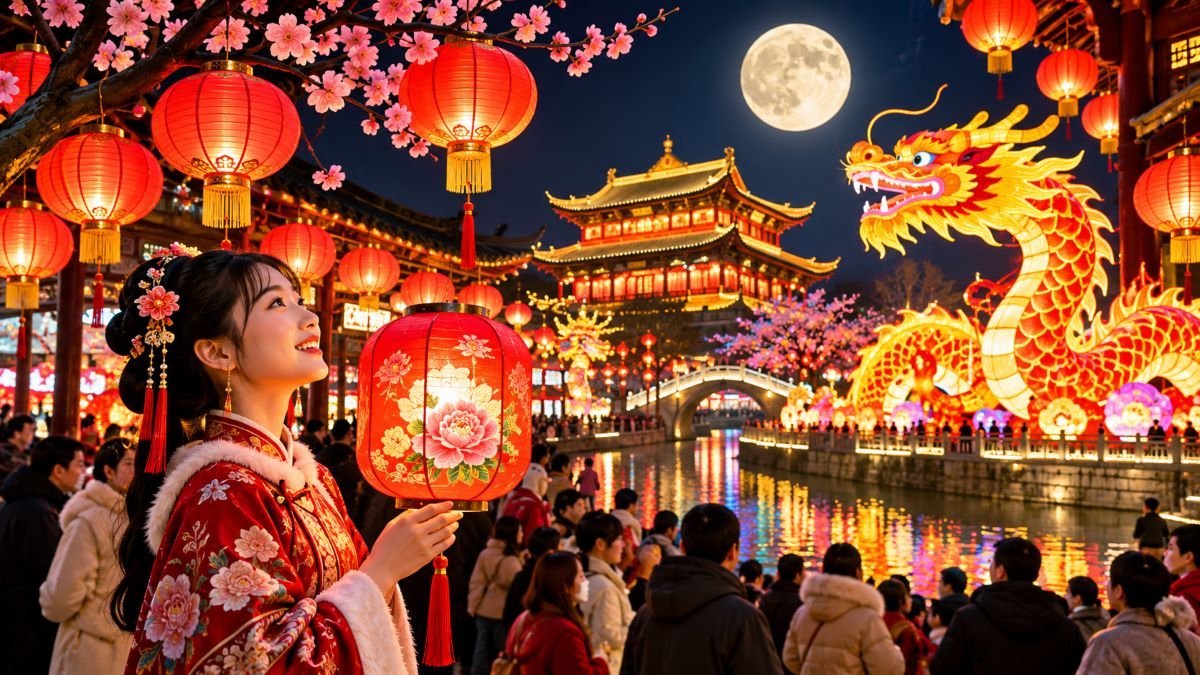
During this occasion, cities, towns, villages, temples, parks, and public spaces across China become illuminated with colorful lanterns. Families gather to enjoy traditional foods, solve lantern riddles, watch cultural performances, and appreciate the symbolic beauty of the first full moon of the new year.
Although the Lantern Festival is closely associated with Chinese New Year, it has its own history, customs, symbolism, and cultural identity. Its traditions reflect important Chinese values, including family unity, happiness, prosperity, hope, and the relationship between people and the changing seasons.
Today, the celebration attracts international attention through spectacular lantern displays, traditional performances, cultural exhibitions, and community events. Chinese communities around the world also celebrate the occasion, helping preserve its traditions across generations.
Understanding the Lantern Festival provides a meaningful introduction to Chinese cultural heritage, traditional calendar systems, seasonal celebrations, and the importance of family and community in Chinese society.
1. What Is the Lantern Festival?
The Lantern Festival is a traditional Chinese celebration observed on the fifteenth day of the first lunar month. It is commonly regarded as the final major celebration of the Chinese New Year period.
The Chinese name, Yuanxiao Jie, combines two cultural ideas. Yuan refers to the beginning or first month, while Xiao refers to the night. Together, the name is associated with the first full-moon night of the new lunar year.
The festival is particularly recognizable for its illuminated lanterns. Traditional lanterns are made using materials such as bamboo, paper, silk, and wood. They may feature animals, flowers, mythical creatures, historical characters, geometric patterns, or symbolic designs.
Red and gold are especially common colors because they are traditionally associated with happiness, good fortune, prosperity, and celebration.
The Lantern Festival is not simply an occasion for decorating streets with lights. It represents the completion of the New Year celebration cycle and provides an opportunity for families and communities to come together.
Its major characteristics include:
- Displaying colorful traditional lanterns.
- Gathering with family members.
- Eating Yuanxiao or Tangyuan.
- Solving traditional lantern riddles.
- Watching dragon and lion dances.
- Participating in cultural performances.
- Enjoying the first full moon of the lunar year.
Although customs differ between regions, the central themes of light, happiness, togetherness, and new beginnings remain important.
2. History and Origins of the Lantern Festival
The history of the Lantern Festival developed over many centuries. Its origins are associated with ancient Chinese religious practices, imperial ceremonies, seasonal customs, and Buddhist traditions.
Historians generally connect the development of the celebration with several cultural influences rather than a single confirmed founding event.
Early Historical Traditions
Some historical accounts connect early lantern-related celebrations with ancient rituals marking the changing seasons and the beginning of a new agricultural year.
In traditional Chinese society, the lunar calendar played an important role in agriculture, religious observances, and community activities. The first full moon of the new year therefore held particular symbolic importance.
Early celebrations gradually developed into occasions involving nighttime gatherings, ceremonial lighting, and public festivities.
Han Dynasty Influence
The Han Dynasty (206 BCE–220 CE) is frequently mentioned in historical discussions of the Lantern Festival.
One popular traditional account associates the festival's development with Emperor Ming of the Eastern Han Dynasty and the spread of Buddhism in China.
According to this account, the emperor encouraged the lighting of lanterns in imperial and religious settings to honor the Buddha. This practice is traditionally linked to the fifteenth day of the first lunar month.
However, the historical development of the festival was more complex, and its customs cannot be attributed exclusively to this story.
Development During the Tang Dynasty
During the Tang Dynasty (618–907 CE), Chinese society experienced significant cultural and economic growth.
Lantern displays became increasingly elaborate, particularly in major cities. Public celebrations featured decorative lights, nighttime entertainment, music, and social gatherings.
The festival became an important occasion for people to experience public festivities and admire artistic lantern designs.
Expansion During the Song Dynasty
The Song Dynasty (960–1279 CE) played an important role in expanding the cultural activities associated with the Lantern Festival.
Lantern displays became more sophisticated, and lantern riddles gradually became an important form of entertainment.
Night markets, street performances, food stalls, and public celebrations contributed to the festival's popularity.
These developments helped establish many traditions that remain recognizable today.
Later Dynasties and Modern Development
During the Ming and Qing dynasties, lantern-making became increasingly diverse.
Craftspeople created lanterns in the shapes of animals, flowers, buildings, mythical figures, and other artistic subjects.
Different regions developed their own distinctive styles and celebration practices.
In modern China, the Lantern Festival continues to combine traditional customs with contemporary entertainment. Large illuminated installations, themed exhibitions, digital lighting, and public cultural programs have expanded the ways people experience the celebration.
3. Why Is the Lantern Festival Celebrated?
The Lantern Festival celebrates the first full moon of the lunar year and traditionally concludes the Spring Festival period.
Its cultural significance extends beyond the appearance of lanterns.
Symbol of Family Reunion
Family unity is one of the most important themes associated with the celebration.
The round shape of the full moon symbolizes completeness and reunion in Chinese culture. Families traditionally gather to share food, enjoy the evening, and spend time together.
This symbolism is particularly meaningful during the Lunar New Year period, when people often travel long distances to return to their hometowns.
Symbol of Light and Hope
Lanterns illuminate streets and public spaces, creating an atmosphere of happiness and optimism.
Light is commonly associated with hope, guidance, knowledge, and the removal of darkness.
For many participants, displaying lanterns represents positive wishes for the coming year.
Wishes for Good Fortune
Traditional lantern designs frequently include symbols associated with prosperity, happiness, longevity, and success.
Colors, decorative patterns, written messages, and symbolic figures communicate these wishes.
The festival therefore provides an opportunity for individuals and families to express hopes for health, harmony, and good fortune.
Celebration of a New Beginning
As the final major event of the traditional New Year celebration period, the Lantern Festival represents a transition from holiday festivities toward everyday life.
It brings together the themes of renewal, gratitude, and optimism that are central to the wider Lunar New Year season.
4. Traditional Lanterns and Their Cultural Symbolism
Lanterns are the most recognizable feature of the celebration.
Traditional Chinese lantern-making is a craft that combines artistic design, construction techniques, decorative painting, and cultural symbolism.
Red Lanterns
Red is one of the most popular colors used during Chinese celebrations.
Red lanterns are traditionally associated with happiness, good fortune, vitality, and protection against misfortune.
They are commonly displayed in streets, homes, shopping districts, temples, and public gathering spaces.
Gold and Yellow Lanterns
Gold and yellow lanterns often represent prosperity, wealth, dignity, and abundance.
These colors are especially popular in elaborate festival decorations.
Animal-Shaped Lanterns
Animal-shaped lanterns are a major part of traditional lantern art.
Common designs include:
- Dragons representing strength and good fortune.
- Rabbits associated with lunar mythology and gentleness.
- Fish symbolizing abundance and prosperity.
- Phoenixes representing renewal and harmony.
- Tigers symbolizing courage and protection.
The specific meanings may vary depending on the design and regional tradition.
Flower-Shaped Lanterns
Lanterns decorated with flowers are often associated with beauty, happiness, growth, and the arrival of spring.
Lotus, peony, plum blossom, and chrysanthemum designs are frequently used in Chinese decorative arts.
Modern Artistic Lanterns
Contemporary lantern exhibitions often feature large illuminated sculptures.
These may depict traditional buildings, famous historical figures, animals, landscapes, and scenes from Chinese legends.
Modern lighting technology allows organizers to combine traditional craftsmanship with artistic illumination.
5. Traditional Food: Yuanxiao and Tangyuan
Food is an essential part of the Lantern Festival.
The most recognizable festival foods are Yuanxiao and Tangyuan, both made primarily from glutinous rice flour and commonly associated with family unity and completeness.
Although their ingredients and symbolic meanings are similar, the two foods are traditionally prepared differently.
What Is Yuanxiao?
Yuanxiao is particularly associated with northern Chinese traditions.
It is commonly made by rolling small pieces of filling in dry glutinous rice flour, gradually forming round rice balls.
Common fillings include:
- Black sesame.
- Sweet bean paste.
- Peanut.
- Walnut.
- Sweetened nut mixtures.
Yuanxiao is commonly served in hot water or sweet soup.
What Is Tangyuan?
Tangyuan is especially associated with southern Chinese traditions.
It is generally prepared by mixing glutinous rice flour with water to create a soft dough. A portion of dough is flattened, filled, and shaped into a round ball.
Tangyuan can be served in sweet soups or other preparations.
Some varieties are unfilled, while others contain sesame, peanut, red bean, or other fillings.
Why Are Round Rice Balls Important?
The round shape of Yuanxiao and Tangyuan symbolizes completeness, harmony, and family reunion.
The Chinese word Tuan Yuan is associated with reunion and togetherness.
Eating these round rice balls during the Lantern Festival expresses wishes for a harmonious family life and happiness in the coming year.
Regional Differences
Northern and southern China have developed distinctive food traditions.
Yuanxiao is especially associated with northern preparation methods, while Tangyuan is widely associated with southern traditions.
However, these distinctions are not absolute. Both foods are enjoyed in different parts of the country.
6. Major Lantern Festival Traditions and Activities
The Lantern Festival includes many activities that combine artistic expression, traditional entertainment, food, and community participation.
Lantern Displays
Lantern displays are the central attraction.
People visit parks, temples, historical sites, shopping streets, and public squares to admire illuminated decorations.
Some displays are relatively simple, while others feature enormous structures requiring extensive planning and craftsmanship.
Solving Lantern Riddles
Lantern riddles, known as Dengmi, are among the most interesting traditional activities.
Riddles are written on small pieces of paper and attached to lanterns.
Visitors attempt to solve them, often using knowledge of Chinese characters, word meanings, historical references, and traditional expressions.
This activity encourages learning, creativity, and social interaction.
Dragon Dance
The dragon dance is a traditional performance frequently seen during Chinese New Year celebrations and Lantern Festival events.
Performers carry a long dragon figure using poles and coordinate their movements to create the appearance of a moving dragon.
The dragon is traditionally associated with strength, prosperity, and good fortune.
Lion Dance
Lion dancing is another popular performance.
Dancers work together inside a decorative lion costume, imitating the movements of a lion.
The performance is usually accompanied by drums, cymbals, and other traditional instruments.
It is commonly associated with welcoming good fortune and creating a festive atmosphere.
Traditional Performances
Music, folk dancing, acrobatics, storytelling, and theatrical performances may take place during festival celebrations.
Some locations organize cultural exhibitions to introduce visitors to traditional Chinese arts and craftsmanship.
Family Gatherings
Families often use the occasion to share a meal and enjoy the festival together.
For people living away from their hometowns, the celebration can provide another opportunity to reconnect with relatives and friends.
7. Famous Places to Experience the Lantern Festival in China
Different Chinese cities are known for their distinctive lantern traditions and public celebrations.
Nanjing
Nanjing has a long history of lantern celebrations.
The Qinhuai Lantern Festival is particularly famous for its traditional displays and historical atmosphere.
Visitors can experience illuminated decorations around the Qinhuai River and the historic Confucius Temple area.
Zigong
Zigong, in Sichuan Province, is internationally recognized for its elaborate lantern festival exhibitions.
The Zigong Lantern Festival features large-scale illuminated sculptures, creative installations, and detailed artistic displays.
Its lantern-making tradition has become an important part of the city's cultural identity.
Beijing
Beijing offers a mixture of traditional and modern Lantern Festival activities.
Public parks, cultural venues, and historic locations may organize lantern exhibitions, performances, and family-friendly events.
Shanghai
Shanghai combines traditional Chinese celebration customs with contemporary city attractions.
Lantern exhibitions, illuminated installations, cultural programs, and festive food events provide different ways to experience the occasion.
Xi'an
Xi'an's historical heritage gives its lantern celebrations a distinctive atmosphere.
Lantern displays near historic landmarks and traditional cultural districts connect the festival with China's imperial history.
Harbin
Although Harbin is best known for its winter ice and snow celebrations, its seasonal illuminated displays also provide a striking setting for winter cultural events.
8. Lantern Festival and Chinese Lunar Calendar
The Lantern Festival is closely connected to the traditional Chinese lunisolar calendar.
Unlike the Gregorian calendar, which is based primarily on the Earth's annual journey around the Sun, the Chinese lunisolar calendar considers both lunar months and solar seasons.
The first month of the traditional lunar calendar begins with the Chinese New Year.
The Lantern Festival takes place on the fifteenth day of that month, corresponding to the first full moon of the lunar year.
Why Does the Date Change Every Year?
The Gregorian calendar follows a solar-year structure, whereas the Chinese traditional calendar uses lunar months.
A lunar month lasts approximately 29.5 days.
As a result, the fifteenth day of the first lunar month falls on different Gregorian calendar dates each year.
The date generally occurs in February or early March.
Relationship with the Full Moon
The fifteenth day of a lunar month is traditionally associated with the full moon.
The Lantern Festival therefore combines astronomical observation with cultural and seasonal traditions.
The full moon is particularly meaningful because its circular appearance represents wholeness and reunion.
How Is the Date Determined?
The Chinese lunisolar calendar uses astronomical calculations to determine lunar months and the placement of solar terms.
The beginning of a lunar month is associated with the astronomical new moon, while the fifteenth day is traditionally linked with the full-moon period.
This calendar system ensures that traditional celebrations remain connected to both lunar cycles and the solar seasons.
9. Lantern Festival in Modern Chinese Society
The Lantern Festival has changed considerably over time, but many traditional customs remain important.
Modern celebrations combine historical practices with technology, tourism, entertainment, and public cultural programs.
Digital Lantern Displays
LED lighting and modern projection technologies have expanded the possibilities of lantern design.
Some contemporary exhibitions feature animated lighting, interactive installations, and large illuminated structures.
Tourism and Cultural Events
Major cities organize public lantern exhibitions that attract domestic and international visitors.
These events help introduce Chinese cultural traditions to wider audiences.
Social Media and Digital Celebrations
Photographs and videos of illuminated lanterns are widely shared through digital platforms.
People who cannot attend public events can still experience aspects of the celebration through online content.
Preservation of Traditional Craftsmanship
Traditional lantern-making remains an important cultural craft.
Artisans continue to use bamboo frames, silk, paper, painting, cutting, and decorative techniques.
Cultural exhibitions and educational programs help introduce younger generations to these traditional skills.
Celebrations Outside China
Chinese communities in countries such as Singapore, Malaysia, the United States, Canada, Australia, and the United Kingdom also organize Lantern Festival activities.
These celebrations may include lantern displays, traditional foods, dragon dances, and cultural performances.
They provide opportunities for people of different backgrounds to learn about Chinese heritage.
10. The Difference Between Chinese New Year and the Lantern Festival
Although the two celebrations are closely connected, they are not the same event.
Chinese New Year begins the first day of the first lunar month, while the Lantern Festival takes place on the fifteenth day of that month.
Chinese New Year focuses heavily on welcoming the new year, family reunions, traditional meals, and wishes for prosperity.
The Lantern Festival emphasizes illuminated lanterns, the first full moon, traditional riddles, public entertainment, and the symbolic conclusion of the New Year celebration period.
| Feature | Chinese New Year | Lantern Festival |
| Date | First day of first lunar month | Fifteenth day of first lunar month |
| Main symbol | New beginnings and prosperity | Lanterns and full moon |
| Main food | Dumplings, fish and regional festive dishes | Yuanxiao and Tangyuan |
| Major activities | Family reunions, fireworks and visits | Lantern displays, riddles and performances |
| Cultural meaning | Welcoming the lunar new year | Reunion, completeness and celebration |
Together, these occasions form an important part of China's annual cultural calendar.
11. Important Symbols and Their Meanings
The Lantern Festival uses many symbols that communicate traditional Chinese cultural values.
Lanterns: Represent light, hope, happiness, and good fortune.
Full Moon: Symbolizes completeness, harmony, and family reunion.
Red Color: Traditionally associated with joy, prosperity, and good luck.
Round Rice Balls: Represent family unity and togetherness.
Dragons: Associated with strength, prosperity, and auspicious power.
Fish: Symbolize abundance and prosperity.
Flowers: Represent beauty, renewal, and the changing seasons.
These symbols help explain why the festival remains meaningful beyond its visual attractions.
12. Is the Lantern Festival a Public Holiday in China?
The Lantern Festival is an important traditional cultural celebration, but it is not generally a nationwide statutory public holiday in mainland China.
Businesses, schools, and government offices usually follow their normal schedules unless local arrangements provide otherwise.
However, many cities organize special public events, lantern exhibitions, and cultural performances.
The distinction between a traditional festival and an official public holiday is important for international visitors planning travel or business activities in China.
13. Interesting Facts About the Lantern Festival
- The Lantern Festival is celebrated on the fifteenth day of the first month of the Chinese lunisolar calendar.
- It traditionally marks the conclusion of the main Chinese New Year celebration period.
- The Chinese name of the festival is Yuanxiao Jie.
- The full moon is an important symbol of family reunion and completeness.
- Yuanxiao and Tangyuan are the festival's best-known traditional foods.
- Lantern riddles are a popular form of traditional entertainment.
- Zigong is famous for its elaborate lantern-making traditions.
- Nanjing's Qinhuai Lantern Festival is one of China's well-known regional celebrations.
- Red lanterns are widely associated with happiness and good fortune.
- Chinese communities around the world continue to celebrate the occasion.
14. Why the Lantern Festival Remains Important Today
The continued popularity of the Lantern Festival reflects the lasting value of cultural traditions in modern society.
Although lifestyles, technology, and entertainment have changed, the festival continues to offer something meaningful to different generations.
For older generations, it provides an opportunity to preserve family customs and pass cultural knowledge to younger relatives.
For younger people, lantern exhibitions, traditional foods, riddles, and public performances offer engaging ways to experience Chinese heritage.
For international visitors, the celebration provides an introduction to Chinese art, history, food, calendar traditions, and community life.
The festival also demonstrates how traditional celebrations can evolve without losing their cultural identity.
Modern lantern installations may use advanced technology, but their underlying symbolism remains connected to traditional ideas of light, hope, reunion, and happiness.
Conclusion
The Lantern Festival is much more than a nighttime display of colorful lights. It is a celebration deeply connected to Chinese history, traditional calendar systems, family relationships, artistic craftsmanship, and cultural identity.
Observed on the fifteenth day of the first lunar month, it brings the Spring Festival celebration period to a symbolic close. Its lantern displays, traditional foods, riddles, dragon dances, and family gatherings express enduring wishes for happiness, harmony, prosperity, and togetherness.
From the historic streets of Nanjing to the elaborate lantern exhibitions of Zigong, the festival continues to connect China's past with its present.
As Chinese communities around the world preserve and share these customs, the Lantern Festival remains an important example of how cultural traditions can bring people together across generations and geographical boundaries.
Whether experienced through a traditional lantern display, a bowl of Tangyuan, or the beauty of the first full moon of the lunar year, the Lantern Festival offers a memorable glimpse into China's rich cultural heritage.
Comments
No comments yet.