
Introduction: Understanding the Indian Rupee
The Indian Rupee, commonly known as INR, is the official currency of India and an important part of the country's financial and economic system. Represented by the symbol ₹, it is used for everyday purchases, salaries, banking transactions, business payments, government services and international trade involving India.
For people living in India, the rupee is the currency used to manage daily expenses, savings and financial activities. For international visitors, students, investors, businesses and people sending money to India, understanding the Indian Rupee is equally important.
India has a distinctive monetary system featuring colourful banknotes, circulation coins, a central bank and a rapidly developing digital payment ecosystem. Its banknotes display Mahatma Gandhi, while their reverse sides feature important historical monuments, cultural landmarks and scientific achievements.
The Indian Rupee also has a growing international presence through India's expanding economy, overseas trade, financial markets and cross-border payment initiatives.
Understanding the Indian Rupee helps international users compare prices, exchange currencies, plan travel expenses and participate more confidently in financial transactions involving India.
What Is the Indian Rupee (INR)?
The Indian Rupee is the official national currency of India. Its internationally recognized three-letter currency code is INR, and its commonly used symbol is ₹.
One Indian Rupee is divided into 100 smaller units called paise.
The rupee is used throughout India's 28 states and 8 union territories. It is the standard currency for consumer purchases, salaries, banking services, business transactions, taxes and government payments.
International financial institutions, banks and foreign exchange platforms use INR to distinguish Indian currency from other currencies.
For example:
- INR 100 means one hundred Indian Rupees.
- INR 500 means five hundred Indian Rupees.
- INR 1,000 means one thousand Indian Rupees.
- INR 10,000 means ten thousand Indian Rupees.
The symbol ₹ is used in everyday prices, invoices, financial reports and digital payment systems.
Understanding the Indian Rupee Symbol (₹)
The Indian Rupee symbol was officially approved by the Government of India on 15 July 2010.
Designed by D. Udaya Kumar, the symbol combines elements of the Devanagari letter 'र' and the Latin capital letter 'R'. Its two horizontal lines also create a visual reference to the national flag and the equal sign.
Before the introduction of the symbol, different abbreviations such as Rs, Re and INR were commonly used to represent Indian currency.
The new symbol gave the Indian Rupee a distinct visual identity in international financial communication.
It was incorporated into Indian banknotes and coins from 2011 onwards and became part of the Unicode standard, allowing it to be displayed in digital documents, websites and electronic communication.
The symbol is now widely recognized in India and international currency-related transactions.
History of the Indian Rupee
The history of the Indian Rupee reflects India's long-standing traditions of trade, coinage, monetary administration and economic development.
India has used different forms of money throughout its history, including ancient coins, medieval silver currency, colonial-era rupees and modern banknotes.
Early History of the Rupee
India has a long history of metallic currency.
Ancient Indian communities used different forms of coins and monetary units for trade, taxation and economic exchange.
Over centuries, regional kingdoms and empires introduced their own coins, reflecting the political authority, cultural traditions and economic conditions of their time.
During the sixteenth century, an important development took place under Sher Shah Suri.
Between 1540 and 1545, Sher Shah Suri introduced a standardized silver coin known as the Rupiya. The coin weighed approximately 178 grains and became an important predecessor of the modern Indian Rupee.
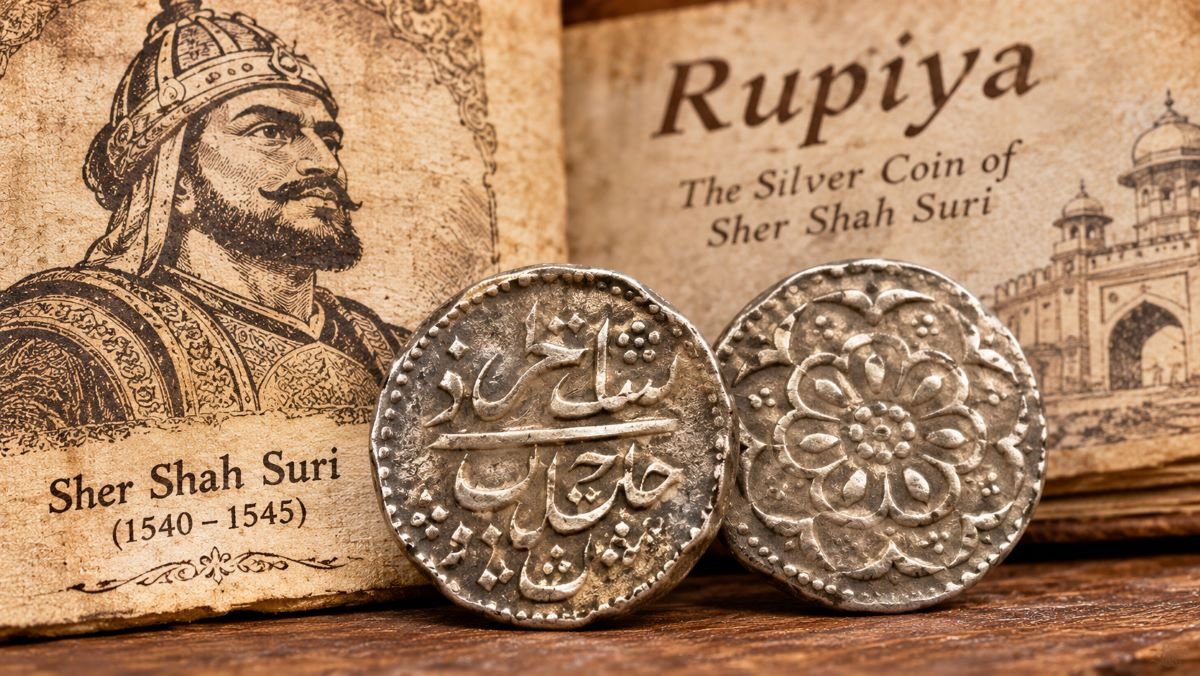
Sher Shah Suri's introduction of the silver Rupiya in the sixteenth century marked an important milestone in the history of Indian currency.
The monetary system subsequently developed further under the Mughal Empire, which helped establish greater uniformity in coinage across large parts of the Indian subcontinent.
The Rupee During British Rule
During British rule, the Indian Rupee became an important part of the colonial monetary system.
British Indian coins and banknotes circulated throughout the country, supporting trade, taxation, banking and government administration.
The monetary system evolved over time as new coinage designs, denominations and financial institutions were introduced.
The Paper Currency Act of 1861 established the government's monopoly over paper currency issuance in British India.
This was an important development in the standardization and administration of Indian banknotes.
Establishment of the Reserve Bank of India
The Reserve Bank of India (RBI) was established on 1 April 1935 under the Reserve Bank of India Act, 1934.
It became India's central banking institution and gradually assumed responsibility for managing the country's currency and monetary system.
Today, the RBI is responsible for issuing banknotes, implementing monetary policy, managing currency distribution and supporting financial stability.
Coins are produced by the Government of India and issued into circulation through the Reserve Bank.
Indian Currency After Independence
India gained independence from British rule on 15 August 1947.
Following independence, the country's monetary system gradually developed its own identity.
The first distinctive Republic of India coinage was introduced on 15 August 1950.
The earlier monetary structure initially continued, with one rupee divided into 16 annas.
In 1950, the first Republic India banknotes were issued in denominations of ₹2, ₹5, ₹10 and ₹100.
The King’s portrait was replaced by the Lion Capital of Ashoka Pillar, representing the identity and sovereignty of independent India.
Decimalisation of the Indian Rupee in 1957
One of the most important changes in Indian currency history occurred on 1 April 1957, when India adopted a decimal-based monetary system.
Before decimalisation, one rupee was divided into 16 annas or 64 pice.
Following the reform, one rupee was divided into 100 paise.
The new decimal units were initially called Naya Paisa to distinguish them from the previous monetary system.
The word Naya was removed from 1 June 1964, after which the unit became known simply as Paisa.
Decimalisation simplified calculations, pricing, accounting and financial transactions.
It also helped bring India's monetary system into line with the decimal-based systems used by many other countries.
Introduction of Mahatma Gandhi Banknotes
An important development in Indian banknote design took place in 1987, when a ₹500 banknote featuring Mahatma Gandhi's portrait was introduced.
In 1996, the Reserve Bank introduced the Mahatma Gandhi Series of banknotes with enhanced security features.
The new series included improved watermarks, security threads, latent images and raised printing features.
The introduction of these banknotes represented a significant modernization of India's paper currency.
Introduction of the Mahatma Gandhi New Series in 2016
A major currency reform occurred in November 2016.
On 8 November 2016, the Government of India announced that the existing ₹500 and ₹1,000 banknotes of the Mahatma Gandhi Series would cease to be legal tender.
The Reserve Bank subsequently introduced the Mahatma Gandhi (New) Series.
The new banknotes featured redesigned layouts, distinctive colours, updated security features and smaller dimensions.
The ₹2,000 denomination was introduced in November 2016, followed by redesigned ₹500, ₹200, ₹100, ₹50, ₹20 and ₹10 notes.
The new series incorporated India's cultural heritage and scientific achievements into the reverse designs of banknotes.
Indian Banknotes: Understanding India's Paper Currency
Indian banknotes are known for their distinctive colours, Mahatma Gandhi portraits, multilingual inscriptions and representations of national heritage.
Unlike polymer banknotes used in some countries, Indian banknotes are printed on paper made using cotton.
The Reserve Bank of India is the nation's sole banknote-issuing authority, except for the ₹1 note, which is issued by the Government of India.
The commonly used modern banknote denominations include ₹10, ₹20, ₹50, ₹100, ₹200 and ₹500.
The ₹2 and ₹5 banknotes were discontinued for printing and replaced by coins, although previously issued notes remain legal tender. The Government of India also issues ₹1 notes from time to time.
The ₹10 Indian Banknote
The ₹10 banknote in the Mahatma Gandhi (New) Series has a chocolate-brown base colour.
It features Mahatma Gandhi on the front and the Sun Temple at Konark on the reverse.
The Sun Temple design reflects India's architectural heritage and historical craftsmanship.
The ₹10 note is useful for smaller everyday purchases, local transportation and retail transactions.
The ₹20 Indian Banknote
The ₹20 banknote has a greenish-yellow colour scheme.
Its reverse side features the Ellora Caves, a historic site known for its remarkable rock-cut architecture and cultural significance.
The design reflects India's artistic heritage and architectural achievements.
The ₹20 denomination is commonly used for everyday spending and smaller transactions.
The ₹50 Indian Banknote
The ₹50 banknote has a fluorescent-blue base colour.
Its reverse side features Hampi with a Chariot, representing the historical and architectural heritage of the Vijayanagara Empire.
The design highlights India's rich cultural history and the importance of its historic monuments.
The ₹100 Indian Banknote
The ₹100 banknote has a lavender base colour.
Its reverse side features Rani ki Vav, a historic stepwell in Gujarat recognized for its architectural and artistic significance.
The note combines traditional Indian imagery with modern currency security features.
The ₹200 Indian Banknote
The ₹200 banknote is bright yellow.
Its reverse design features the Sanchi Stupa, one of India's important Buddhist heritage monuments.
The Sanchi Stupa represents India's religious, cultural and architectural history.
The ₹200 denomination also provides a convenient intermediate value for everyday purchases.
The ₹500 Indian Banknote
The ₹500 banknote has a stone-grey base colour.
Its reverse side features the Red Fort in Delhi, an important monument associated with India's history and independence.
The ₹500 note is one of the higher denominations commonly used in everyday financial transactions.
What About the ₹2,000 Banknote?
The ₹2,000 banknote was introduced in November 2016 as part of the Mahatma Gandhi (New) Series.
It features a magenta colour scheme and the Mangalyaan spacecraft motif on its reverse side, recognizing India's achievements in space exploration.
The Reserve Bank announced its withdrawal from circulation on 19 May 2023 under its Clean Note Policy.
However, withdrawal from circulation is different from demonetisation.
According to the RBI's consolidated instructions dated 9 June 2026, ₹2,000 banknotes continue to be legal tender. The regular bank-branch exchange and deposit facility ended on 7 October 2023. Exchange and deposit facilities remain available through designated RBI Issue Offices.
Therefore, international users should not treat the ₹2,000 note as an ordinary denomination for everyday payments, even though it retains legal-tender status.
Understanding Indian Banknote Security Features
Indian banknotes include several security features designed to help protect against counterfeiting.
Common features include:
Mahatma Gandhi Watermark: A watermark showing Mahatma Gandhi's portrait is visible when the note is held against light.
Security Thread: A special security thread is incorporated into the banknote and includes inscriptions associated with the Reserve Bank of India.
See-Through Register: Certain design elements on the front and reverse align when the note is viewed against light.
Colour-Changing Ink: Selected denomination numerals change colour when the note is tilted.
Raised Printing: Certain elements use intaglio printing, producing a tactile effect that can help people identify genuine banknotes.
Micro Lettering: Very small lettering appears in selected areas and can be examined using magnification.
Identification Marks: Raised identification features and angular bleed lines help visually impaired users distinguish denominations.
The RBI recommends examining banknotes by looking, touching and tilting them rather than relying on a single feature.
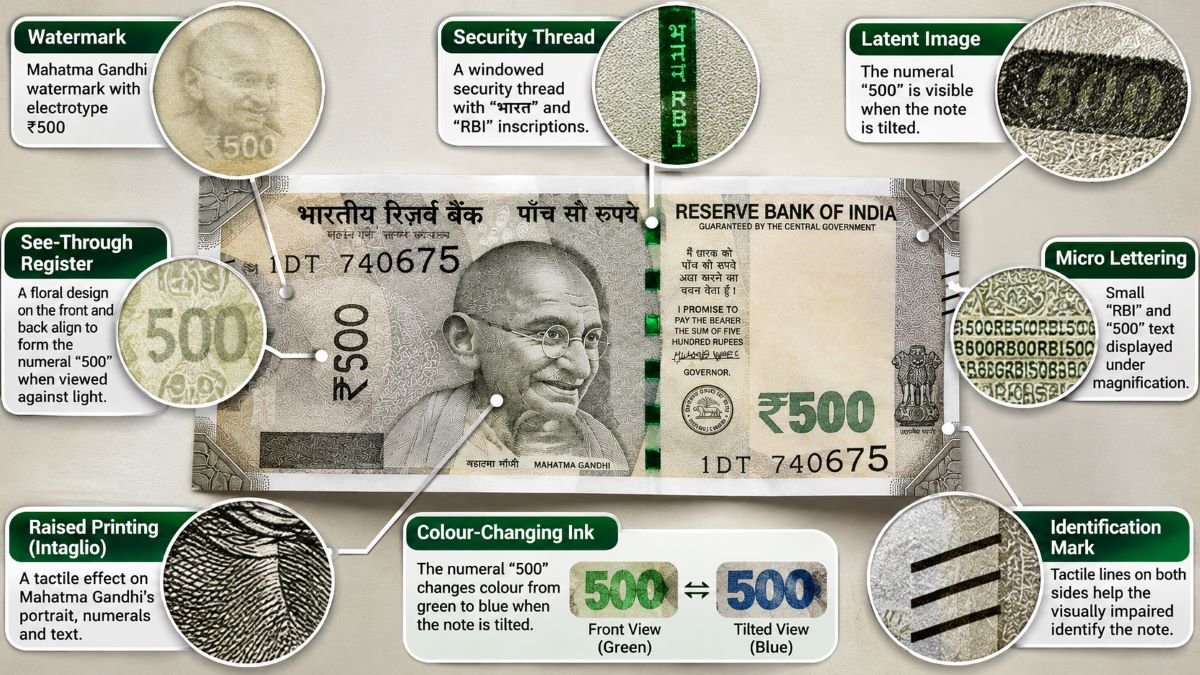
Indian ₹500 banknotes incorporate security features such as watermarks, security threads, micro-lettering, raised printing and colour-changing ink to help prevent counterfeiting.
These features are especially useful for international visitors who may be unfamiliar with Indian currency.
Indian Coins and Their Denominations
Indian circulation coins are issued by the Government of India and manufactured at authorized minting facilities.
Coins are available in different shapes, sizes, metals and designs.
The commonly recognized Indian coin denominations include:
| Coin | Value |
| 50 paise | ₹0.50 |
| One Rupee | ₹1 |
| Two Rupees | ₹2 |
| Five Rupees | ₹5 |
| Ten Rupees | ₹10 |
| Twenty Rupees | ₹20 |
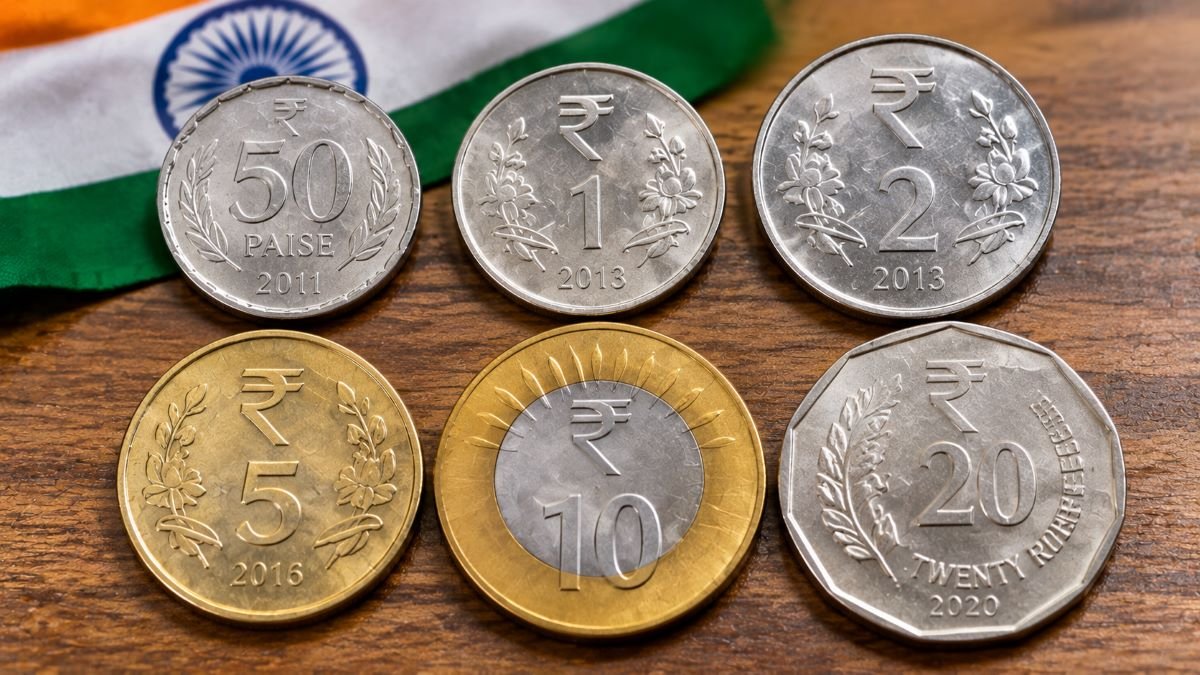
Indian circulation coins come in different denominations, including 50 paise, ₹1, ₹2, ₹5, ₹10 and ₹20.
Coins may feature national symbols, important personalities, monuments, cultural themes and commemorative designs.
The 50 Paise Coin
The 50 paise coin represents half of one Indian Rupee.
Although its use in everyday shopping has become less common, it continues to be recognized as a legal-tender denomination under applicable rules.
The One Rupee Coin
The ₹1 coin is one of the most familiar Indian circulation coins.
It is used for small purchases, public transportation and everyday cash transactions.
Different designs and minting variations may be found in circulation.
The Two Rupees Coin
The ₹2 coin is a common denomination in India's cash economy.
It has appeared in several designs representing national identity, cultural themes and important events.
The Five Rupees Coin
The ₹5 coin is widely used for everyday purchases and small cash payments.
Different versions have been produced using different materials and designs over time.
The Ten Rupees Coin
The ₹10 coin is a popular denomination in India.
It has been issued in different designs, including versions with and without the Rupee symbol.
Both valid designs remain legal tender, provided the coins satisfy the applicable requirements.
The Twenty Rupees Coin
The ₹20 coin is a relatively higher-value circulation coin.
It is distinctive because of its multi-sided design and bi-metallic construction.
It represents India's modern coinage system and is useful for larger cash transactions involving coins.
Why India Withdrew Small Paise Coins
India gradually discontinued lower-value coin denominations as their purchasing power declined and production costs increased.
Coins of 25 paise and below ceased to be legal tender from 30 June 2011.
The 50 paise coin remained a recognized legal-tender denomination.
This transition reflects changes in India's economy, consumer prices and everyday payment requirements.
Who Issues and Manages Indian Currency?
India's currency system is managed through the responsibilities of the Reserve Bank of India and the Government of India.
Although both institutions are involved in currency management, their roles are different.
The Role of the Reserve Bank of India
The Reserve Bank of India is the country's central bank.
Its responsibilities include:
- Issuing Indian banknotes, except ₹1 notes.
- Managing currency distribution.
- Conducting monetary policy.
- Supporting financial stability.
- Maintaining public confidence in banknotes.
- Managing currency quality and security.
The RBI also works with commercial banks and currency presses to maintain an adequate supply of banknotes throughout India.
The Role of the Government of India
The Government of India is responsible for the issuance of ₹1 notes and the production of coins.
The government also approves the design, form and material of banknotes after considering recommendations from the Reserve Bank.
Coins are minted at four government mints located in Mumbai, Hyderabad, Kolkata and Noida.
Banknotes are printed at four currency presses located in Nashik, Dewas, Mysuru and Salboni.
These institutions collectively support India's national currency supply.
Indian Rupee and International Exchange Rates
For international users, one of the most important aspects of the Indian Rupee is its exchange rate.
The value of INR changes in relation to other currencies.
For example, the Indian Rupee may rise or fall against:
- United States Dollar (USD)
- Euro (EUR)
- British Pound (GBP)
- Canadian Dollar (CAD)
- Australian Dollar (AUD)
- Japanese Yen (JPY)
- United Arab Emirates Dirham (AED)
- Singapore Dollar (SGD)
The exchange rate determines how much Indian currency someone receives when converting foreign money into INR.
It also determines how much foreign currency can be obtained when exchanging Indian Rupees internationally.
Is the Indian Rupee Fixed to the US Dollar?
No. The Indian Rupee is not permanently fixed or pegged to the United States dollar.
India follows a market-determined exchange-rate framework in which currency values are influenced by demand and supply in foreign exchange markets.
The Reserve Bank of India may intervene in the foreign exchange market to address excessive volatility and support orderly market conditions.
However, it does not maintain a permanent fixed conversion rate between INR and USD.
Consequently, the value of the Indian Rupee can change over time.
What Influences the Value of the Indian Rupee?
Several economic factors influence the international value of INR.
Inflation
Changes in domestic inflation can affect the purchasing power of the rupee and influence its relative value against other currencies.
Interest Rates
Monetary policy decisions by the Reserve Bank of India influence financial conditions, investment returns and demand for Indian assets.
International Trade
India imports and exports a wide range of products and services. Changes in trade flows can influence foreign currency demand and the exchange market.
Crude Oil Prices
India imports a substantial amount of its crude oil requirements. Changes in international oil prices can affect the country's import bill and foreign exchange demand.
Foreign Investment
International investment in Indian companies, financial markets and infrastructure can influence demand for Indian Rupees.
Global Financial Conditions
Changes in international interest rates, investor sentiment and global economic uncertainty can affect currency movements.
These factors interact with each other and contribute to fluctuations in the Indian Rupee's international value.
The Indian Rupee in Global Trade and Finance
The Indian Rupee is relevant to international financial markets because of India's expanding role in global trade, manufacturing, services and investment.
India maintains extensive business relationships with countries across Asia, Europe, North America, the Middle East and Africa.
International companies use INR when conducting certain transactions involving Indian suppliers, employees, business partners and customers.
The rupee is particularly relevant to sectors such as:
- Information technology and digital services.
- Pharmaceuticals and healthcare.
- Manufacturing and industrial production.
- Agriculture and food processing.
- Energy and infrastructure.
- Financial and professional services.
The Reserve Bank of India has also introduced arrangements allowing certain international trade transactions to be settled in Indian Rupees through Special Rupee Vostro Accounts.
This supports India's efforts to develop additional channels for international trade settlement.
However, international businesses should still check applicable regulations, participating banks and foreign exchange arrangements before conducting INR-denominated transactions.
How International Visitors Can Use Money in India
People visiting India for tourism, education, business or family purposes need to understand how the country's payment system works.
India has a combination of traditional cash payments, bank cards, mobile wallets and digital payment services.
The payment options available to an international visitor can vary depending on location, merchant facilities, card issuer and eligibility requirements.
Exchanging Foreign Currency into Indian Rupees
International visitors can obtain Indian Rupees before travelling or after arriving in India through authorized foreign exchange providers.
Common currency exchange options include:
- Authorized currency exchange providers.
- Selected banks.
- Airport currency exchange counters.
- Other legally authorized foreign exchange services.
Exchange rates and service charges may differ between providers.
Before exchanging money, compare the final amount received rather than considering only the displayed exchange rate.
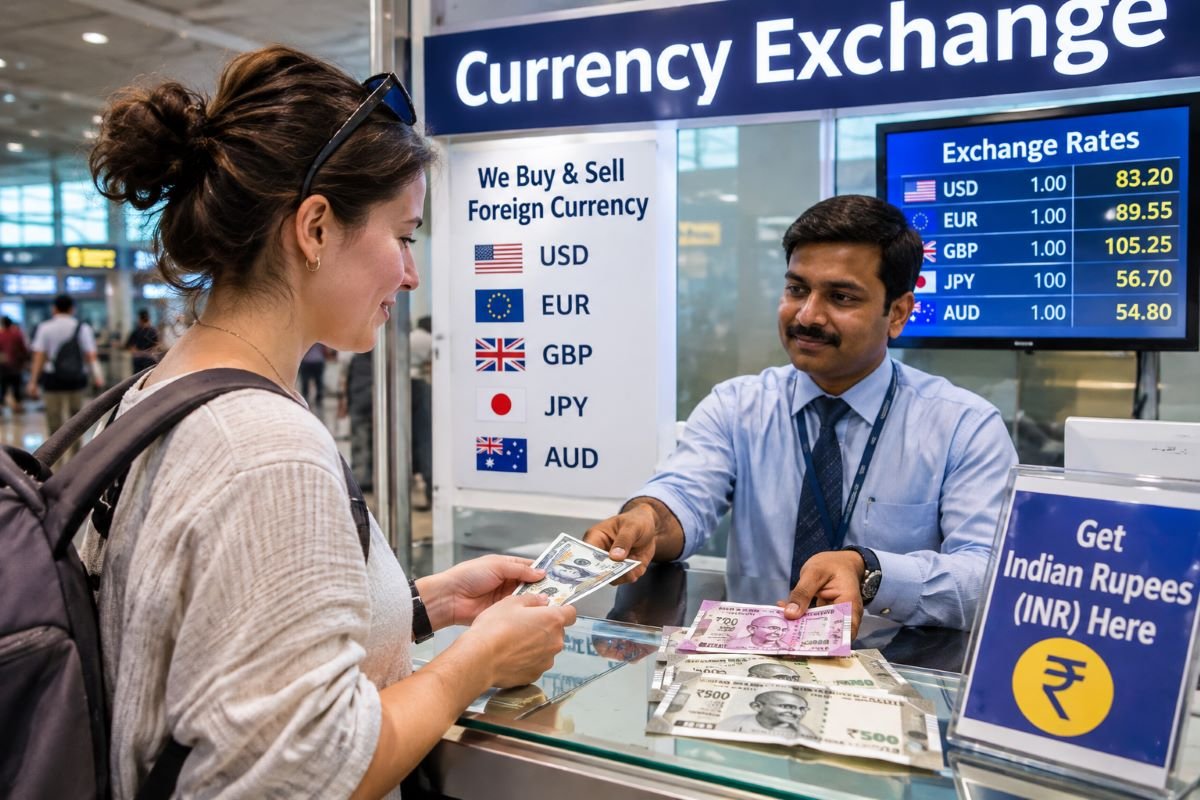
International visitors can exchange foreign currencies for Indian Rupees through authorized currency exchange providers in India.
Keep exchange receipts where provided, as they may be useful for records or future transactions.
Using International Debit and Credit Cards
Many hotels, established restaurants, shopping centres, major retailers and travel service providers in India accept international debit and credit cards.
Major card networks are commonly used in larger cities and tourist destinations.
However, card acceptance is not universal.
Smaller shops, local markets, roadside vendors and some transportation providers may prefer cash or local digital payment methods.
International cardholders should also check whether their bank charges foreign transaction fees or applies currency conversion costs.
When a payment terminal offers a choice between paying in INR or converting the purchase into the cardholder's home currency, compare the conversion rate and fees before accepting the offer.
Understanding UPI Payments in India
Unified Payments Interface (UPI) is one of India's most important digital payment systems.
It allows users to make real-time payments through participating banking applications and payment apps.
UPI is commonly used for:
- Retail purchases.
- Restaurant bills.
- Online shopping.
- Utility payments.
- Transportation services.
- Person-to-person transfers.
Transactions are often completed by scanning a QR code or using another supported UPI payment method.
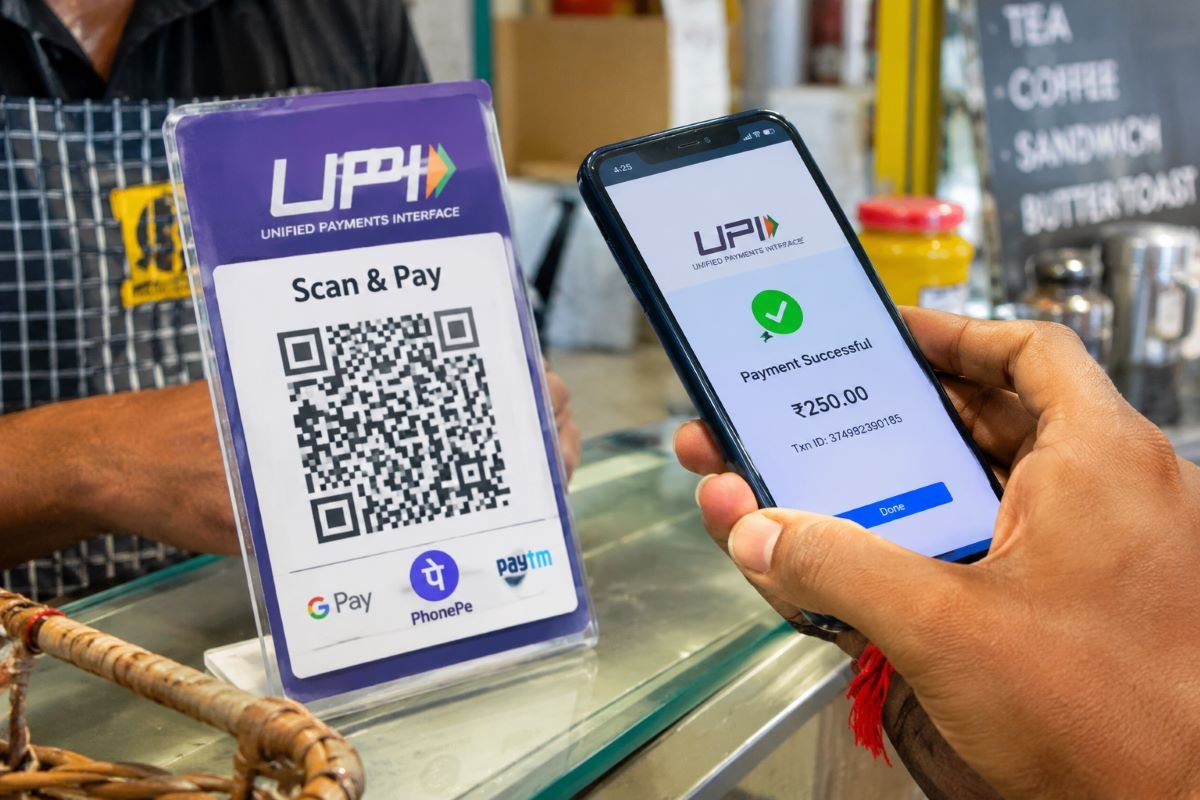
UPI enables convenient digital payments in India, allowing customers to pay merchants by scanning QR codes using supported mobile payment applications.
Can International Visitors Use UPI?
International visitors may have access to a dedicated service called UPI One World.
The Reserve Bank of India has permitted authorized prepaid payment instrument issuers to provide UPI-linked wallets to eligible foreign nationals and Non-Resident Indians visiting India.
The facility is subject to passport and visa verification, regulatory requirements, issuer availability and applicable eligibility conditions.
It is intended for merchant payments during a visit to India rather than unrestricted access to all domestic banking functions.
Therefore, international visitors should check the current availability of UPI One World with an authorized provider before relying on it.
Foreign visitors should not assume that an ordinary overseas bank account or international mobile number can automatically be used with every Indian UPI application.
Using Cash for Everyday Purchases
Cash continues to play an important role in India's economy.
Indian Rupees are useful for:
- Small retail purchases.
- Local transportation.
- Street markets.
- Small restaurants and food vendors.
- Rural and remote destinations.
- Businesses that do not accept electronic payments.
International visitors may find it helpful to carry a reasonable amount of smaller-denomination banknotes for everyday expenses.
Keeping a mixture of ₹10, ₹20, ₹50, ₹100 and ₹200 notes can make smaller transactions more convenient.
It is also useful to keep some ₹1, ₹2, ₹5, ₹10 and ₹20 coins for situations where exact change is required.
Understanding Prices and the Indian Numbering System
International visitors may notice that Indian prices use a different numbering format from the grouping system commonly used in many Western countries.
India uses lakh and crore units.
For example:
| Indian Numbering | International Numbering |
| ₹1,000 | 1,000 |
| ₹10,000 | 10,000 |
| ₹1 lakh | 100,000 |
| ₹10 lakh | 1,000,000 |
| ₹1 crore | 10,000,000 |
| ₹100 crore | 1,000,000,000 |
A lakh represents 100,000, while a crore represents 10 million.
Understanding these terms is useful when reading financial documents, property prices, business reports and large monetary values in India.
Understanding Taxes in India
Goods and services purchased in India may be subject to the Goods and Services Tax (GST).
The applicable GST treatment and rate depend on the type of goods or services and the relevant tax rules.
For international shoppers, hotel guests and business travellers, it is useful to check the final invoice and understand which taxes or charges have been included.
A purchase price and its final invoiced amount may differ depending on the applicable tax treatment and billing arrangement.
Tipping and Everyday Expenses
Tipping practices in India can vary by location, establishment and type of service.
Visitors may encounter service charges in some restaurants and hospitality businesses.
Before adding an additional tip, it is useful to check whether a service charge has already been included in the bill.
Travel expenses can also differ significantly between cities and regions.
Accommodation, transportation, food and entertainment costs in major metropolitan areas may differ from those in smaller towns and rural destinations.
Indian Rupee vs United States Dollar
The Indian Rupee and United States Dollar are separate national currencies.
Although both are used in international financial transactions, they are issued by different monetary authorities and have different international values.
| Feature | Indian Rupee | US Dollar |
| Currency Code | INR | USD |
| Currency Symbol | ₹ | $ |
| Issuing Authority | Reserve Bank of India | Federal Reserve System |
| Country | India | United States |
| Subdivision | 100 paise | 100 cents |
| Exchange System | Market-determined | Floating |
The two currencies are connected through international trade, financial markets, investment and global economic conditions.
However, INR and USD do not have a fixed one-to-one conversion value.
International businesses should identify the correct currency when preparing invoices, contracts, budgets and financial statements.
Digital Payments and the Future of Indian Currency
India's financial system has experienced considerable changes through the expansion of digital banking and electronic payment services.
Traditional cash transactions now exist alongside:
- Unified Payments Interface (UPI).
- Debit and credit cards.
- Internet banking.
- Mobile banking applications.
- Prepaid payment instruments.
- Contactless payments.
UPI has become an important component of India's domestic retail payment infrastructure.
It allows participating users to transfer money and make merchant payments in real time.
Digital payment services have made financial transactions more convenient for individuals and businesses.
India has also pursued international payment connections and arrangements that support cross-border payments involving participating institutions and countries.
However, digital payment systems do not replace the Indian Rupee as the national unit of account.
A bank balance, digital wallet or electronic payment denominated in INR is still measured in Indian Rupees.
Cash and digital payments therefore operate together within India's modern monetary system.
Interesting Facts About the Indian Rupee
The Indian Rupee has several distinctive features that make it interesting from an international perspective.
- The currency code is INR: It is used in international banking, financial transactions and foreign exchange markets.
- The symbol ₹ was approved in 2010: It provided the Indian Rupee with a distinct international visual identity.
- One Rupee equals 100 paise: India adopted its decimal monetary system on 1 April 1957.
- The modern rupee has historical roots in the sixteenth century: Sher Shah Suri issued a silver coin called the Rupiya between 1540 and 1545.
- Mahatma Gandhi appears on modern banknotes: The Mahatma Gandhi (New) Series was introduced in 2016.
- Indian banknotes use cotton-based paper: The material differs from polymer banknotes used in some other countries.
- The ₹20 coin is distinctive: Its multi-sided shape and bi-metallic construction make it recognizable.
- The ₹2,000 note was withdrawn from circulation in 2023: It nevertheless continues to be legal tender under RBI instructions dated 9 June 2026.
- The Reserve Bank of India began operations in 1935: It is the country's central banking institution.
- India has its own real-time payment system: UPI has become an important part of the country's digital financial infrastructure.
Conclusion: Why Understanding the Indian Rupee Matters
The Indian Rupee is more than a national payment system. It represents India's monetary history, financial institutions, economic development and growing participation in international commerce.
From the historic silver Rupiya introduced under Sher Shah Suri to the decimal currency system, modern Mahatma Gandhi banknotes and digital payment infrastructure, the Indian monetary system has undergone considerable transformation.
Today, INR is central to everyday financial activity throughout India and is increasingly relevant to international trade, investment, tourism and cross-border payments.
Understanding the Indian Rupee helps foreign visitors manage travel expenses, international students handle everyday purchases, businesses prepare financial transactions and investors understand India's economic environment.
Whether someone is planning a visit, studying abroad, conducting international business or following global currency markets, knowledge of INR provides a useful foundation for understanding India's economy and monetary system.
Frequently Asked Questions About the Indian Rupee (INR)
1. What is the official currency of India?
The official currency of India is the Indian Rupee, identified by the international currency code INR and the symbol ₹.
2. What does INR stand for?
INR stands for Indian Rupee. It is the standardized three-letter currency code used by banks, financial institutions and foreign exchange platforms.
3. How many paise are in one Indian Rupee?
One Indian Rupee is divided into 100 paise.
4. What is the Indian Rupee symbol?
The official symbol is ₹. It combines elements of the Devanagari letter 'र' and the Latin capital letter 'R'.
5. Who issues Indian banknotes?
The Reserve Bank of India is the sole authority for issuing Indian banknotes, except for ₹1 notes, which are issued by the Government of India.
6. What are the common Indian banknote denominations?
Commonly used modern Indian banknotes include ₹10, ₹20, ₹50, ₹100, ₹200 and ₹500. The ₹1 note is also legal tender and is issued by the Government of India from time to time.
7. What are the Indian coin denominations?
Indian circulation coins include 50 paise, ₹1, ₹2, ₹5, ₹10 and ₹20 denominations.
8. Who manages the Indian monetary system?
The Reserve Bank of India manages the issuance of banknotes and conducts monetary policy, while the Government of India is responsible for coin production and ₹1 banknotes.
9. When was the Indian Rupee symbol introduced?
The Government of India approved the Indian Rupee symbol on 15 July 2010. It was incorporated into Indian banknotes and coins from 2011 onwards.
10. When did India adopt decimal currency?
India adopted a decimal currency system on 1 April 1957, dividing one rupee into 100 paise instead of 16 annas.
11. What was the historical origin of the Indian Rupee?
Sher Shah Suri introduced a standardized silver coin called the Rupiya between 1540 and 1545. It became an important predecessor of the modern Indian Rupee.
12. What is the difference between INR and USD?
INR is the Indian Rupee, while USD is the United States Dollar. They are separate currencies with different issuing authorities and exchange rates.
13. Is the Indian Rupee fixed to the US Dollar?
No. India's exchange-rate framework is market-determined, with currency values influenced by foreign exchange markets. The Reserve Bank of India may intervene to address excessive volatility and maintain orderly market conditions.
14. What is the highest commonly used Indian banknote denomination?
The ₹500 banknote is the highest denomination commonly used in everyday cash transactions. The ₹2,000 note has been withdrawn from circulation, although it continues to be legal tender.
15. Is the ₹2,000 Indian banknote still legal tender?
Yes. The ₹2,000 banknote remains legal tender under the RBI's consolidated instructions dated 9 June 2026. However, it has been withdrawn from circulation, and its exchange or deposit facility is available through designated RBI Issue Offices rather than ordinary bank branches.
16. Can international visitors use foreign debit and credit cards in India?
Many Indian hotels, established retailers, restaurants and travel businesses accept major international debit and credit cards. However, acceptance can vary by location and merchant.
17. Can international tourists use UPI in India?
Eligible international visitors may be able to use UPI One World, a prepaid wallet linked to UPI. Availability depends on authorized providers, identity verification and applicable eligibility requirements.
18. Where can international visitors exchange foreign currency in India?
Foreign visitors can exchange currency through authorized foreign exchange providers, selected banks and designated airport exchange services.
19. Is cash still used in India?
Yes. Cash continues to be used for retail purchases, local transportation, markets and many everyday transactions. Digital payments are also widely used.
20. What is a lakh in Indian currency?
One lakh represents 100,000. For example, ₹1 lakh is equal to ₹100,000.
21. What is a crore in Indian currency?
One crore represents 10 million. For example, ₹1 crore is equal to ₹10,000,000.
22. What is the Mahatma Gandhi New Series?
The Mahatma Gandhi (New) Series is a family of Indian banknotes introduced in 2016. Its designs feature distinctive colours, modern security features and images representing India's cultural heritage and scientific achievements.
23. Why do Indian banknotes have different colours?
Different base colours help distinguish denominations and make banknotes easier to identify during everyday transactions.
24. What security features are used in Indian banknotes?
Indian banknotes use features such as watermarks, security threads, micro lettering, see-through registers, raised printing and colour-changing elements.
25. Do Indian prices include taxes?
The final price depends on the applicable tax rules and the nature of the purchase. GST may be itemized on invoices, so international shoppers should check the final amount payable.
26. Where can international users check Indian Rupee exchange rates?
International users can check INR exchange rates through banks, authorized foreign exchange providers and reliable currency conversion platforms. Rates and service charges may differ between providers.
Comments
No comments yet.