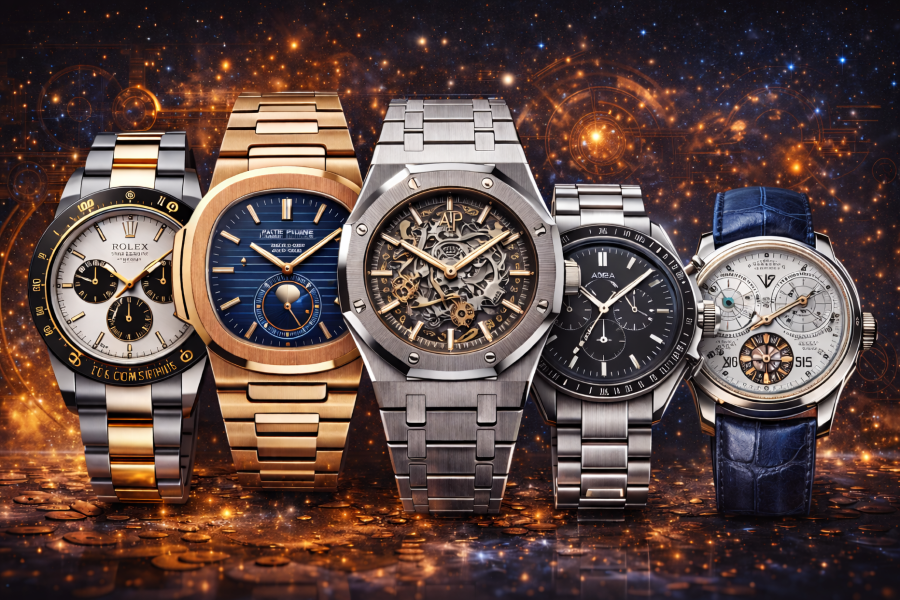
The Science, Craftsmanship, and Innovation Behind Perfect Timekeeping
Introduction
Precision lies at the heart of every great watch. While modern digital devices can tell time with remarkable accuracy, luxury watch brands continue to captivate enthusiasts with mechanical masterpieces that combine engineering, artistry, and centuries of horological tradition. In the world of luxury watches, precision is not merely a technical feature—it is a reflection of craftsmanship, heritage, and innovation.
Luxury watchmakers such as Swiss and international brands dedicate enormous resources to achieving extraordinary accuracy. Every component inside a mechanical watch must work in perfect harmony to measure time reliably. From the delicate oscillation of the balance wheel to advanced materials that resist magnetic fields, luxury watchmakers employ a combination of tradition and technology to maintain precision.
This article explores the fascinating mechanisms, innovations, and quality-control processes that luxury watch brands use to maintain accurate timekeeping. It examines both traditional horological techniques and modern technological advancements that ensure luxury watches remain precise instruments of time.
The Importance of Precision in Luxury Watches
Precision is the fundamental purpose of any timekeeping device. Historically, accurate time measurement was essential for navigation, astronomy, scientific research, and industrial development. Even today, accurate timekeeping plays a vital role in modern society.
For luxury watch brands, precision represents more than functionality. It symbolizes reliability, craftsmanship, and engineering excellence. Watch enthusiasts often admire the incredible complexity involved in maintaining accuracy within a tiny mechanical device that operates without batteries or electronic assistance.
Mechanical watches are composed of dozens or even hundreds of tiny parts. These components interact continuously to regulate the flow of time. Even microscopic variations in movement can affect accuracy. Therefore, achieving precision requires exceptional engineering, careful assembly, and rigorous testing.
Luxury watch brands maintain strict quality standards to ensure their watches meet specific accuracy requirements. Some watches must remain accurate within just a few seconds per day. Achieving such precision in a purely mechanical system is a remarkable accomplishment.
The Fundamentals of Mechanical Watch Precision
To understand how luxury watches maintain precision, it is essential to examine the core components of a mechanical movement.
A mechanical watch functions through a carefully designed system that converts stored energy into controlled motion. The key components responsible for timekeeping include:
- The mainspring
- The gear train
- The escapement
- The balance wheel
Each of these components plays a crucial role in regulating time.
The Mainspring: The Energy Source
The mainspring serves as the power source of a mechanical watch. It is a tightly wound spring that stores mechanical energy when the watch is wound.
As the mainspring gradually unwinds, it releases energy that drives the movement of the watch. This energy flows through a series of gears that ultimately regulate the motion of the hands.
Maintaining precision requires consistent energy delivery from the mainspring. If the power supply fluctuates significantly, the watch may gain or lose time. Luxury watchmakers design sophisticated mechanisms to ensure a steady flow of power throughout the watch’s power reserve.
Some high-end watches feature twin or multiple mainsprings to improve energy stability and extend the power reserve.
The Gear Train: Transmitting Energy
The gear train transfers energy from the mainspring to the escapement. This system of interconnected gears ensures that energy moves smoothly through the movement.
Each gear is precisely engineered to maintain the correct ratio between energy transfer and time measurement. Even the smallest irregularity in gear teeth or alignment could affect accuracy.
Luxury watch brands manufacture gears with extremely tight tolerances. Advanced machining techniques allow watchmakers to produce components that measure fractions of a millimeter.
The Escapement: The Heart of Time Regulation
The escapement is one of the most critical components in a mechanical watch. It regulates the release of energy from the gear train and ensures that the balance wheel oscillates at a consistent rate.
The escapement essentially acts as a gatekeeper, allowing controlled bursts of energy to pass through the system.
One of the most common escapement designs used in luxury watches is the Swiss lever escapement. This design has remained dominant for centuries due to its reliability and efficiency.
The escapement produces the familiar ticking sound of a mechanical watch. Each tick represents the release of energy that drives the movement forward.
The Balance Wheel: The Watch’s Timekeeper
The balance wheel is often considered the heart of a mechanical watch. It oscillates back and forth at a consistent frequency, controlling how quickly the watch measures time.
This oscillation functions similarly to a pendulum in a traditional clock. The balance wheel swings at a regular rhythm, dividing time into precise intervals.
The frequency of the balance wheel determines the watch's accuracy. High-frequency movements tend to offer greater precision because they divide time into smaller increments.
Luxury watches commonly operate at frequencies such as:
- 21,600 vibrations per hour
- 28,800 vibrations per hour
- 36,000 vibrations per hour
Higher frequencies can improve accuracy but also require more energy and create greater wear on components.
The Role of Materials in Precision
Modern luxury watch brands rely on advanced materials to improve accuracy and durability.
Traditional watch components were made from brass and steel. While these materials are reliable, they can be affected by environmental factors such as temperature changes and magnetism.
Modern watchmakers increasingly use high-tech materials designed to enhance precision.
Silicon Components
Silicon has become one of the most important materials in modern horology.
Many luxury brands now manufacture escapement components and balance springs from silicon. This material offers several advantages:
- Resistance to magnetism
- Reduced friction
- Exceptional durability
- High dimensional stability
Silicon components can be manufactured with incredible precision using advanced micro-engineering techniques.
Anti-Magnetic Materials
Magnetism is one of the most common threats to mechanical watch accuracy. Everyday devices such as smartphones, laptops, and speakers generate magnetic fields that can disrupt watch movements.
Luxury watch brands have developed anti-magnetic technologies that protect delicate components from magnetic interference.
Some watches incorporate specialized alloys that resist magnetism, while others use protective inner cases made from soft iron.
These innovations allow luxury watches to maintain precision even in magnetically active environments.
Precision Through Regulation and Adjustment
Even the most carefully manufactured movement requires fine adjustment to achieve optimal accuracy.
Watchmakers perform a process called regulation to ensure that a watch keeps time accurately.
During regulation, watchmakers adjust the balance wheel and other components to correct any timing deviations. This process requires extraordinary skill and experience.
A watch must be tested in multiple positions because gravity affects the movement differently depending on orientation.
For example, watches are often tested in positions such as:
- Dial up
- Dial down
- Crown up
- Crown down
- Crown left
- Crown right
Adjusting a watch for consistent accuracy in all positions is one of the most challenging aspects of watchmaking.
Chronometer Certification
Some luxury watches undergo independent testing to verify their accuracy.
Chronometer certification is one of the most respected standards in the watch industry. Watches that achieve this certification must pass strict accuracy tests conducted over several days in different temperatures and positions.
Certified chronometers must meet precise performance criteria regarding daily accuracy.
Chronometer certification provides consumers with assurance that a watch meets high standards of precision.
The Role of Hand Assembly
One of the defining characteristics of luxury watches is the level of hand craftsmanship involved in their production.
While modern machines manufacture many components, final assembly and regulation are often performed by skilled watchmakers.
Hand assembly allows watchmakers to inspect each component carefully and make adjustments that machines cannot replicate.
In some high-end watches, the movement may take several weeks or even months to assemble and regulate properly.
This meticulous process contributes significantly to the watch’s precision and reliability.
Advanced Complications and Precision Engineering
Luxury watches often include complex mechanical features known as complications. These may include:
- Perpetual calendars
- Moon phases
- Chronographs
- Minute repeaters
- Tourbillons
While complications enhance functionality and prestige, they also introduce additional engineering challenges.
Maintaining precision in watches with many moving parts requires exceptional design and manufacturing precision.
The Tourbillon: Fighting the Effects of Gravity
One of the most famous mechanisms designed to improve precision is the tourbillon.
The tourbillon was invented to counteract the effects of gravity on a watch’s balance wheel.
In a tourbillon mechanism, the escapement and balance wheel are mounted inside a rotating cage. This cage continuously rotates, averaging out positional errors caused by gravity.
Although modern wristwatches experience less gravitational error than pocket watches, the tourbillon remains a symbol of watchmaking mastery.
Temperature Compensation
Temperature changes can affect metal components inside a watch, causing them to expand or contract slightly. Even minor dimensional changes can influence accuracy.
Luxury watch brands design balance springs and other components to minimize the effects of temperature variation.
Some advanced movements incorporate temperature-compensating materials that maintain consistent performance in different environments.
Lubrication and Friction Control
Mechanical watches contain many moving parts that generate friction.
Proper lubrication is essential for maintaining smooth operation and preventing wear. Watchmakers apply specialized oils to specific components to reduce friction and ensure consistent movement.
These lubricants must remain stable for many years despite constant motion and environmental changes.
Luxury watch brands invest heavily in developing advanced lubricants that enhance long-term precision.
Testing and Quality Control
Precision is not achieved by design alone. Luxury watch brands subject their watches to extensive testing procedures.
These tests may include:
- Accuracy testing in multiple positions
- Temperature variation testing
- Shock resistance testing
- Water resistance testing
- Long-term performance evaluation
Some brands even simulate years of wear through accelerated testing methods.
Only watches that pass strict quality control standards are released to customers.
Innovation in Modern Horology
While luxury watchmaking respects centuries of tradition, it also embraces innovation.
Modern watchmakers continue to develop new technologies that enhance precision.
Examples include:
- advanced escapement designs
- improved balance spring materials
- high-frequency movements
- anti-magnetic technologies
These innovations ensure that mechanical watches remain competitive with electronic timekeeping devices in terms of accuracy.
The Balance Between Tradition and Technology
Luxury watch brands must maintain a delicate balance between preserving tradition and adopting modern technology.
Many watch enthusiasts appreciate mechanical watches not only for their accuracy but also for their historical significance and artistic craftsmanship.
By combining traditional techniques with modern materials and engineering methods, luxury watch brands continue to push the boundaries of precision.
Conclusion
Precision in luxury watches is the result of centuries of innovation, engineering expertise, and meticulous craftsmanship. From the delicate oscillation of the balance wheel to advanced anti-magnetic materials and rigorous testing standards, every aspect of a luxury watch is designed to ensure reliable timekeeping.
Luxury watchmakers achieve remarkable accuracy through a combination of mechanical ingenuity and modern technology. Their dedication to precision reflects a deeper commitment to quality, heritage, and excellence.
In a world increasingly dominated by digital technology, luxury mechanical watches remain extraordinary examples of human ingenuity. They remind us that precision is not only a scientific achievement but also an art form—one measured in tiny oscillations that quietly mark the passage of time.
Comments
No comments yet.