
Introduction: The Story Behind the United States Dollar
The United States Dollar, commonly known as the US Dollar or USD, is one of the most recognizable currencies in the world. Represented by the symbol $, it is the official currency of the United States and plays an important role in international trade, finance, investment, and everyday economic activity. From American shops and businesses to international financial markets, the dollar has become a familiar symbol of modern commerce.
However, the United States Dollar did not become an influential currency overnight. Its history stretches back to the early years of the American republic, when the newly independent nation needed a reliable and unified monetary system. Before the establishment of a national currency, people in the American colonies used a mixture of foreign coins, local currencies, and paper notes issued by different authorities.
The creation of the US dollar was an important step toward building a stable national economy. Over the centuries, the currency evolved through major political, technological, and economic changes. Silver and gold coins gave way to widespread paper money, the Federal Reserve introduced a modern monetary framework, and the dollar eventually became a central part of the international financial system.
Today, the US dollar is used far beyond the borders of the United States. It is held by central banks, used in international business transactions, and serves as an important reference currency in global financial markets.
Understanding the history of USD provides a fascinating look at American economic development and the changing relationship between money, government, trade, and society.
What Is the United States Dollar (USD)?
The United States Dollar is the official currency of the United States of America. Its internationally recognized three-letter currency code is USD, while its commonly used symbol is $.
The dollar is divided into 100 smaller units called cents. This decimal structure makes it convenient for everyday transactions, financial calculations, and accounting.
The currency is issued within a monetary system involving the US Department of the Treasury and the Federal Reserve System. The Bureau of Engraving and Printing produces Federal Reserve notes, while the United States Mint manufactures circulating coins.
Common US currency denominations include:
Banknotes:
- $1
- $2
- $5
- $10
- $20
- $50
- $100
Coins:
- 1 cent (penny)
- 5 cents (nickel)
- 10 cents (dime)
- 25 cents (quarter)
- 50 cents (half dollar)
- $1 coin
The familiar green appearance of American banknotes has earned them the informal nickname greenbacks. Although modern US currency includes additional colors and security features, the green design remains an important part of its visual identity.
The Origins of the US Dollar
Before the American Dollar
Before independence, the American colonies did not have one unified currency system.
People used different forms of money depending on their location and economic circumstances. British pounds, Spanish silver coins, European currencies, and locally issued paper notes circulated throughout the colonies.
One particularly influential coin was the Spanish milled dollar. It was widely accepted because of its relatively consistent silver content and availability through international trade.
The Spanish dollar became familiar to merchants and ordinary people alike. Its fractional divisions also made it useful for smaller transactions.
During this period, monetary systems were complicated. Different colonies sometimes assigned different values to the same foreign coins, making trade and accounting difficult.
The American Revolution created an even greater need for a dependable national monetary system.
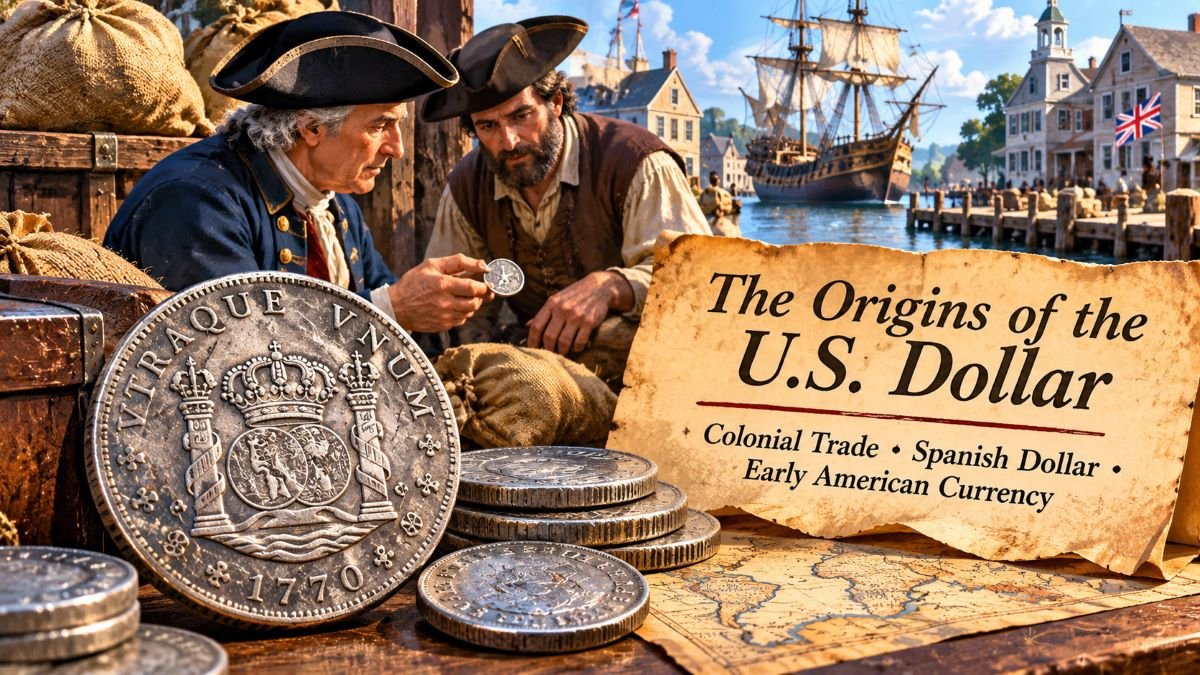
Spanish silver dollars and colonial trade helped shape the monetary practices of early America.
Continental Currency and the Revolutionary War
During the American Revolutionary War, the Continental Congress issued paper money known as Continental Currency to help finance the struggle for independence.
These notes were denominated in Spanish dollars and were intended to support military and government expenses.
However, the new currency faced serious problems. The government had limited financial resources, and the amount of paper money issued grew beyond what the economy could confidently support.
As public confidence declined and counterfeiting increased, Continental Currency lost much of its purchasing power.
This experience demonstrated the importance of public confidence, financial discipline, and reliable monetary institutions.
The phrase "not worth a Continental" later became associated with something having little or no value.
The difficulties of Continental Currency influenced the discussions surrounding America's future monetary system.
The Adoption of the Dollar in 1785
An important milestone occurred on May 13, 1785, when the Continental Congress selected the dollar as the standard unit of American money.
The decision established a foundation for a decimal-based monetary system.
The choice was influenced by the familiarity of the Spanish milled dollar, which already circulated widely in North America.
Instead of creating an entirely unfamiliar unit, the new nation adopted a monetary standard that merchants and communities already understood.
The dollar would eventually become the foundation of the country's national currency.
The Coinage Act of 1792: Establishing America's Monetary System
One of the most important events in the history of the United States Dollar was the passage of the Coinage Act on April 2, 1792.
The legislation established the United States Mint and created a formal framework for producing national coins.
Philadelphia, which was then the nation's capital, became the location of the first US Mint.
The legislation introduced a decimal monetary structure based on the dollar, with smaller denominations organized into fractions of the main unit.
The system included:
- Dollar: The principal monetary unit.
- Dime: One-tenth of a dollar.
- Cent: One-hundredth of a dollar.
- Mill: One-thousandth of a dollar.
The Act also specified standards for gold, silver, and copper coins.
Its provisions established requirements for coin weights, metal content, inscriptions, and designs. Coins were to include symbols representing liberty and, on gold and silver pieces, the American eagle.
This legislation gave the United States a more organized monetary foundation and helped establish the dollar as a national unit of account.
The first American silver dollars were produced in the 1790s, although their circulation was initially limited. Many silver and gold coins were exported or stored rather than used regularly in everyday transactions.
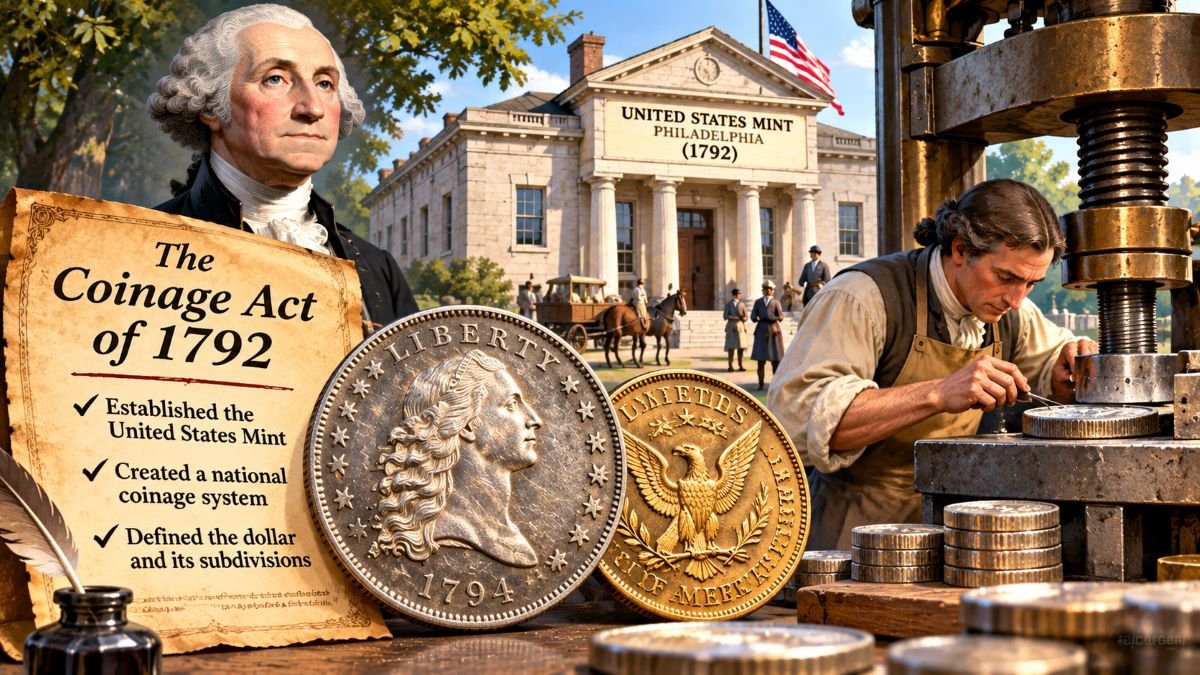
The Coinage Act of 1792 established the United States Mint and laid the foundation for America's national coinage system.
Nevertheless, the Coinage Act of 1792 remains one of the defining moments in American financial history.
The Development of American Coins During the 19th Century
During the nineteenth century, the US monetary system expanded alongside the country's growing population, industrial development, and commercial activity.
The United States Mint gradually increased production to supply coins for everyday transactions.
Early American coins featured symbolic representations of Liberty rather than portraits of living political leaders. These designs reflected the ideals associated with the country's founding.
Over time, different denominations received distinctive designs and metal compositions.
Gold and silver coins played an important role in the monetary system, and the relationship between the values of these metals influenced coin production.
The discovery of gold in California during the mid-nineteenth century increased the importance of gold in American economic life. New minting facilities were established to process precious metals and support the expanding economy.
However, the country still faced difficulties with different forms of banknotes and regional financial systems.
The growing economy required a more unified and dependable form of money.
Paper Money and the Rise of Greenbacks
The Civil War and the Introduction of Federal Paper Currency
A major transformation in American currency occurred during the Civil War.
Before the conflict, the United States had a complicated system involving coins, private banknotes, and different financial institutions. Banknotes issued by one institution were not always accepted at full value in another region.
The war created enormous financial demands for the federal government.
In 1861, the Treasury issued Demand Notes to help finance government expenses. In 1862, Congress authorized United States Notes, which became widely known as greenbacks because of their green reverse printing.
These notes represented an important development in the history of American money.
Unlike ordinary banknotes issued by private banks, United States Notes were issued by the federal government and could be used as legal tender for designated payments.
The introduction of greenbacks helped the government finance wartime activities and contributed to the development of a more standardized national currency.
Why Are US Banknotes Called Greenbacks?
The nickname greenback originated from the green ink used on the reverse side of nineteenth-century American paper currency.
Green printing helped distinguish the notes and became closely associated with the national paper currency introduced during the Civil War.
The nickname survived long after the original notes disappeared from everyday circulation.
Even today, people sometimes use the word greenback when referring to US dollars, particularly in financial and economic discussions.
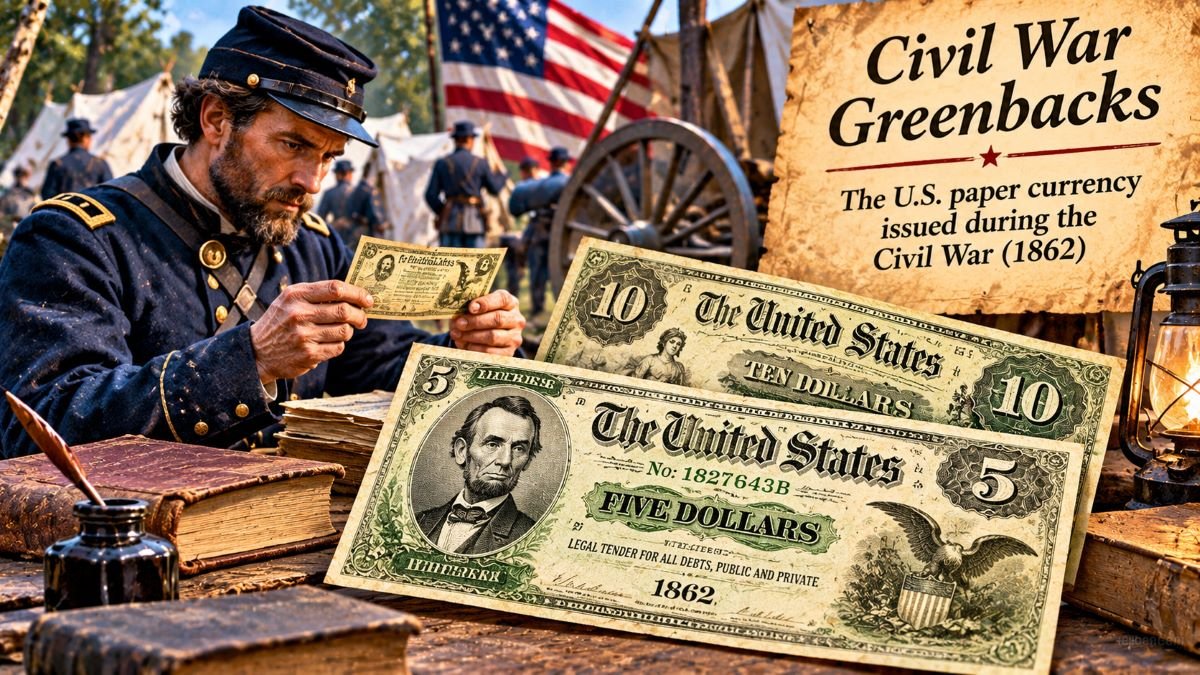
Civil War greenbacks expanded the use of paper money and helped finance the Union's war effort.
The Bureau of Engraving and Printing
The production of American paper currency became increasingly organized during the nineteenth century.
The Bureau of Engraving and Printing, established within the Treasury Department's operations in 1862, gradually assumed responsibility for designing, engraving, and printing official government currency.
By 1877, the Bureau had become the sole producer of United States currency.
Its work helped standardize the appearance and production of banknotes while improving the security of the printing process.
Modern American banknotes continue to be produced by the Bureau of Engraving and Printing.
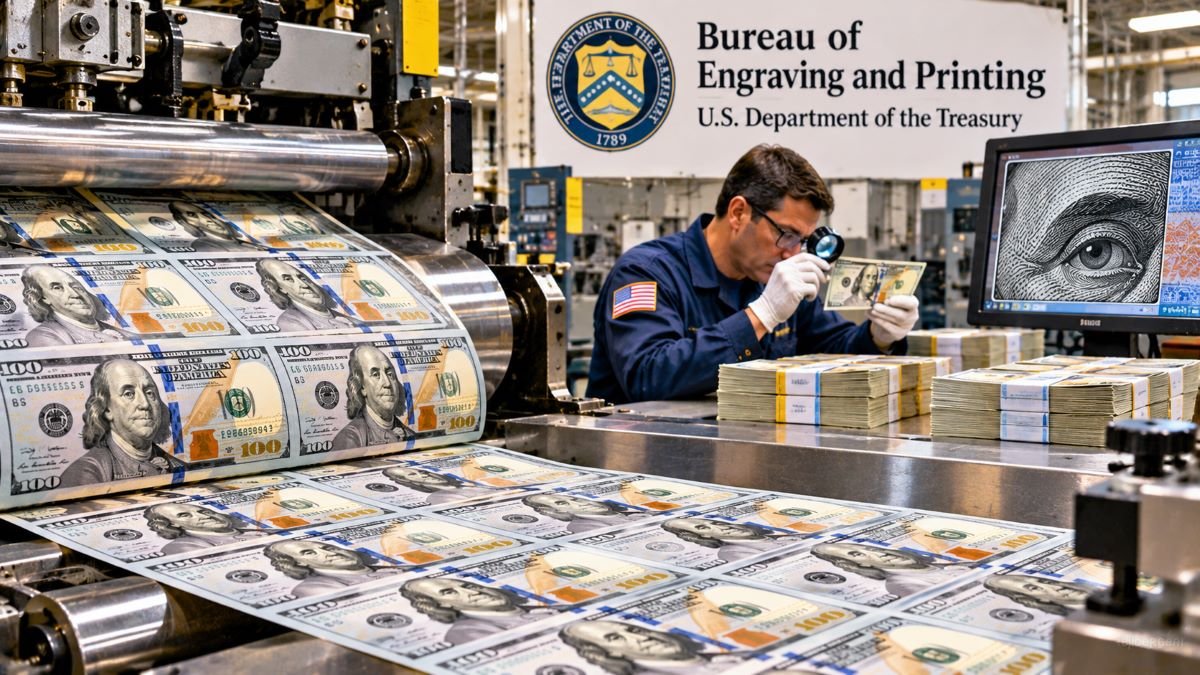
The Bureau of Engraving and Printing produces U.S. banknotes using specialized printing methods and security features.
The Federal Reserve and the Modern US Dollar
The Creation of the Federal Reserve in 1913
The establishment of the Federal Reserve System was another major turning point in the development of the US dollar.
During the nineteenth and early twentieth centuries, the United States experienced repeated banking panics and financial instability.
Banks sometimes faced sudden demands from customers who wanted to withdraw their money. The existing monetary system was not always flexible enough to respond effectively to these situations.
Congress passed the Federal Reserve Act on December 23, 1913, establishing the Federal Reserve System as the country's central banking system.
The Federal Reserve was designed to support financial stability, improve the banking system, and provide a more responsive supply of money and credit.
The new system also introduced Federal Reserve Notes, which gradually became the principal form of American paper currency.
What Are Federal Reserve Notes?
Federal Reserve Notes are the paper banknotes used in everyday American transactions.
They are issued through the Federal Reserve System and printed by the Bureau of Engraving and Printing.
Although the Federal Reserve and the Treasury Department have different responsibilities, they work within the same national monetary framework.
The Federal Reserve manages monetary policy and supports the stability of the financial system, while the Treasury's Bureau of Engraving and Printing manufactures paper currency.
This distinction is important for understanding how the modern US dollar operates.
The Gold Standard and Its Influence on the Dollar
For much of its early history, the American monetary system was connected to precious metals, especially gold and silver.
Under gold-standard arrangements, the value of currency was linked to a specified quantity of gold. This meant that monetary authorities had obligations concerning the relationship between paper money and gold reserves.
The United States developed its gold-standard framework gradually, with the Gold Standard Act of 1900 formally defining the dollar in terms of gold.
This system influenced international financial relationships because countries using gold-linked currencies could maintain relatively stable exchange-rate relationships.
However, the gold standard also restricted the flexibility of monetary policy.
During economic crises, governments and financial institutions could face difficulties responding to falling economic activity and financial pressure while maintaining gold convertibility.
The Great Depression and Changes to Gold Convertibility
The Great Depression of the 1930s brought major changes to the American monetary system.
In 1933, the Roosevelt administration introduced policies that restricted domestic gold ownership and ended the general convertibility of ordinary domestic currency into gold.
The government also changed the official monetary price of gold.
These measures represented a major departure from earlier gold-standard practices.
The dollar remained an important monetary unit, but its relationship with gold was fundamentally changing.
The experience demonstrated how monetary systems can evolve when governments respond to severe economic challenges.
Bretton Woods and the Dollar's International Rise
The Bretton Woods Conference of 1944
The international position of the US dollar strengthened considerably during the Second World War and its aftermath.
In July 1944, representatives from 44 Allied nations met at Bretton Woods, New Hampshire, to discuss the future of the international monetary system.
The conference established the foundations of the Bretton Woods system, which aimed to create greater stability in international exchange rates.
Under this arrangement, participating countries maintained exchange rates linked to the US dollar, while the dollar was convertible into gold for foreign monetary authorities at the official rate of $35 per ounce.
The United States occupied a central position in this system because of its economic strength and substantial gold reserves.
The agreement helped establish the dollar as the principal reference currency in the postwar international monetary system.
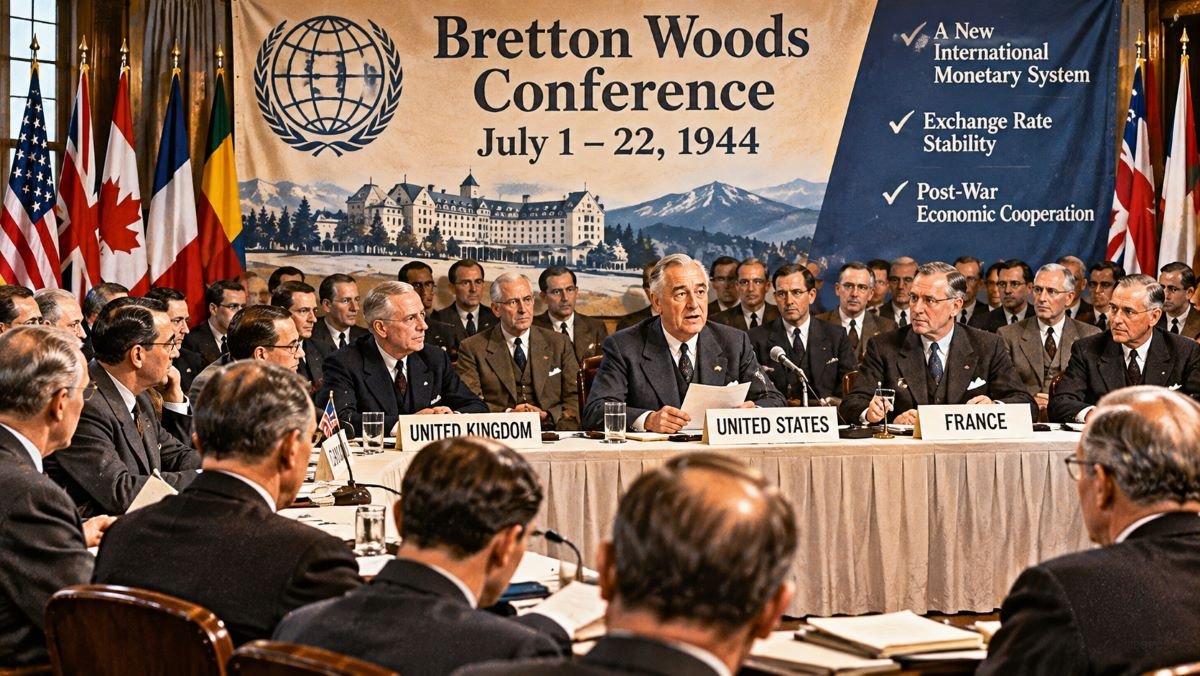
The 1944 Bretton Woods Conference helped establish the U.S. dollar's central role in the postwar international monetary system.
Why Did the US Dollar Become So Important Internationally?
Several factors contributed to the dollar's growing international importance.
Economic strength: The United States emerged from the Second World War with a large industrial economy and a significant role in international production and trade.
Financial markets: American financial markets developed into important centers for international investment and capital movement.
International trade: The dollar became widely used in commercial transactions involving goods, services, and commodities.
Institutional confidence: The United States developed financial institutions and markets that supported international use of its currency.
Postwar monetary arrangements: The Bretton Woods system placed the dollar at the center of the international exchange-rate framework.
Together, these developments helped establish the US dollar as one of the most influential currencies in the modern world.
The End of Dollar-to-Gold Convertibility in 1971
By the late 1960s, the Bretton Woods system was facing growing pressure.
The supply of dollars held outside the United States had increased, while confidence in the ability of the United States to maintain gold convertibility weakened.
Foreign governments held substantial dollar reserves, and the amount of dollars potentially presented for conversion exceeded the gold available at the official price.
On August 15, 1971, President Richard Nixon announced the suspension of the dollar's convertibility into gold for foreign official holders.
This decision became known as the Nixon Shock.
It marked a turning point in the international monetary system.
The Bretton Woods arrangement eventually collapsed, and major currencies increasingly moved toward floating exchange rates during the 1970s.
The Modern Fiat Currency System
Today, the US dollar is a fiat currency.
A fiat currency is money that is not directly redeemable for a fixed quantity of a physical commodity such as gold.
Its value is supported by the monetary and legal framework of the issuing country, public confidence, economic activity, and the institutions responsible for managing the financial system.
The modern dollar is therefore fundamentally different from earlier gold and silver monetary arrangements.
Its value changes in foreign exchange markets according to economic conditions, interest rates, international demand, inflation expectations, and other financial factors.
The Design and Features of US Dollar Banknotes
American banknotes are recognized around the world for their traditional green appearance and detailed portraits of historical figures.
Each denomination has a distinctive design that reflects important personalities and events in American history.
Common banknote portraits include:
- $1 Bill: George Washington, the first President of the United States.
- $2 Bill: Thomas Jefferson, the third President and principal author of the Declaration of Independence.
- $5 Bill: Abraham Lincoln, the sixteenth President of the United States.
- $10 Bill: Alexander Hamilton, the first Secretary of the Treasury.
- $20 Bill: Andrew Jackson, the seventh President.
- $50 Bill: Ulysses S. Grant, the eighteenth President.
- $100 Bill: Benjamin Franklin, a Founding Father, scientist, and diplomat.
The reverse sides feature historic buildings, national symbols, and significant American imagery.
The Great Seal and the One-Dollar Bill
The one-dollar bill is particularly famous for its reverse design, which includes two sides of the Great Seal of the United States.
The design features an eagle, a shield, and other symbolic elements representing the nation.
The unfinished pyramid and the Eye of Providence are also featured on the reverse.
These symbols have attracted considerable public interest because of their historical and symbolic interpretations.
The one-dollar bill has retained its familiar overall design for decades, making it one of the most recognizable banknotes internationally.
Modern Security Features
US banknotes include several security features designed to discourage counterfeiting.
Depending on the denomination, these may include:
- Watermarks.
- Security threads.
- Color-shifting ink.
- Fine-line printing.
- Microprinting.
- Detailed engraved portraits.
- Distinctive paper composition.
Modern banknote production combines traditional engraving techniques with advanced printing and security technologies.
These measures help maintain confidence in the authenticity of American currency.
The Evolution of US Dollar Coins
Although paper banknotes dominate everyday cash transactions in the United States, coins remain an important part of the monetary system.
American coins have changed considerably since the first national mint began producing currency in the eighteenth century.
Early coins were made from copper, silver, and gold. Their designs frequently featured Liberty, eagles, and other national symbols.
Over time, changes in metal prices, manufacturing technology, and economic requirements influenced coin composition and design.
Modern circulating coins include the penny, nickel, dime, quarter, half dollar, and dollar coin.
The US Mint continues to produce coins for circulation, collectors, and special commemorative programs.
American coin designs also provide a visual record of the country's history, presidents, national landmarks, and cultural achievements.
The US Dollar as a Global Currency
The United States Dollar is not only the official currency of America. It also has an important role in the global economy.
Central banks, financial institutions, businesses, and investors around the world use or hold dollars for different purposes.
International Trade
Many international transactions are denominated or settled in US dollars.
Businesses involved in importing and exporting goods may use the dollar even when neither trading party is located in the United States.
This widespread use makes the dollar an important currency for international commercial activity.
Foreign Exchange Markets
The US dollar is one of the most actively traded currencies in foreign exchange markets.
It appears in major currency pairs such as:
- EUR/USD – Euro and US Dollar.
- GBP/USD – British Pound and US Dollar.
- USD/JPY – US Dollar and Japanese Yen.
- USD/CHF – US Dollar and Swiss Franc.
- AUD/USD – Australian Dollar and US Dollar.
- USD/CAD – US Dollar and Canadian Dollar.
These currency pairs are important references for international investors, financial institutions, traders, and businesses.
Global Reserve Currency
The US dollar is the world's leading international reserve currency.
Central banks hold dollar-denominated assets, including US Treasury securities, as part of their foreign exchange reserves.
The dollar's position is supported by the size of the American economy, the depth and liquidity of US financial markets, and its established role in international transactions.
Although other currencies also play important international roles, the dollar remains a major foundation of the global financial system.
Dollarization in Other Countries
Some countries officially use the US dollar as their national currency, while others use it alongside their domestic currency.
This practice is commonly known as dollarization.
Countries and territories that use the US dollar include Ecuador, El Salvador, and Panama, although their monetary arrangements differ.
Dollarization can help reduce exchange-rate uncertainty for transactions involving the dollar. However, it also means that governments have less independent control over domestic monetary policy.
How the Value of the US Dollar Changes
The value of the US dollar is not fixed in international markets.
Its exchange rate changes in response to a range of economic and financial factors.
Important influences include:
Interest rates: Changes in Federal Reserve interest-rate policy can influence demand for dollar-denominated assets.
Inflation: Inflation affects purchasing power and can influence expectations about future currency values.
Economic growth: Strong economic performance can attract international investment and influence demand for the dollar.
International trade: Trade balances and cross-border financial transactions can affect currency demand.
Global uncertainty: During periods of financial stress or geopolitical uncertainty, investors may increase demand for dollar-denominated assets.
Monetary policy: Decisions made by the Federal Reserve can influence financial conditions and the international value of the dollar.
For this reason, the USD exchange rate against currencies such as the euro, pound, yen, Canadian dollar, and Indian rupee changes over time.
The US Dollar in the Digital Economy
The way people use money has changed significantly since the introduction of the first American coins and banknotes.
Today, the US dollar exists in several forms, including physical cash and digital balances held in bank accounts and financial institutions.
Digital banking, card payments, online shopping, electronic transfers, and mobile payment services have made it possible to use dollar-denominated money without physically handling banknotes.
However, digital representations of dollar balances should not be confused with a separate national currency.
They generally represent claims or balances denominated in the same US dollar.
The financial system also includes discussions about digital currencies, payment modernization, and the potential development of central bank digital currency arrangements.
These developments illustrate how the concept and use of money continue to evolve alongside technology.
Interesting Facts About the United States Dollar
The history of the US dollar includes several interesting details:
- The dollar has roots in the Spanish silver coin: The Spanish milled dollar influenced the American monetary system because it was widely used in colonial trade.
- The dollar was adopted in 1785: The Continental Congress selected it as the standard unit of American money.
- The Coinage Act was passed in 1792: It established the US Mint and created the framework for national coin production.
- Greenbacks appeared during the Civil War: The federal government issued United States Notes to help finance wartime expenses.
- The Federal Reserve was established in 1913: Its creation transformed the country's monetary and banking framework.
- The $1 bill features George Washington: His portrait first appeared on a United States Note in 1869.
- The $2 bill features Thomas Jefferson: Although less commonly encountered than other denominations, it remains valid currency.
- The dollar is used internationally: It plays a significant role in global trade, investment, and central bank reserves.
- The modern dollar is fiat money: It is not directly redeemable for a fixed quantity of gold.
- Older US currency remains valid: Genuine United States currency issued in earlier years generally retains its legal value, even when a particular design is no longer produced.
Conclusion: From an American Currency to a Global Monetary Symbol
The history of the United States Dollar reflects the economic and political development of the United States itself.
From the influence of Spanish silver coins and the monetary challenges of the Revolutionary War to the Coinage Act of 1792, the Civil War greenbacks, and the creation of the Federal Reserve, the dollar has undergone significant transformations.
Its relationship with gold changed, its paper currency became more standardized, and its role expanded through the international monetary arrangements established after the Second World War.
The end of gold convertibility in 1971 marked another major transition, leading to the modern fiat currency system.
Today, the US dollar is much more than a means of payment within the United States. It is an important international currency used in trade, finance, investment, and foreign exchange markets.
Understanding USD history helps explain how a monetary unit adopted by a young republic developed into one of the most influential financial symbols in the world.
Frequently Asked Questions About the United States Dollar (USD)
1. What is the official currency of the United States?
The official currency of the United States is the United States Dollar, identified by the international currency code USD and the symbol $.
2. When was the US dollar created?
The Continental Congress adopted the dollar as the standard unit of American money in 1785. The Coinage Act of 1792 subsequently established the national mint and formalized the country's coinage system.
3. Why is the US dollar called USD?
USD stands for United States Dollar. It is the standardized three-letter currency code used in international financial markets, banking, and currency exchange systems.
4. What currency was used in America before the US dollar?
Before the establishment of the national monetary system, people used Spanish silver dollars, British pounds, European coins, colonial paper notes, and other forms of money.
5. Why is the US dollar symbol $?
The dollar symbol developed from historical currency notation associated with the Spanish American peso, also known as the Spanish dollar. Its precise development is debated, but it became the standard symbol for the American dollar.
6. Who controls the US dollar?
The US monetary system involves several institutions. Congress establishes monetary laws, the Federal Reserve manages monetary policy, and the Department of the Treasury oversees important currency functions through agencies such as the Bureau of Engraving and Printing and the US Mint.
7. Is the US dollar backed by gold?
No. The modern US dollar is a fiat currency and is not directly redeemable for a fixed amount of gold.
8. When did the US dollar stop being convertible into gold?
The United States suspended dollar convertibility into gold for foreign official holders on August 15, 1971. This decision contributed to the eventual collapse of the Bretton Woods monetary system.
9. Why is the US dollar important in international trade?
The dollar is widely used for international payments, commodity transactions, investment, and financial settlements. Its established role and the depth of US financial markets contribute to its global importance.
10. What is the difference between USD and the dollar symbol ($)?
USD is the official three-letter currency code for the United States Dollar, while $ is its commonly used symbol. USD is especially useful in international transactions where several countries use dollar-named currencies.
11. How many cents are in one US dollar?
One United States Dollar is divided into 100 cents. For example, 50 cents equals half a dollar, while 25 cents equals one-quarter of a dollar.
12. Is the US dollar still the world's leading reserve currency?
Yes. The US dollar remains the leading international reserve currency, although other currencies also form part of central banks' foreign exchange reserves.
13. Which countries use the US dollar?
The United States uses USD as its official currency. Countries including Ecuador, El Salvador, and Panama also use the US dollar under different monetary arrangements.
14. Who prints US dollar banknotes?
The Bureau of Engraving and Printing, an agency of the US Department of the Treasury, produces Federal Reserve Notes. The United States Mint manufactures American coins.
15. Are old US dollar bills still valid?
Generally, yes. Genuine US currency issued in earlier years remains valid at its face value, even if the design or series is no longer being printed.
Comments
No comments yet.