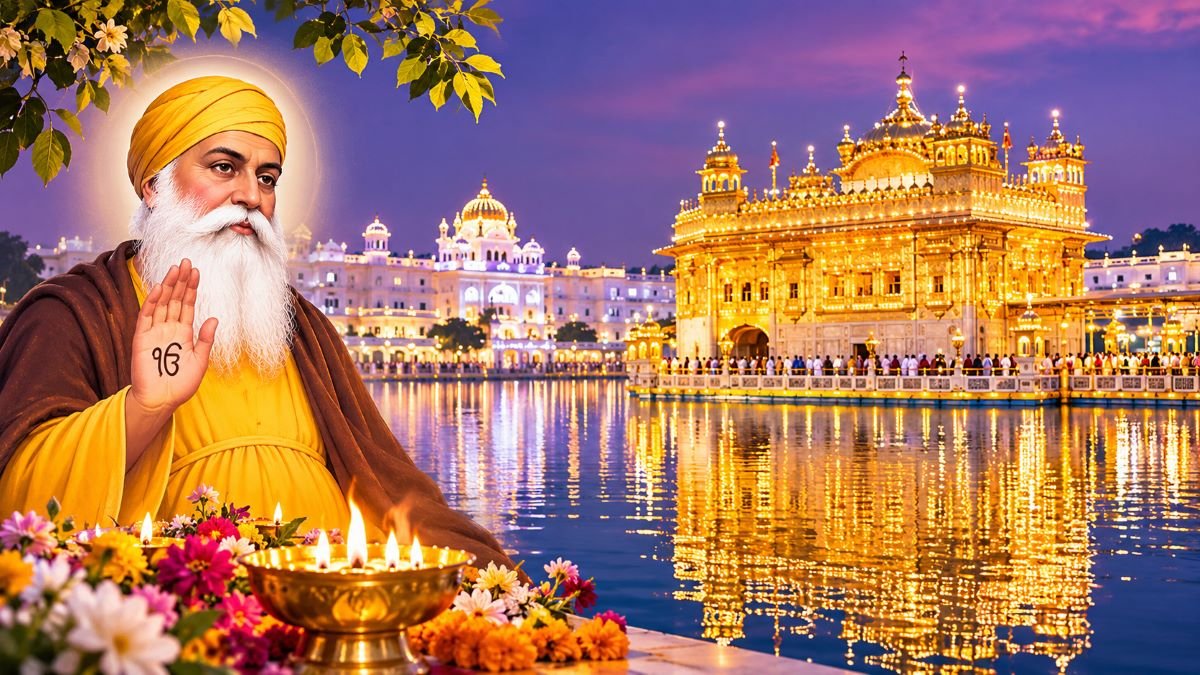
Guru Nanak Gurpurab: History, Teachings, Traditions, and the Global Celebration of Sikhism's Founder
Introduction
Guru Nanak Gurpurab, also known as Guru Nanak Jayanti and Prakash Parv, is one of the most important religious festivals in Sikhism. It commemorates the birth of Guru Nanak Dev Ji, the founder of Sikhism and the first of the ten Sikh Gurus. The occasion celebrates his life, spiritual wisdom, and teachings about equality, honesty, compassion, and devotion to one universal God.
Observed with great devotion by Sikh communities across the world, Guru Nanak Gurpurab is a celebration of faith as well as humanity. Gurdwaras organize special prayers, devotional singing, community meals, and processions. People participate in acts of selfless service and remember the importance of treating every individual with dignity and respect.
The festival also provides an opportunity to understand Guru Nanak's message, which encourages people to live honestly, share their resources, reject discrimination, and develop a deeper connection with the Divine.
Who Was Guru Nanak Dev Ji?
Guru Nanak Dev Ji was born in 1469 at Rai Bhoi Ki Talwandi, a village now known as Nankana Sahib in present-day Pakistan. His birthplace is an important historical and religious destination for Sikhs around the world.
From an early age, Guru Nanak demonstrated a thoughtful and questioning nature. He showed an interest in spiritual matters and questioned social practices that created divisions among people. His teachings challenged discrimination based on caste, social position, and religious identity.
Guru Nanak believed that all human beings were equal and that genuine devotion was not limited to outward religious rituals. He emphasized that a person's actions, honesty, humility, and treatment of others were essential expressions of spiritual life.
During his lifetime, Guru Nanak travelled to different regions to share his teachings. These journeys, traditionally remembered as Udasis, helped communicate his message to people from different religious and cultural backgrounds.
He eventually established a community at Kartarpur, where people could practice devotion, earn an honest living, and serve others. His teachings became the foundation of Sikhism and continue to guide Sikh religious and social life.
The Spiritual Significance of Guru Nanak Gurpurab
The word Gurpurab combines the words Guru and Parab, referring to a sacred occasion associated with a Sikh Guru. Guru Nanak Gurpurab specifically commemorates the birth of Guru Nanak Dev Ji.
The festival is also known as Prakash Parv, meaning the celebration of spiritual enlightenment or the arrival of spiritual light. It reflects the belief that Guru Nanak's teachings brought a message of truth, equality, and compassion to humanity.
For Sikhs, the occasion is an important time to remember the first Guru's contribution to religious thought and community life. Devotees visit gurdwaras, listen to hymns, participate in prayers, and reflect on the values taught by Guru Nanak.
The festival also highlights the importance of putting spiritual principles into practice. Rather than treating religion as something limited to ceremonies, Guru Nanak encouraged people to demonstrate their faith through honest behaviour, kindness, and service.
Three Fundamental Teachings of Guru Nanak Dev Ji
Guru Nanak's teachings provide a practical framework for living a meaningful and responsible life. Three principles are especially central to Sikh philosophy.
1. Naam Japna – Remembering the Divine
Naam Japna means remembering and meditating on the name of God. It encourages individuals to maintain a sincere connection with the Divine through prayer, remembrance, and spiritual awareness.
This principle teaches that spirituality should remain part of everyday life. People are encouraged to develop humility, gratitude, and inner discipline rather than focusing only on external appearances.
2. Kirat Karni – Earning Through Honest Work
Kirat Karni emphasizes earning a livelihood through honest and responsible effort. Guru Nanak taught that people should work sincerely, avoid exploitation, and respect the dignity of labour.
This principle connects spirituality with everyday responsibilities. Honest work is considered an important part of a balanced life because it promotes independence, integrity, and respect for others.
3. Vand Chakna – Sharing With Others
Vand Chakna means sharing one's resources and achievements with others, particularly people who need support.
The principle encourages generosity, cooperation, and concern for the wider community. It teaches that wealth and personal success should not become reasons for selfishness or social separation.
Together, Naam Japna, Kirat Karni, and Vand Chakna express a way of life based on devotion, honesty, and sharing.
Major Traditions and Rituals of Guru Nanak Gurpurab
Guru Nanak Gurpurab is observed through a combination of religious ceremonies, devotional activities, and community service. Although celebrations may vary between locations, several traditions are widely followed.
Akhand Path – Continuous Recitation of Sacred Scripture
One of the important preparations for Gurpurab is the Akhand Path, the uninterrupted recitation of Guru Granth Sahib Ji, the central religious scripture of Sikhism.
The recitation traditionally takes approximately 48 hours. It is organized in gurdwaras and sometimes in homes, allowing devotees to listen to sacred hymns and reflect on their spiritual meaning.
The Akhand Path usually concludes around the main celebration, bringing the community together for prayers and religious observances.
Prabhat Pheris – Early Morning Devotional Processions
Prabhat Pheris are devotional gatherings and processions organized during the days leading up to Guru Nanak Gurpurab.
Participants gather early in the morning and move through neighbourhoods while singing religious hymns. These processions spread the message of Guru Nanak Dev Ji and encourage people to participate in the celebrations.
Prabhat Pheris also create opportunities for community members to come together through prayer and shared devotion.
Nagar Kirtan – Procession of Devotional Singing
Nagar Kirtan is one of the most visible public traditions associated with Guru Nanak Gurpurab.
During the procession, devotees move through streets while singing hymns from Sikh scriptures. The Guru Granth Sahib Ji is respectfully carried in a decorated palanquin, accompanied by the Panj Pyare, or Five Beloved Ones.
In many places, the procession also includes Gatka demonstrations, traditional Sikh martial arts, devotional music, and community participation.
Nagar Kirtan allows people from different backgrounds to experience Sikh traditions and learn about the teachings of Guru Nanak.
Kirtan and Special Prayers at Gurdwaras
On the main day of Gurpurab, gurdwaras organize special religious programmes. Devotees gather to listen to Kirtan, the devotional singing of hymns from Guru Granth Sahib Ji.
Religious speakers may explain the life and teachings of Guru Nanak Dev Ji, helping visitors understand the spiritual significance of the occasion.
Many gurdwaras remain especially active throughout the celebration, welcoming devotees and visitors for prayers and community activities.
Langar – The Tradition of Sharing Food Equally
Langar is one of the most meaningful traditions in Sikhism. It is a free community meal served in gurdwaras to everyone, regardless of religion, caste, gender, nationality, or financial background.
During Guru Nanak Gurpurab, volunteers prepare and distribute food to large numbers of visitors. People sit together and share the same meal, symbolizing equality and mutual respect.
The tradition reflects Guru Nanak's rejection of social divisions and his belief in the equal dignity of all human beings.
Langar is not simply about providing food. It represents hospitality, humility, cooperation, and the responsibility to care for others.
Seva – Selfless Service to Humanity
Seva means serving others without expecting personal rewards. It is an important expression of Sikh religious practice and becomes especially visible during Gurpurab celebrations.
Volunteers participate in activities such as preparing meals, serving Langar, cleaning gurdwaras, distributing food, and helping visitors.
Seva demonstrates that religious devotion should be reflected in practical actions. It encourages people to contribute to society and help those who need assistance.
Why Is Guru Nanak Gurpurab Celebrated on Kartik Purnima?
Guru Nanak Gurpurab is traditionally associated with Kartik Purnima, the full moon day of the lunar month of Kartik. This is why the festival is often referred to as Kartik Gurpurab.
The date follows the traditional lunar calendar rather than a fixed Gregorian calendar date. Consequently, the festival falls on a different date each year in the modern calendar.
The connection with Kartik Purnima is an important part of the traditional observance of Guru Nanak's birth anniversary.
It is worth noting that different historical and religious traditions have discussed the exact interpretation of Guru Nanak's birth date. Nevertheless, the Kartik Purnima observance is widely followed by Sikh communities.
How Is Guru Nanak Gurpurab Celebrated Around the World?
Guru Nanak Gurpurab is celebrated by Sikh communities in many countries, including India, Pakistan, Canada, the United Kingdom, the United States, Australia, and several other parts of the world.
Celebrations in India
India is home to a large Sikh population, and Gurpurab is celebrated with devotion in cities and towns across the country.
Amritsar holds particular importance because it is home to Sri Harmandir Sahib, popularly known as the Golden Temple. During Gurpurab, the gurdwara attracts large numbers of devotees who participate in prayers, Kirtan, and community service.
Gurdwaras in Delhi, Punjab, Haryana, Uttar Pradesh, and other regions also organize religious gatherings, processions, and Langar.
Nankana Sahib in Pakistan
Nankana Sahib is especially significant because it is the birthplace of Guru Nanak Dev Ji.
The historic Gurdwara Janam Asthan stands at the location associated with his birth. Sikh pilgrims visit the site to pay their respects and participate in religious observances.
The town remains an important destination for understanding Guru Nanak's early life and historical legacy.
Celebrations in Canada, the United Kingdom, and Other Countries
Sikh communities outside South Asia also celebrate Gurpurab through special prayers, Nagar Kirtan, Langar, and cultural gatherings.
In countries such as Canada and the United Kingdom, gurdwaras organize large community programmes that bring together Sikh families and visitors from different backgrounds.
These international celebrations demonstrate how Sikh religious traditions have become an important part of multicultural societies around the world.
Guru Nanak Gurpurab and the Importance of Equality
One of the most enduring aspects of Guru Nanak's message is the principle of human equality.
During a period when social hierarchies and divisions were deeply established, Guru Nanak challenged the idea that a person's worth depended on caste, wealth, or social position.
His teachings encouraged people to recognize the same Divine presence in all human beings. This message is reflected in Sikh traditions such as Langar, where everyone is welcomed and served equally.
The principle of equality remains relevant in modern society. It encourages communities to challenge discrimination, respect different backgrounds, and create environments where people can live together with dignity.
The Universal Message of Guru Nanak Gurpurab
Although Guru Nanak Gurpurab is a Sikh religious festival, the values associated with it have significance beyond any single community.
Its message encourages people to:
- Practise honesty in personal and professional life.
- Treat every individual with respect and dignity.
- Share resources and support people in need.
- Reject discrimination and unnecessary social divisions.
- Develop compassion, humility, and gratitude.
- Contribute to society through selfless service.
These principles offer practical guidance for building peaceful communities and responsible societies.
Guru Nanak's teachings also remind people that spirituality is not separate from everyday life. The way individuals work, communicate, share, and treat others can reflect their values and beliefs.
Conclusion
Guru Nanak Gurpurab is a celebration of the life, teachings, and spiritual legacy of Guru Nanak Dev Ji. Through Akhand Path, Prabhat Pheris, Nagar Kirtan, Kirtan, Langar, and Seva, Sikh communities remember the founder of their faith and share his message with the wider world.
The festival represents more than the commemoration of a historical birth. It is a reminder of the importance of honest work, devotion, equality, compassion, and generosity.
Guru Nanak's teachings continue to inspire people across generations and cultures. His message encourages humanity to move beyond social divisions, recognize the dignity of every individual, and build a life based on truth, service, and mutual respect.
The enduring significance of Guru Nanak Gurpurab lies in its simple but powerful message: remember the Divine, earn honestly, share with others, and treat all people as equals.
Comments
No comments yet.