Introduction
As winter reaches its deepest point in the Northern Hemisphere, families across China and several East Asian communities prepare to celebrate Dongzhi, one of the oldest seasonal festivals in Chinese culture. Also known as the Winter Solstice Festival, Dongzhi marks an important astronomical moment when the Northern Hemisphere experiences its shortest day and longest night of the year.
The festival is much more than a seasonal observance. It represents family reunion, the changing balance of nature, the return of longer daylight hours, and the importance of maintaining cultural traditions across generations. For many families, Dongzhi is a time to gather around the dining table, prepare traditional foods, remember ancestors, and welcome the gradual return of spring.
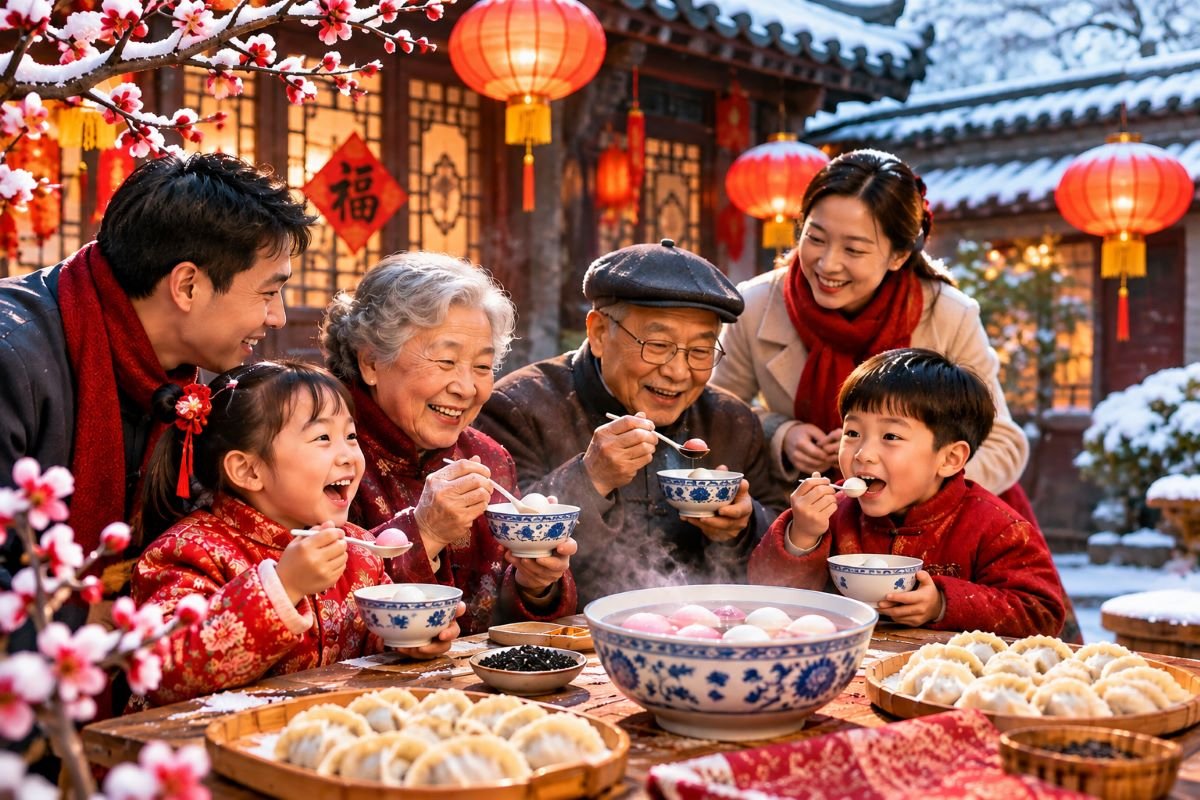
One of the most recognisable customs associated with Dongzhi is eating Tangyuan, small round glutinous rice balls often served in a sweet soup. Their circular shape symbolises completeness, unity, and family togetherness. In northern China, dumplings known as Jiaozi are particularly popular during the festival.
Although Dongzhi has ancient roots in Chinese seasonal and agricultural traditions, its meaning has developed over centuries. Today, it is observed in different ways across mainland China, Taiwan, Hong Kong, Singapore, Malaysia, and other communities influenced by Chinese culture.
Dongzhi reminds people that even during the darkest part of winter, daylight gradually begins to return. Its central message of renewal, harmony, and family connection continues to make it a meaningful celebration.
What Is the Dongzhi Festival?
Dongzhi (冬至) is a traditional Chinese festival celebrated around the December winter solstice. The Chinese characters have a seasonal meaning: Dong refers to winter, while Zhi can mean arrival or extreme point. Together, Dongzhi describes the arrival of winter's most extreme seasonal point.
Astronomically, the winter solstice occurs when the Northern Hemisphere is tilted farthest away from the Sun. This produces the shortest period of daylight and the longest night of the year in that hemisphere.
After the solstice, daylight gradually increases, although temperatures may continue to fall because the land and atmosphere take time to respond to changing sunlight.
In Chinese tradition, this astronomical transition has a deeper symbolic meaning. Dongzhi represents the gradual return of Yang energy, an important concept in traditional Chinese philosophy that is associated with warmth, activity, light, and growth.
The festival is sometimes described through the idea that Yin reaches its peak and Yang begins to return. This symbolic interpretation connects the movement of the seasons with the broader Chinese understanding of balance and harmony.
When Is Dongzhi Celebrated?
Dongzhi is celebrated around the winter solstice, which usually occurs on December 21 or December 22 in the Gregorian calendar.
The exact date and time of the astronomical solstice can vary from year to year because Earth's orbit and calendar arrangements do not produce an identical annual date.
For communities following the traditional Chinese calendar, the festival is associated with the eleventh lunar month and the solar term known as Dongzhi.
Unlike festivals that are determined entirely by a fixed lunar-calendar date, Dongzhi is closely connected with the solar calendar and the Sun's position in the sky.
This makes it an interesting example of how traditional East Asian calendars combine lunar months with solar observations.
Dongzhi and the Twenty-Four Solar Terms
Traditional Chinese timekeeping includes a system known as the Twenty-Four Solar Terms, or Ershisi Jieqi.
These terms divide the solar year into twenty-four seasonal periods. They were historically important for agriculture, weather observation, and planning activities according to changes in nature.
Dongzhi is one of these twenty-four solar terms. It marks the winter solstice and represents an important turning point in the annual solar cycle.
The system helped farming communities understand seasonal changes before modern weather forecasting and scientific measurement became widely available.
Today, the Twenty-Four Solar Terms remain an important part of Chinese cultural heritage and provide a connection between traditional knowledge and modern seasonal awareness.
The Ancient History of Dongzhi
Dongzhi has a long history connected with early Chinese observations of the Sun and seasonal changes.
Ancient communities depended heavily on agriculture, so understanding the movement of the Sun was essential. The changing length of daylight influenced planting schedules, harvesting periods, food storage, and preparations for winter.
The winter solstice was especially important because it marked the shortest day of the year and the beginning of the gradual increase in daylight.
Early Seasonal Observations
Before modern astronomical instruments existed, people observed shadows, sunrise, sunset, and the movement of celestial objects to understand seasonal patterns.
The winter solstice could be identified by the Sun reaching its lowest apparent midday position in the sky in the Northern Hemisphere.
These observations helped ancient Chinese societies develop sophisticated calendar systems.
The importance of the solstice was not limited to practical agriculture. It also became connected with ideas about cosmic balance, political order, and the relationship between human society and nature.
Dongzhi During the Zhou Dynasty
Historical accounts associate winter solstice observances with early Chinese dynasties, including the Zhou period.
During different historical periods, the solstice was treated as an important occasion for ceremonies and seasonal observances.
The exact customs and calendar arrangements changed over time. In some historical periods, the winter solstice held such significance that it was associated with the beginning of a new annual cycle.
Development During the Han Dynasty
The Han Dynasty played an important role in the development and organisation of Chinese calendar traditions.
Seasonal ceremonies and official observances helped establish the importance of the winter solstice within public and cultural life.
Historical traditions describe the period as an occasion for rest, celebration, and expressions of respect.
The festival gradually became associated with family gatherings and customs that extended beyond official ceremonies.
Dongzhi Through Later Dynasties
During later Chinese dynasties, Dongzhi continued to be recognised as an important seasonal occasion.
Families followed different customs depending on their region, social background, and local traditions. Some prepared special foods, while others performed ceremonies to honour ancestors or express gratitude.
The festival's importance was also reflected in traditional sayings, poetry, and cultural practices.
Over generations, Dongzhi developed into a celebration that combined astronomical observation, philosophical ideas, family relationships, and regional food traditions.
The Philosophy of Yin and Yang During Dongzhi
One of the most interesting aspects of Dongzhi is its connection with the traditional Chinese concept of Yin and Yang.
Yin and Yang represent complementary forces that interact throughout the natural world. They are not simply opposites; they are understood as interconnected aspects of a larger balance.
In traditional interpretations:
- Yin is associated with darkness, coldness, stillness, and the night.
- Yang is associated with light, warmth, activity, and growth.
Winter is traditionally associated with stronger Yin energy. At the winter solstice, Yin is considered to reach its maximum point, after which Yang begins to increase.
This does not mean that winter immediately ends or temperatures suddenly rise. Instead, the concept describes a gradual seasonal transition.
The increasing daylight after the solstice becomes a symbol of renewed energy and the return of growth.
For this reason, Dongzhi is often associated with hope, renewal, and the belief that change continues even during the darkest period of the year.
Traditional Dongzhi Foods
Food is central to Dongzhi celebrations. Different regions have developed their own dishes, and many of them carry symbolic meanings connected with family unity, warmth, and prosperity.
Two of the best-known Dongzhi foods are Tangyuan and Jiaozi.
Tangyuan: The Symbol of Family Reunion
Tangyuan are small round balls made from glutinous rice flour. They are usually cooked in boiling water and served in a sweet soup.
They may be plain or filled with ingredients such as:
- Black sesame paste.
- Peanut paste.
- Sweet red bean paste.
- Sugar-based fillings.
The round shape of Tangyuan is especially meaningful. In Chinese culture, circles can represent completeness, unity, and reunion.
Eating Tangyuan during Dongzhi therefore symbolises family togetherness and the wish for harmony in the coming year.
Tangyuan can be served in a lightly sweetened ginger syrup, a simple sugar broth, or another regional preparation.
Their colours may also vary. White and pink Tangyuan are common, while modern versions may include additional colours and flavours.
Jiaozi: Northern China's Winter Favourite
In northern China, eating Jiaozi during Dongzhi is a widely recognised tradition.
Jiaozi are dumplings made by wrapping a filling inside thin dough. Common fillings include pork, cabbage, chives, mushrooms, and other vegetables.
They can be boiled, steamed, or pan-fried.
One popular explanation connects dumplings with warmth and protection during cold winter weather. Their shape is also sometimes compared with ancient Chinese gold or silver ingots, giving them associations with prosperity.
There is a well-known traditional story connecting dumplings with the physician Zhang Zhongjing. According to the story, he prepared food with warming ingredients to help people suffering from the winter cold. Although the details belong to traditional accounts rather than a fully established historical explanation, the story remains popular in discussions of dumpling customs.
For many northern families, preparing and eating Jiaozi is an important part of Dongzhi.
Lamb and Other Warming Dishes
In some parts of China, Dongzhi meals include lamb soup, hot pot, and other warming dishes.
Lamb is especially popular in certain northern and northwestern regions. It is often cooked with ginger, spices, vegetables, and broth.
Hot pot is another suitable meal for the cold season. Family members gather around a shared pot of simmering soup and cook vegetables, meat, tofu, mushrooms, and noodles.
These dishes create a warm dining experience and encourage people to spend time together.
Rice Cakes and Regional Specialities
Other regions have their own Dongzhi foods.
In parts of southern China, rice cakes and sweet rice preparations may be associated with the festival. Some communities prepare dishes using glutinous rice, beans, sesame, or other locally available ingredients.
The variety of food traditions demonstrates that Dongzhi is not celebrated through one universal menu. Instead, each region contributes its own culinary identity.
Dongzhi Traditions Across Different Regions
China is geographically and culturally diverse, and Dongzhi customs vary significantly from one region to another.
Dongzhi in Northern China
Northern Chinese celebrations often feature Jiaozi.
Families may gather to prepare dumplings together before enjoying a shared meal. The activity itself is part of the celebration, as relatives can work together while talking and sharing stories.
In some areas, people also enjoy lamb soup and other warming foods during the winter season.
Dongzhi in Southern China
In many southern Chinese communities, Tangyuan is the most recognisable food associated with Dongzhi.
Families prepare sweet rice balls and share them as a symbol of unity.
The size, colour, filling, and serving style can differ according to local customs.
Some communities also prepare special rice dishes or regional desserts.
Dongzhi in Taiwan
Dongzhi is an important traditional observance in Taiwan.
Families commonly prepare Tangyuan in different colours and sizes. Some households make the rice balls at home, while others purchase them from shops and markets.
The festival is also associated with family gatherings and remembering ancestors.
In Taiwanese culture, Dongzhi can carry strong associations with growing older and moving through another cycle of life.
Dongzhi in Hong Kong
In Hong Kong, Dongzhi is widely recognised as a family occasion.
Many families gather for a special meal, often including Tangyuan and other traditional dishes.
For some households, the festival is also connected with ancestor remembrance and family ceremonies.
Restaurants and food shops may offer seasonal Dongzhi dishes, making the festival visible in everyday urban life.
Dongzhi in Singapore and Malaysia
Chinese communities in Singapore and Malaysia also observe Dongzhi.
Tangyuan is a familiar festival food, and family members may gather to prepare or share the sweet rice balls.
The celebrations reflect the cultural traditions brought by generations of Chinese migrants and their descendants.
In multicultural societies such as Singapore and Malaysia, Dongzhi forms part of a wider calendar of cultural and religious celebrations.
The Family Reunion Tradition
Family togetherness is one of the most important themes of Dongzhi.
In traditional Chinese culture, family relationships and respect for older generations have long held an important place. Seasonal festivals provide opportunities for relatives to reconnect and maintain these relationships.
During Dongzhi, families may:
- Prepare traditional food together.
- Visit parents and grandparents.
- Share a special family meal.
- Remember ancestors.
- Exchange good wishes.
- Teach children traditional customs.
For families living far apart, the festival can also provide a reason to travel home or arrange a virtual gathering.
The meaning of reunion is closely connected with the circular shape of Tangyuan. Sharing round rice balls symbolises the wish for family members to remain connected and experience a complete, harmonious life.
Ancestor Remembrance and Family Respect
In some communities, Dongzhi is associated with ancestor remembrance.
Families may visit ancestral graves, prepare offerings, or perform traditional ceremonies at home or in ancestral halls.
These practices reflect the importance of family history and respect for previous generations in Chinese culture.
Not every family observes Dongzhi in this way. Customs differ according to regional traditions, religious beliefs, and family preferences.
For those who participate, ancestor remembrance is a way of maintaining a connection between past and present generations.
It also gives younger family members an opportunity to learn about their heritage and the people who shaped their family's history.
Dongzhi and Traditional Chinese Medicine
Dongzhi is sometimes discussed in connection with traditional Chinese medicine and seasonal health practices.
Traditional Chinese medicine places importance on adjusting daily routines according to seasonal changes. Winter is often associated with rest, conserving energy, and eating nourishing foods.
Some traditional dietary recommendations encourage warm soups, cooked vegetables, grains, and other foods considered suitable for cold weather.
However, these ideas belong to a traditional medical framework and should not be confused with proven medical treatment.
Modern health advice for winter should be based on reliable medical guidance, including maintaining a balanced diet, staying physically active, and protecting against cold temperatures.
The seasonal food traditions of Dongzhi can still be appreciated as part of cultural heritage and family cooking.
Dongzhi and the Winter Solstice Around the World
Dongzhi is one of several cultural observances connected with the winter solstice.
Different societies have developed celebrations and customs around the shortest day of the year.
Examples include:
- Dongzhi Festival: A traditional Chinese winter solstice celebration associated with family reunion, Tangyuan, and seasonal balance.
- Yule: A winter festival with historical roots in northern European traditions, later influencing some Christmas customs.
- Winter Solstice celebrations: Various communities around the world mark the astronomical turning point through gatherings, ceremonies, and seasonal activities.
- Shab-e Yalda: An Iranian winter solstice celebration associated with family gatherings, poetry, fruits, and staying awake during the longest night.
Although these festivals have different histories and religious or cultural meanings, they share an interest in the seasonal transition and the gradual return of daylight.
Dongzhi is distinctive because of its connection with the Chinese calendar, Yin and Yang philosophy, family reunion, and traditional foods.
Dongzhi in Modern Chinese Society
Modern Dongzhi celebrations combine traditional customs with contemporary lifestyles.
In large cities, families may purchase Tangyuan from supermarkets or specialist shops instead of preparing them entirely at home. Restaurants may introduce seasonal menus, and cultural organisations may organise workshops or educational activities.
Social media has also made it easier for people to share family recipes, festival photographs, and messages about Dongzhi.
Younger generations may celebrate in ways that differ from their grandparents, but traditional food and family gatherings continue to provide a connection with cultural heritage.
For people living outside China, Dongzhi can be a particularly meaningful way to maintain family traditions.
Chinese communities in different countries may organise gatherings, cultural events, and food activities that introduce the festival to wider audiences.
The festival's central themes of reunion, renewal, and seasonal balance remain relevant even as lifestyles change.
How to Celebrate Dongzhi at Home
People who want to experience Dongzhi do not need to organise a large event. Simple activities can help them understand and enjoy the festival.
Prepare Tangyuan
Making Tangyuan is one of the easiest ways to experience a traditional Dongzhi custom.
Glutinous rice flour is mixed with water to create a soft dough. Small portions are rolled into balls, with optional sweet fillings added before shaping.
The rice balls are cooked in boiling water and served in a sweet broth.
Families can prepare different colours and fillings to create a shared cooking activity.
Cook a Traditional Family Meal
A Dongzhi meal can include Tangyuan, dumplings, soup, vegetables, and other regional dishes.
The important element is not the number of dishes but the opportunity to share food with family and friends.
Learn About the Winter Solstice
Dongzhi provides an opportunity to learn about astronomy and seasonal changes.
Families can discuss why the Northern Hemisphere has its shortest day around December 21 or 22 and how daylight gradually increases afterward.
Children can observe sunrise and sunset times or compare daylight hours during different months.
Share Family Stories
Older relatives can explain how they celebrated Dongzhi when they were young.
This helps preserve family memories and allows children to understand the traditions associated with the festival.
Explore Chinese Cultural Traditions
People unfamiliar with Dongzhi can learn about Tangyuan, Jiaozi, the Twenty-Four Solar Terms, and Yin and Yang philosophy.
These subjects provide a deeper understanding of how Chinese culture connects daily life with seasonal changes.
The Symbolism of Roundness and Renewal
The circular shape of Tangyuan is more than a cooking detail. It represents an important cultural idea.
In many Chinese traditions, roundness is associated with completeness, harmony, and reunion.
The shape of the rice balls therefore reflects the hope that family relationships will remain strong and that the household will experience happiness and togetherness.
The winter solstice adds another layer of symbolism.
Although it marks the longest night of the year, it also signals the gradual return of longer days. This creates a powerful image of renewal.
Dongzhi therefore combines two complementary ideas: the unity of family and the continuing movement of nature.
The festival reminds people that seasonal change is part of a larger cycle and that difficult periods do not remain unchanged forever.
Why Dongzhi Is Still Important Today
In a rapidly changing world, traditional festivals provide opportunities to maintain cultural connections.
Dongzhi remains important because it combines several meaningful elements:
Cultural heritage: The festival preserves customs connected with Chinese history, seasonal observation, and traditional food.
Family relationships: It encourages relatives to gather, share meals, and maintain relationships across generations.
Seasonal awareness: It connects people with the astronomical winter solstice and the changing length of daylight.
Regional identity: Different food traditions and local customs allow communities to maintain their unique cultural practices.
Intergenerational learning: Children can learn about history, food preparation, astronomy, and family traditions through participation.
These elements help explain why Dongzhi continues to be observed in both traditional and modern settings.
Conclusion
Dongzhi is a meaningful celebration that connects Chinese culture with the natural cycle of the seasons. Marking the winter solstice, the festival represents the shortest day of the year in the Northern Hemisphere and the gradual return of longer daylight.
Its history reflects ancient seasonal observations, traditional Chinese philosophy, and the importance of agriculture. Over time, it developed into a family-centred occasion celebrated through food, ancestor remembrance, and community traditions.
From sweet Tangyuan in southern China to Jiaozi in the north, the festival's regional dishes express the diversity of Chinese cultural life. Family gatherings, seasonal meals, and traditional customs continue to make Dongzhi relevant to people across generations.
The festival's message is especially meaningful during winter. It reminds people that darkness is followed by increasing light, that nature moves through cycles, and that family connections provide comfort and strength.
Whether celebrated in China or by Chinese communities around the world, Dongzhi remains a special occasion for reunion, reflection, and renewal.
Frequently Asked Questions (FAQs)
1. What is the Dongzhi Festival?
Dongzhi is a traditional Chinese festival that celebrates the winter solstice. It is associated with family reunion, seasonal change, traditional food, and the gradual return of longer daylight hours.
2. When is the Dongzhi Festival celebrated?
Dongzhi is usually celebrated around December 21 or December 22, depending on the exact date and time of the winter solstice.
3. What does Dongzhi mean?
Dongzhi is written as 冬至 in Chinese. The characters refer to winter and its arrival at an extreme seasonal point, describing the winter solstice.
4. Why is Dongzhi important in Chinese culture?
Dongzhi is important because it connects ancient seasonal traditions with family reunion, cultural identity, and the Chinese understanding of natural balance.
5. What food is eaten during Dongzhi?
Tangyuan and Jiaozi are two of the best-known Dongzhi foods. Other regional dishes include lamb soup, hot pot, rice cakes, and various traditional desserts.
6. What is Tangyuan?
Tangyuan are round balls made from glutinous rice flour. They may contain sweet fillings such as black sesame or peanut paste and are commonly served in a sweet soup.
7. Why do people eat Tangyuan during Dongzhi?
Tangyuan have a round shape that symbolises completeness, harmony, and family reunion. Eating them represents the wish for togetherness and happiness.
8. Why do people eat dumplings during Dongzhi?
Jiaozi are particularly popular in northern China. Their association with the winter season, warmth, and prosperity makes them a traditional Dongzhi food in many households.
9. What is the connection between Dongzhi and Yin and Yang?
Traditional Chinese philosophy associates winter with Yin. At the winter solstice, Yin is considered to reach its peak, while Yang begins to return. This represents a gradual movement toward increasing light and activity.
10. Is Dongzhi a public holiday in China?
Dongzhi is an important traditional festival, but it is not generally a nationwide statutory public holiday in mainland China. Families and communities may observe it through meals and cultural activities.
11. Is Dongzhi celebrated outside China?
Yes. Dongzhi is observed by Chinese communities in places such as Taiwan, Hong Kong, Singapore, Malaysia, and other countries with Chinese cultural communities.
12. Is Dongzhi the same as the Winter Solstice?
Dongzhi is the Chinese traditional festival associated with the winter solstice. The astronomical event is shared across the Northern Hemisphere, but Dongzhi has its own cultural customs and historical significance.
13. What are the Twenty-Four Solar Terms?
The Twenty-Four Solar Terms are a traditional Chinese system that divides the solar year into twenty-four seasonal periods. Dongzhi is one of these terms.
14. Do all Chinese families celebrate Dongzhi in the same way?
No. Customs differ by region, family history, and personal preferences. Southern families may focus on Tangyuan, while northern families commonly prepare Jiaozi.
15. What is the main message of Dongzhi?
Dongzhi represents family unity, harmony, renewal, and the gradual return of light after the longest night of the year.
Comments
No comments yet.