Día de los Muertos in Mexico: History, Traditions, and Cultural Significance
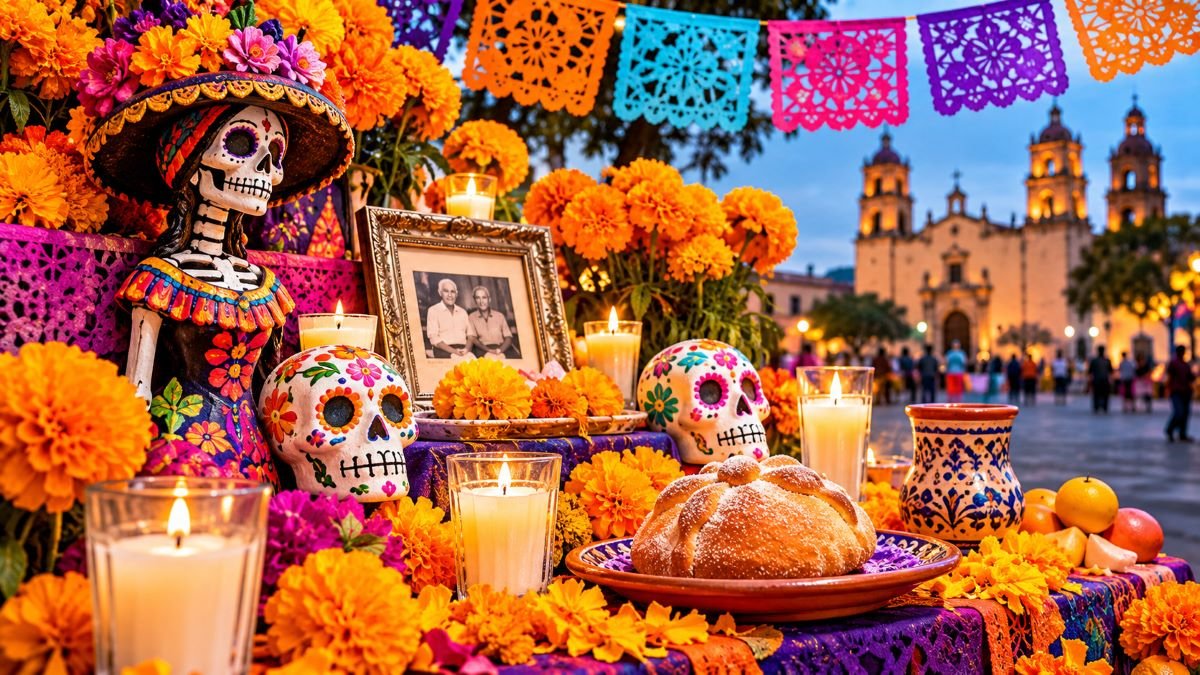
Every year, as October comes to an end and November begins, communities across Mexico prepare for one of the country's most meaningful cultural celebrations: Día de los Muertos, or the Day of the Dead. Colourful marigold flowers, decorated altars, candles, traditional foods, music, and family gatherings transform homes, streets, and cemeteries into places of remembrance.
Although its name may sound sombre, Día de los Muertos is not simply a day of mourning. It is a celebration that honours deceased family members and friends while keeping their memories connected to everyday life. Families remember loved ones through photographs, favourite meals, stories, and personal belongings, creating a welcoming space for remembrance and reflection.
Celebrated primarily on November 1 and 2, this tradition has become one of Mexico's most recognisable cultural expressions. Its significance extends beyond decorations and public festivities: it reflects ideas about family, memory, identity, and the relationship between life and death.
1. What Is Día de los Muertos?
Día de los Muertos is a Mexican cultural observance dedicated to remembering deceased relatives and loved ones. Families prepare offerings, known as ofrendas, and decorate them with objects that reflect the personalities and preferences of those being remembered.
According to traditional beliefs found in many communities, the spirits of the departed return temporarily to visit their families during this period. Flowers, candles, food, and other offerings help create a symbolic welcome for them.
The celebration generally centres on November 1 and 2, although preparations and related observances can begin several days earlier. In some regions, families follow more detailed local calendars and dedicate particular days to different groups of departed souls.
Rather than treating death only as an ending, Día de los Muertos provides an opportunity to remember the influence that loved ones continue to have on family life and community identity.
2. The History and Origins of the Celebration
The history of Día de los Muertos is complex and reflects centuries of cultural development.
Long before Spanish colonisation, Indigenous civilisations in Mesoamerica had varied beliefs and ceremonies concerning death, ancestors, and the afterlife. The Mexica, Maya, Purépecha, Totonac, and other communities developed their own customs for honouring the dead. These practices were connected to religious beliefs, agricultural cycles, and ideas about the natural world.
Following the Spanish arrival in the sixteenth century, Catholic religious observances became part of the region's cultural landscape. All Saints' Day, observed on November 1, and All Souls' Day, observed on November 2, contributed to the calendar around which many modern commemorations developed.
Over generations, Indigenous customs and European religious influences interacted in different ways across Mexico. The resulting traditions were not identical everywhere. Local communities adapted ceremonies, foods, symbols, and family practices according to their own histories.
It is therefore more accurate to understand today's Día de los Muertos as a diverse tradition shaped by multiple historical influences rather than as a celebration with one simple origin.
In 2008, UNESCO inscribed the Indigenous festivity dedicated to the dead on its Representative List of the Intangible Cultural Heritage of Humanity. This recognition highlighted the importance of the practices through which communities remember deceased relatives and maintain cultural continuity.
3. Why Is Día de los Muertos Celebrated on November 1 and 2?
The main dates of Día de los Muertos are closely associated with the beginning of November.
November 1 coincides with All Saints' Day in the Catholic calendar. In many Mexican communities, it is traditionally associated with remembering children who have died, although customs differ from one region to another.
November 2 corresponds with All Souls' Day, a day dedicated to remembering deceased adults and other departed loved ones.
These dates provide a shared period for families to visit cemeteries, prepare home altars, attend religious services, and participate in community traditions.
However, the celebration is not restricted to two days everywhere. Some communities begin preparing offerings in late October, while other observances continue into the first days of November.
4. The Ofrenda: The Heart of Día de los Muertos
One of the most important features of the celebration is the ofrenda, a carefully arranged altar created to honour deceased loved ones.
An ofrenda is usually placed inside a home, although community spaces, schools, cultural centres, and public locations may also display them. Families arrange photographs, candles, flowers, food, and meaningful objects to create a personal tribute.
Common elements include:
Photographs: Pictures help identify and remember the people being honoured. They are often placed in prominent positions on the altar.
Candles: Their light represents remembrance and is traditionally believed to help guide returning spirits.
Marigold flowers: Known in Mexico as cempasúchil, these bright orange and yellow flowers are strongly associated with the celebration. Their colour, fragrance, and petals are used to decorate altars and create symbolic pathways.
Water: A glass of water is commonly included as a gesture of hospitality.
Salt: In some traditions, salt represents purification and protection.
Favourite foods: Families prepare dishes and drinks that their deceased relatives enjoyed during their lives.
Personal belongings: Everyday objects, religious items, or treasured possessions can make an ofrenda especially meaningful.
The arrangement varies from family to family. Some altars are simple and intimate, while others are elaborate multi-level displays featuring carefully arranged decorations.
5. Important Symbols and Their Meanings
Día de los Muertos is recognised for its distinctive visual language. Many of its decorations carry cultural or symbolic meanings.
Cempasúchil: The Mexican Marigold
The cempasúchil is among the most recognisable flowers associated with the celebration. Its vivid colour makes it especially prominent in November decorations.
Families place the flowers on altars, graves, and pathways. In some traditions, petals are arranged to create a symbolic route connecting the cemetery with the home.
Calaveras: Decorative Skulls
Skulls, known as calaveras, appear in many forms, including painted decorations, illustrations, and edible sweets.
Sugar skulls are particularly familiar. They are often decorated with colourful icing and patterns. Rather than representing fear alone, these designs form part of the celebration's distinctive artistic expression.
La Catrina
La Catrina is an elegant skeletal figure dressed in fashionable clothing, often depicted wearing a decorative hat.
The image became widely recognised through Mexican artistic and satirical traditions, particularly the work of illustrator José Guadalupe Posada. It is now a prominent symbol in Día de los Muertos artwork, costumes, and public displays.
Papel Picado
Papel picado consists of decorative sheets of colourful cut paper. Patterns may include flowers, skeletons, and other traditional designs.
The lightweight decorations are commonly hung across streets, homes, and altars, adding movement and colour to the celebration.
6. Traditional Foods and Drinks
Food plays an important role in Día de los Muertos because meals help connect remembrance with family traditions.
One of the best-known seasonal foods is pan de muerto, a sweet bread traditionally prepared around the celebration. Its shape and decorations vary by region, and some versions include rounded or bone-like designs made from dough.
Other foods frequently associated with family offerings include:
- Tamales prepared with different fillings and regional ingredients.
- Mole, a traditional sauce with many local variations.
- Seasonal fruits such as oranges, bananas, and mandarins.
- Candied pumpkin and other traditional sweets.
- Hot chocolate and atole, warm drinks often served during family gatherings.
Food choices are usually personal. Families may prepare the dishes that a particular relative enjoyed, making the offerings a meaningful expression of memory rather than simply a festive menu.
7. How Different Regions of Mexico Celebrate
Although the central themes of remembrance and family connection are shared, Día de los Muertos is not celebrated in exactly the same way throughout Mexico.
Oaxaca
Oaxaca is known for its rich artistic and community traditions. Families prepare detailed altars, decorate graves, and participate in local gatherings. Markets and streets often feature seasonal flowers, foods, and handmade decorations.
Michoacán
In parts of Michoacán, especially around Lake Pátzcuaro, families maintain distinctive cemetery traditions. In some communities, graves are decorated with flowers and candles, creating memorable scenes of remembrance.
Mexico City
Mexico City hosts public exhibitions, cultural programmes, decorative installations, and large gatherings during the season. These events introduce visitors to different aspects of Mexican culture, although public spectacles are not the foundation of every community's traditional observance.
Yucatán
In the Yucatán Peninsula, related traditions include Hanal Pixán, a regional observance associated with Maya cultural heritage. Families prepare special foods and offerings to honour deceased relatives.
These regional differences demonstrate that Día de los Muertos is not a single uniform event. It is a collection of living traditions shaped by local identities and family customs.
8. Modern Celebrations and International Recognition
Today, Día de los Muertos is recognised well beyond Mexico. Mexican communities in the United States and other countries continue to celebrate the tradition through family altars, cultural exhibitions, educational events, and community gatherings.
Museums, schools, and cultural organisations also use the occasion to introduce people to Mexican history, art, and traditional practices.
In Mexico, public events and tourism have increased international awareness of the celebration. However, the meaning of the tradition remains deeply connected to families and local communities.
It is also important to distinguish between traditional practices and newer entertainment events. For example, Mexico City's large Day of the Dead parade became prominent in recent years, partly influenced by its appearance in the 2015 film Spectre. Such public events can be enjoyable cultural attractions, but they should not be confused with the historical foundation of the observance.
The international popularity of Día de los Muertos creates opportunities for cultural exchange, while also making respectful representation important. Understanding its meaning requires looking beyond costumes, face painting, and colourful decorations.
9. The Cultural Significance of Día de los Muertos
At its heart, Día de los Muertos is about remembering people and maintaining connections across generations.
Photographs preserve family histories. Recipes keep personal memories alive. Stories pass experiences from grandparents to children. Altars bring these elements together in a visible expression of love and remembrance.
The celebration also demonstrates how cultural traditions evolve. Indigenous customs, religious influences, regional identities, and modern artistic expressions have all contributed to the forms seen today.
Its recognition by UNESCO in 2008 reflects the importance of safeguarding the cultural knowledge and community practices associated with the Indigenous festivities dedicated to the dead.
For many families, the most meaningful part of the celebration is not the size of an altar or the number of decorations. It is the opportunity to remember loved ones, share stories, and strengthen family bonds.
10. Why Día de los Muertos Remains Important Today
In a rapidly changing world, cultural celebrations provide opportunities to preserve shared histories and values. Día de los Muertos continues to do this by bringing families and communities together around remembrance.
Its traditions encourage younger generations to learn about their ancestors, regional customs, traditional foods, and artistic heritage. They also provide a way for people living far from their hometowns to maintain connections with their cultural roots.
The celebration reminds people that remembering someone can be an active part of everyday life. Through photographs, meals, stories, and family gatherings, memories continue to be passed from one generation to another.
Conclusion
Día de los Muertos is much more than a colourful November festival. It is a meaningful Mexican tradition that brings together remembrance, family, cultural identity, and artistic expression.
From marigold-covered altars and decorative skulls to traditional foods and regional ceremonies, each element contributes to a celebration with deep cultural significance.
Its continued practice demonstrates how communities can preserve their heritage while allowing traditions to evolve. By honouring those who came before them, families keep memories alive and pass their stories to future generations.
For anyone interested in world cultures and seasonal celebrations, Día de los Muertos offers an opportunity to understand how different societies remember the past and give meaning to the connections that shape their lives.
Comments
No comments yet.